By Magnus Emuji
ASABA/Nigeria: The Delta State Government has reaffirmed its commitment to strengthening healthcare delivery across the state, calling on Local Government Chairmen to urgently prioritise the recruitment of nurses and other critical health workers to keep Primary Healthcare Centres (PHCs) functioning optimally.
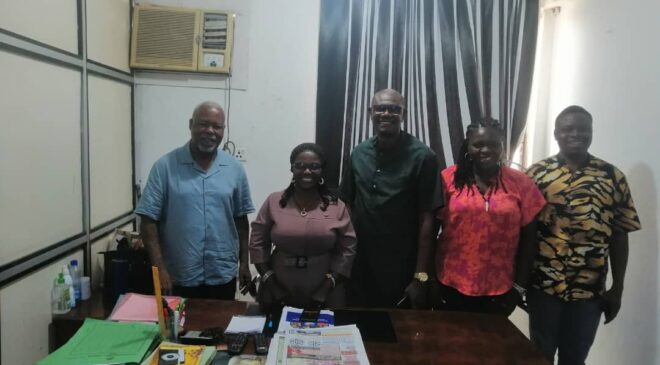
The Director of Planning, Research and Statistics at the Delta State Primary Healthcare Development Agency, Dr. Charles Eboka, gave the charge in Asaba when the State Chairman of the Civil Society in Malaria Control, Immunization and Nutrition (ACOMIN), Pastor Gregory Sifo, visited his office with State Programme Officer Sir Austin Uwede and other members of the organisation.
Eboka disclosed that Ndokwa West Local Government had recently employed 35 nurses and 12 additional health workers, while Bomadi Local Government recruited 58 health personnel, including 17 nurses, 16 Community Health Extension Workers (CHEWs), one pharmacist, and 11 health assistants. He commended both LGAs for their proactive steps, urging other council chairmen to emulate the initiative to improve service delivery across PHCs in the state.
The agency director further revealed that 156 PHCs had been approved for enrollment into the Basic Health Scheme, adding to the 246 public health facilities already enrolled. This brings the total number of participating health centres in Delta State to 402, a development he said would enhance access to quality healthcare for residents.
Meanwhile, the ACOMIN team also visited the newly appointed Director of Nursing Services at the Delta State Local Government Service Commission, Mrs. Patricia Enafoma. During the visit, Pastor Sifo appealed to the commission to continue drawing the attention of relevant authorities to the urgent need for hiring more nurses and health workers at council levels.
He said the team was on an assessment visit to obtain firsthand information about efforts regarding the recruitment of PHC staff. According to him, the severe shortage of nurses and other frontline health personnel was undermining effective healthcare delivery, stressing the need for more community-based medical outreaches to create health awareness.
In his remarks, the State Programme Officer of ACOMIN, Sir Austin Uwede, noted that the organisation was currently active in ten local government areas, including Ndokwa West, Ughelli North, Ughelli South, Aniocha South, Aniocha North, Sapele, Okpe, and Warri South. He emphasized that ACOMIN’s interventions were community-driven, with activities conducted in selected health facilities.
Uwede identified inadequate manpower—especially the failure to replace retired nurses and other essential health workers—as one of the major challenges affecting the state’s healthcare system. He appealed to the Delta State Government to intervene urgently to prevent further strain on PHCs and safeguard public health.
The call for increased recruitment comes as Delta State intensifies reforms to strengthen its healthcare delivery framework and ensure that no community is left behind.