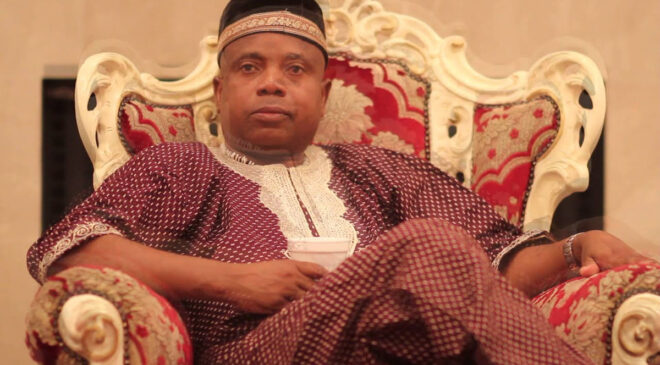
OLEH/Nigeria: The African Democratic Congress (ADC) senatorial candidate for Delta South, Dr. Austin Orette, has asked the Independent National Electoral Commission (INEC) to explain the circumstances surrounding the alleged omission of his name from its published list of candidates for the 2027 National Assembly elections.
Orette made the demand while addressing party supporters and journalists in Ozoro, headquarters of Isoko North Local Government Area, on Thursday, saying the issue raised broader questions about transparency, accountability and safeguards within the electoral nomination process.
His concern, he said, was not simply that his name was absent from the published list, but how such an omission could occur after his party had submitted his candidacy and what procedures were available to identify and correct an administrative error.
“My concern with INEC is not simply that my name was omitted from a published candidate list. My concern is how such an omission could occur and what institutional safeguards exist to prevent a candidate’s democratic rights from being affected by an administrative failure,” he said.
Orette said the situation had left him concerned about whether his nomination was properly received, whether the information submitted by his party was accurately captured and at what stage any alleged omission occurred.
He referred to Sections 29 and 32 of the Electoral Act, 2022, which deal with the submission of candidate lists and publication of candidates, respectively, and said the law provides a framework for addressing cases where a candidate’s name is missing from a published list.
He called on INEC to establish the facts surrounding the matter and, if an administrative error occurred, correct it through the appropriate procedure.
“I am not asking INEC for a favour. I am asking for the law and the established process to be applied correctly,” Orette said, adding that any evidence of unlawful interference should be referred to the appropriate authorities for investigation.
The candidate said the issue went beyond his individual candidacy, arguing that confidence in the electoral process depended on qualified candidates receiving equal treatment under established rules.
Orette also used the occasion to outline areas he said would form part of his legislative priorities if elected to the Senate, including electoral administration, political-party democracy, security, healthcare, youth employment, infrastructure and economic development.
On electoral reform, he proposed a transparent digital trail covering the movement of candidate information from party nomination to INEC publication, formal acknowledgement of candidate submissions and a mechanism for the rapid correction of wrongly omitted names.
He also called for clearer responsibility where candidate information is negligently or unlawfully handled, stronger safeguards against arbitrary alterations and wider public access to official nomination records.
On political parties, Orette said he would support greater transparency in primaries, including verifiable records of nomination fees, accredited delegates, voting procedures, results, appeals and dispute-resolution processes.
He further listed insecurity, youth unemployment and economic opportunity among issues requiring legislative attention, proposing measures against kidnapping, organised criminal networks and illegal arms trafficking alongside policies addressing some of the socioeconomic conditions associated with criminality.
For Delta South, he identified oil-producing communities, environmental remediation, roads and waterways, healthcare, youth employment, technical training and support for small and medium-sized enterprises as areas he would prioritise.
Orette, a medical doctor, also said healthcare would feature prominently in his proposed legislative agenda, particularly primary healthcare, rural medical access, support for healthcare workers and emergency medical services.
He said young people should be treated as participants in economic development rather than merely as campaign crowds, proposing greater opportunities in vocational training, technology, entrepreneurship, agriculture and maritime activities.
According to him, meaningful economic opportunities could also help reduce young people’s vulnerability to criminal recruitment and political manipulation.
On representation, Orette said a senator’s responsibilities extend beyond speeches and include legislation, amendments, appropriation, oversight and bringing constituents’ concerns to national institutions.
He said voters should assess candidates based on their proposed legislative programmes, approach to oversight and positions on issues affecting their communities, including insecurity, unemployment, healthcare, infrastructure and environmental degradation.
Orette also argued for stronger adherence to the rule of law and equal application of legal standards, saying public office should not shield individuals from accountability.
He cited the 2023 conviction in the United Kingdom of former Nigerian senator Ike Ekweremadu, his wife Beatrice and Obinna Obeta in connection with a proposed kidney donation, saying the case illustrated the principle that political status should not place anyone beyond lawful judicial processes.
INEC has confirmed that the 2027 Presidential and National Assembly elections are scheduled for January 16, 2027.