There is a point at which political competition ceases to be healthy competition and begins to threaten the very society that politicians seek to govern.
The reported confrontation during a political mobilisation exercise in Effurun, Uvwie Local Government Area, this week should serve as a warning to every political actor in Delta State: the 2027 political season must not become a season of intimidation, confrontation and fear.
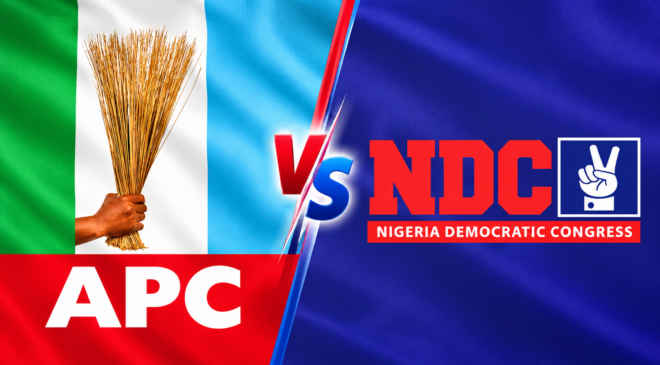
The incident reportedly occurred during an NDC mobilisation march in Effurun and subsequently generated videos that circulated widely on social media. The Delta State Government has condemned the disturbance and directed security agencies to investigate the circumstances and prosecute anyone found culpable.
At the time of this editorial, the circumstances surrounding the confrontation remain subject to investigation. The NDC has made allegations against political opponents, but such allegations should not be treated as established facts until competent authorities complete their investigations. That distinction is important.
What is not in dispute, however, is the principle that political parties must be allowed to conduct lawful activities without intimidation or obstruction.
The Delta State Government has itself affirmed that every political party, candidate and supporter has the right to campaign peacefully anywhere in the state, provided such activities remain within the law.
At Ndokwa Reporters, we believe this principle must apply equally to everybody, the ruling party, opposition parties, independent political actors and ordinary citizens. No political organisation should need permission from its opponents to campaign. Equally, no party should regard its political strength as a licence to intimidate others.
This is bigger than the NDC and APC. It is bigger than the states or any other politician.
It concerns the political culture we want Delta State to develop as the 2027 elections approach.
Elections should be contests over ideas, records, programmes and the future of the people. Supporters should be able to listen to different candidates, ask questions, disagree with them and make their choices without fear.
That is what democracy requires. We are particularly concerned about the possible consequences of allowing isolated political confrontations to become normalised.
Political violence rarely begins as a major crisis. It can begin with a confrontation at a rally, an argument between supporters, an act of provocation or an attempt to prevent another group from speaking to voters. If such incidents are ignored or politically rationalised, they can gradually create a culture in which violence becomes accepted as part of political mobilisation.
Delta cannot afford that culture. The state has experienced enough challenges in the past to understand the value of peace. Businesses require a stable environment. Farmers need access to their communities. Traders need safe markets. Transport operators need functioning roads. Parents need their children to return home safely. Journalists need to report political developments without becoming targets.
Political parties must therefore take responsibility for their supporters.
It is not sufficient for party leaders to condemn violence after an incident has occurred. They must establish clear internal mechanisms for preventing their supporters from confronting rival groups.
Candidates also have a responsibility to speak to their followers. A candidate who encourages restraint contributes to democracy. A candidate who tolerates intimidation, whether directly or indirectly, weakens the democratic environment in which that candidate hopes to operate.
The security agencies equally have an important responsibility. The investigation ordered by the governor must be thorough, professional and credible. If individuals committed offences, they should be identified and dealt with according to the law. If allegations against particular individuals or organisations are found to be unsupported, that should also be made clear.
Justice should not depend on party membership. This is where the principle of impartiality becomes critical.
Security agencies must protect lawful political activity regardless of who is organising it. The opposition must be protected when campaigning. The ruling party must be protected when campaigning. Smaller political parties must enjoy the same protection.
The right to political participation cannot be selective. There is also a responsibility on citizens and social media users.
Videos of political confrontations can spread rapidly, often before the facts are established. Political supporters should resist the temptation to use unverified material to inflame tensions or present allegations as proven facts.
The media, too, must remain careful. Our duty is not to become an extension of any political campaign. Our duty is to report what happened, identify what is established, attribute allegations properly and allow the relevant institutions to determine responsibility.
Ndokwa Reporters, as a community-focused publication, we believe Delta’s political future must be determined at the ballot box, not on the streets. The strength of a political party should be demonstrated by the confidence it inspires among voters, not by the ability of its supporters to intimidate opponents.
There will be disagreements. There will be harsh campaign rhetoric. There will be competing interpretations of government performance. There will be political accusations and counter-accusations. All of these are part of democratic competition.
But violence is not democracy. As political activities intensify, we urge Governor Oborevwori’s administration to ensure that the investigation into the Effurun incident is allowed to proceed transparently and that the outcome is communicated appropriately.
We equally call on all political parties in Delta to sign up, in practice and not merely in speeches, to peaceful campaigning.
Traditional rulers, religious leaders, youth organisations, community associations and civil society groups should also begin reinforcing the message that political differences must not become community conflicts.
The people of Delta will eventually decide who they want to support. That decision belongs to the voters.
No political party, candidate or group of supporters should attempt to make that decision for them through intimidation. The 2027 election is still ahead. There is enough time for politicians to debate, organise, campaign and convince. Let the strongest argument win, not the strongest fist.
Ndokwa Reporters believes Delta’s peace must remain bigger than every political ambition.
