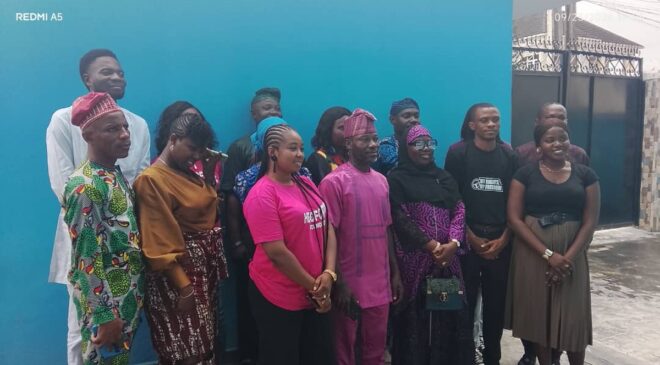
LAGOS/Nigeria: A human rights organisation, Headfort Foundation for Justice, has begun equipping secondary school teachers in Lagos State with knowledge of civic space and fundamental rights as part of efforts to extend civic education into the classroom.
The foundation said the Civic Space Train-the-Trainer programme, held in Lagos on Wednesday, was designed to enable participating teachers to take the lessons beyond the training room and introduce them to students through school-based Human Rights Clubs.
Head of Legal Department of the foundation, Ms Olajumoke Ogunfowora, said the programme formed part of the organisation’s Human Rights Club project, which focuses on helping young people understand their rights, responsibilities and avenues for seeking redress.
She said teachers were being equipped to understand civic rights, how those rights could be protected and the responsibilities that come with exercising them.
“The essence is to educate the teachers on civic space and pass the knowledge to the students. They need to know their civic rights, how to protect them and how to use them responsibly,” Ogunfowora said.
About 12 participants took part in the training, comprising two teachers each from five secondary schools as well as education district officers.
The participating schools included Ayedire High School, Ojota Senior High School, Ikosi Senior and Junior Schools and Kosofe, while the foundation’s legal department handled the legal aspects of the programme.
The initiative builds on Headfort Foundation’s Human Rights Club programme, which the organisation says was established in 2024 to promote human rights awareness and advocacy among students. Its stated objective includes creating spaces where students can discuss rights issues, develop critical thinking and become better informed about their responsibilities as citizens.
Programmes Officer of the foundation, Miss Oluwadamilola Ilori, said sustained engagement was necessary because young people needed regular exposure to rights-related issues.
She said the Human Rights Clubs were intended to help students recognise situations in which their rights might be violated and understand appropriate ways of responding.
Ilori recalled that, while she was a secondary school student, she encountered situations in which her rights were challenged but there was no similar platform to provide the kind of awareness now being introduced through the clubs.
She said the programme was therefore intended not only to provide information but also to reinforce students’ understanding of how they should expect to be treated.
Also speaking, Programme Officer of Spaces for Change, Mr Testimony Omole, said engaging students was important to sustaining civic participation among younger Nigerians.
Omole said the training was organised by Headfort Foundation in partnership with the Action Group on Free Civic Space, with support from the Fund for Global Human Rights.
He said the organisations had been involved in capacity building, advocacy, community engagement, research and knowledge development, including the use of media to promote civic participation.
According to him, the focus on teachers was strategic because they could serve as a link between civic-space education and a much larger population of young people.
“We are at a critical point where we have realised the need to also engage the upcoming generation, the younger generation, the students and the youth,” he said.
Omole said young people needed to understand what civic space meant and the legitimate ways they could participate in civic activities.
He also identified what he described as securitisation and security overreach among factors that could affect civic participation, while stressing the importance of research and evidence in addressing restrictions on civic space.
He urged civil society organisations to strengthen evidence-based advocacy, saying reliable data and documentation were important tools for making a case for social change.
One of the participants, Mr Gabriel Odiwe of Education District 2, Maryland, Lagos, said the training would help teachers improve the way civic rights were taught to students.
Odiwe observed that lack of awareness of rights was not limited to young people, saying many citizens were also unfamiliar with the mechanisms available for seeking enforcement when their rights were violated.
He said the knowledge gained from the programme would help teachers guide students on understanding their rights and responding appropriately to situations involving possible violations.
Headfort Foundation’s wider Human Rights Club initiative has previously included student-led awareness activities and career-focused programmes designed to expose young people to human rights advocacy and civic participation. A March 2026 project report, for instance, documented a student-led campaign marking the International Day of Education.
The latest training therefore represents a train-the-trainer approach, with teachers expected to extend civic and human-rights education to students through the established school clubs.
