LAGOS/Nigeria: Africa’s struggle to shape its global image cannot be separated from who owns the media platforms that tell its stories, media and advertising professional Sikona Cibini has said, urging greater investment in African-owned outlets and distribution networks.
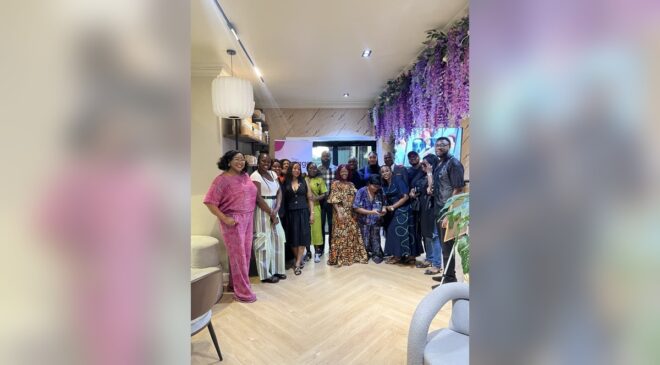
Cibini, Head of Partnerships for West Africa at Forbes Africa, made the call at The Leverage Room, a monthly networking event held in Lagos on Monday, where speakers examined the relationship between business influence, strategic connections and the way Africa is represented to the world.
Speaking on the theme, “Beyond Business: Building Value, Strategic Relationships and Global Influence,” she argued that media narratives extend beyond public perception, influencing how Africans view themselves, how other societies understand the continent and how relationships among African nationalities develop.
She called for increased investment in credible news platforms, documentaries, investigative journalism and digital distribution networks, arguing that Africans need stronger media institutions to communicate their experiences, cultures and business realities to international audiences.
Her intervention places media ownership at the centre of a wider debate about African representation: producing stories is important, but the ability to publish, distribute and sustain them is equally critical to ensuring that African perspectives reach audiences at home and abroad.
Cibini also raised concerns about media coverage of xenophobia, warning that reporting on tensions between African nationalities could contribute to division if it fails to provide adequate context or recognise the positive relationships that exist across borders.
She advocated a more balanced approach that also highlights xenophilia — an appreciation of foreign people and cultures — as part of the conversation about relations among African communities.
The challenge, as reflected in the discussions, is to ensure that coverage of conflict does not become the only lens through which people understand neighbouring countries and their citizens.
Tsholo Ezeani, a South African married to a Nigerian, reinforced the importance of moving beyond national stereotypes, urging Africans to make a greater effort to understand one another outside the assumptions often attached to nationality.
Ezeani also drew attention to the role of reading and cultural documentation in preserving African identity. She encouraged people to read and share folk tales, describing storytelling as an important means of transmitting history, values and cultural knowledge between generations.
“We don’t tell our stories because we don’t read,” she said.
Her remarks broadened the discussion beyond media companies to the responsibility of individuals and communities to preserve their own histories and ensure that cultural knowledge is not lost.
Earlier, Uche Chinonso, convener of The Leverage Room and founder of E Travels and Tours, said the platform was established to connect professionals and entrepreneurs with useful networks and practical business experiences.
He explained that the initiative gives participants opportunities to learn from others, develop relationships and explore solutions to business challenges. He added that meaningful networking requires mutual support, with participants contributing value rather than focusing solely on personal gains.
The gathering also examined how businesses could balance commercial goals with corporate social responsibility and make more deliberate decisions about advertising and publicity.
Participants stressed that organisations should choose media platforms and programmes according to their communication objectives, target audiences and budgets, rather than pursue publicity without a clear strategy.
For African media organisations, the discussion presents a wider question of sustainability: building credible platforms requires not only compelling content but also investment, effective distribution, audience trust and viable business models.
The conversation at The Leverage Room therefore extended beyond how Africa is portrayed. It highlighted the importance of strengthening the institutions, reading culture and professional relationships that enable Africans to document their experiences and communicate their perspectives more effectively.
