
A review of political, economic, security, community and social developments across Nigeria and Delta State from November 15 to 21, 2026.
The week of November 15–21, 2026, brought important developments in Delta State’s public spending plans, renewed attention to the country’s security challenges, a major step towards decentralised policing and fresh evidence of the gap between improving economic indicators and the pressure experienced by households. In Delta, the visit of FIFA President Gianni Infantino to Warri placed the state’s sports infrastructure in the international spotlight, while community groups continued to press for stronger public services.
Delta Proposes ₦1.2368 Trillion Budget for 2027
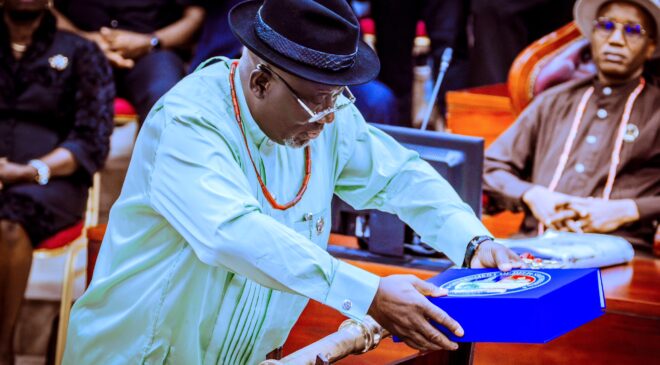
Delta State Governor, Sheriff Oborevwori, on November 16 presented a proposed ₦1.2368 trillion budget for the 2027 fiscal year to the State House of Assembly. Tagged the ‘Budget of Sustained Prosperity and Enhanced Growth’, the estimates provide ₦806.8 billion for capital expenditure and ₦430 billion for recurrent spending. The capital component represents about 65 per cent of the proposal, while roads account for a substantial ₦320 billion. Other major allocations announced at the presentation include ₦74 billion for education and ₦50 billion for healthcare. The governor said the proposed spending plan was 28.5 per cent below the ₦1.729 trillion approved for 2026, describing the reduction as a move towards more realistic revenue projections and prudent fiscal management.
The proposal is now a legislative document, not yet an approved spending authority. Its real significance will depend on the Assembly’s scrutiny of the revenue assumptions, the cost and readiness of projects, and the distribution of investment across the state’s local government areas. Residents will also expect the final budget to show clearly how capital allocations will translate into completed roads, better-equipped hospitals, functional schools and improved access to public services. The test of a development budget is not the size of its headline figure but the quality, spread and completion of the projects it finances.
Debt Repayment and Revenue Claims Face the Test of Accountability
The budget presentation also put Delta’s public finances under the spotlight. Governor Oborevwori said internally generated revenue had increased from about ₦83 billion in 2023 to a projected ₦283 billion by December 2026. He further stated that his administration had repaid ₦400 billion of inherited debt, leaving an outstanding balance of ₦63 billion. These figures, if supported by audited records, would have important implications for the state’s fiscal capacity and its ability to finance infrastructure without placing excessive pressure on future budgets.
However, projections, government announcements and independently audited outcomes are not interchangeable. The House of Assembly, civil society organisations and the public will need access to clear information on revenue performance, debt stock, repayment schedules, contractor liabilities and the actual completion status of projects. The proposed 2027 budget offers an opportunity to strengthen that scrutiny. Deltans should be able to track not only what government intends to spend but also what was released, what was delivered, where it was delivered and whether the public received value for money.
FIFA President Praises Warri City Stadium Upgrade
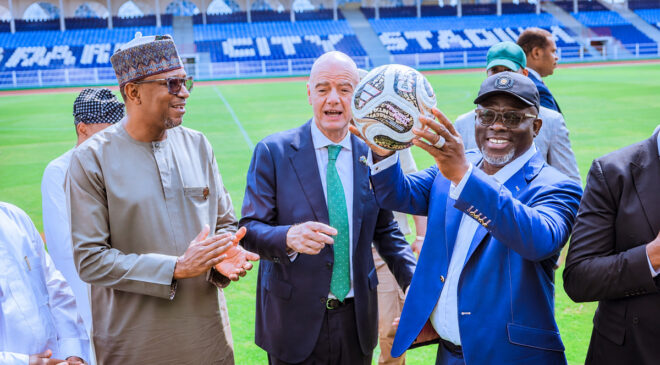
PHOTO: SAMUEL JIBUNOR
Warri moved into the international football spotlight on November 20 when FIFA President Gianni Infantino visited the remodelled Warri City Stadium alongside FIFA Secretary-General Mattias Grafström. Infantino praised the scale of the transformation and described the investment as important for the future of football and opportunities for young people. The visit placed Delta’s sports infrastructure before the leadership of world football and renewed attention on the state’s ambition to develop the game beyond occasional competitions.
The wider project has been presented as a multi-sport facility, with a hybrid-grass football pitch, a nine-lane athletics track, an Olympic-sized swimming pool, an indoor sports hall, modern floodlights, improved changing rooms and drainage. Infantino also visited the Hussey College Sports Complex in Warri, a grassroots facility donated by the Brownhill Foundation with support from the Nigerian Content Development and Monitoring Board. His visit was an endorsement of the potential of the facilities, but the FIFA president indicated that some work at the main stadium was still to be completed before its full readiness could be assessed.
For Warri and the wider Delta sports community, the next phase matters more than the ceremony surrounding the visit. A modern stadium can become an asset for local football only if it is properly maintained, transparently managed and made accessible to clubs, schools, athletes and community competitions. The state should publish a clear maintenance and operating plan, including responsibility for upkeep, security, booking arrangements and the cost of hosting events. It should also explain how young athletes, including girls and athletes in less-publicised sports, will benefit. Without a sustainable programme of use, even an impressive facility risks becoming an expensive structure with limited community impact.
Community Groups Seek Sustained Primary Healthcare Investment
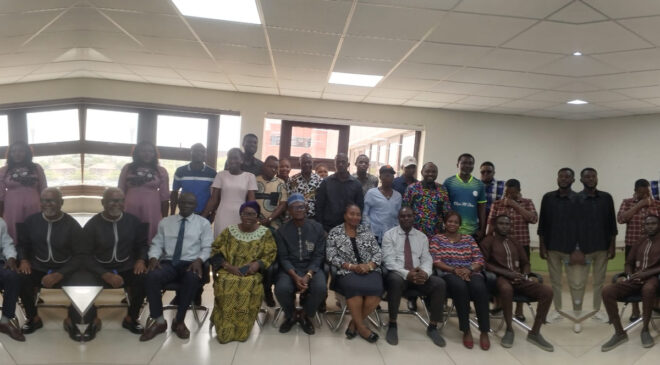
Primary healthcare remained part of the public-service conversation in Delta during the week. The Association of Civil Society Organisations in Malaria Control, Immunisation and Nutrition (ACOMIN) urged the state government, local councils and private-sector partners to sustain improvements achieved through Community-Led Monitoring as the Global Fund Grant Cycle 7 approaches close-out. The organisation drew attention to practical interventions reported at primary healthcare centres, including repairs to equipment, improved access roads, drainage work, water facilities, furniture and lighting. These are basic requirements, but they often determine whether a health centre can provide dependable services to its surrounding communities.
The message from community monitors is that improvements should not disappear when a grant cycle or external support programme ends. Government must provide predictable funding, adequate health workers, essential medicines, reliable power and functional water systems. Local residents can help identify service gaps and monitor performance, but community participation must complement rather than replace the statutory responsibility of government. The state and local councils should therefore make public the maintenance plans and funding arrangements that will keep the reported improvements operational.
Oghara Constituency Empowerment Targets Traders and Small Businesses

The member representing Ethiope Federal Constituency, Erhiatake Ibori-Suenu, held a constituency empowerment programme in Oghara, Ethiope West Local Government Area, on November 20. Published reports described the intervention as a package of support for traders and small businesses, including vehicles, business equipment and cash assistance. One reported component was the distribution of ₦100,000 each to 300 petty traders. The programme was presented as an effort to improve livelihoods, expand small-scale enterprise and provide beneficiaries with tools to strengthen their businesses.
Constituency interventions can offer immediate help, particularly where access to affordable credit and business support is limited. Their long-term value, however, depends on transparent beneficiary selection and whether the assistance enables recipients to sustain or grow their income. Public reporting should identify the criteria used, the categories of beneficiaries and the monitoring arrangements put in place after distribution. Published accounts differed on some quantities of vehicles and equipment; those details should be confirmed against the official distribution list before exact totals are stated. The broader question is whether such programmes are connected to sustained enterprise development rather than one-off presentation events.
Women Mobilise for 2027 as Campaign Activity Gathers Pace
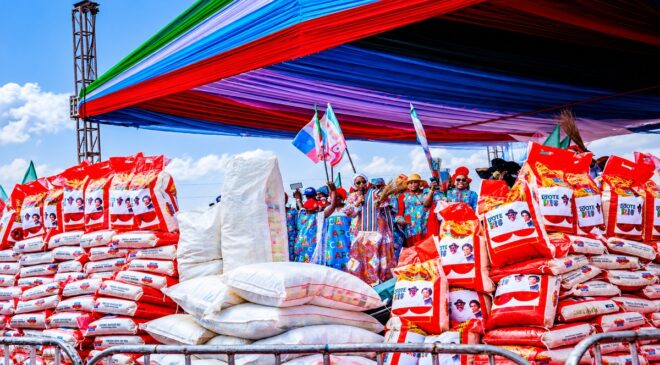
Political mobilisation ahead of the 2027 general election also featured in Delta during the week. At a women’s rally in Kwale on November 16, the wife of the governor, Deaconess Tobore Oborevwori, urged women to take the campaign message into their communities and announced a target of two million votes for the All Progressives Congress. The target was a political mobilisation aspiration, not an independently verified projection of voter behaviour. The event reflected the growing effort by parties and political organisations to build grassroots structures well ahead of the election year.
Women remain central to voter mobilisation, community advocacy and election participation, but their role should extend beyond being counted as campaign foot soldiers. Political parties should demonstrate how women are represented in decision-making, candidate selection, policy development and campaign leadership. As mobilisation intensifies, the quality of political engagement will matter: voters need clear policy proposals on jobs, security, education, healthcare and the cost of living, not only numerical targets and promises of electoral strength.
TUC Honours Oborevwori as Thirteenth-Month Salary Law Takes Effect

The Trade Union Congress conferred its Ukodo Pace Setter Award on Governor Sheriff Oborevwori during the 2026 TUC Day celebration in Asaba on November 19. The recognition was associated with the Thirteenth Month Salary Law, 2026, which provides a statutory basis for an additional annual payment to eligible public servants. The governor had announced that implementation was expected to begin in December 2026. The development has attracted attention because additional income can help workers meet end-of-year expenses at a time when many households continue to face pressure from food, transport and other essential costs.
The practical test will be the law’s implementation. Government and organised labour will need to communicate clearly who qualifies, how the payment will be calculated, when it will be made and how it will be funded each year. A statutory entitlement should be administered consistently and transparently, without creating uncertainty for workers or unsustainable obligations for the state. The TUC’s recognition is an event of public interest, but the lasting measure will be whether eligible workers receive the benefit as provided by law and whether the policy can be maintained responsibly.
State Police Amendment Reaches President Tinubu
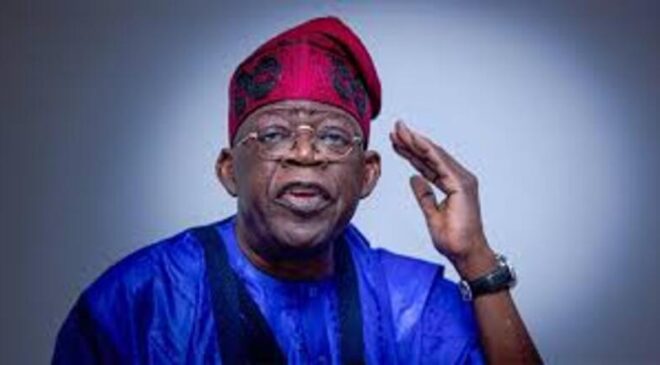
The proposal to establish state police took a significant constitutional step during the week. Following approval by all 36 State Houses of Assembly, the National Assembly transmitted the constitutional amendment bill to President Bola Tinubu on November 18. The President indicated that he would review the proposal in consultation with the Attorney-General of the Federation before deciding on assent. The development marks progress in a long-running debate over whether Nigeria’s security architecture should give states a formal policing role alongside the federal police structure.
Approval by the state assemblies and transmission to the President do not, by themselves, mean that state police forces have been established or are ready to operate. The legal framework must address recruitment standards, training, funding, command structures, inter-agency cooperation, human rights protections and independent oversight. Safeguards against political misuse are particularly important in a federation where state governors are influential political actors. Any reform must improve local intelligence and response without creating armed institutions that can be deployed against opponents or vulnerable communities. The next stage should therefore be judged not only by speed but by the strength of its accountability provisions.
Opposition Coalition Reschedules Summit to November 30

The opposition political landscape also shifted as the Coalition for Democracy rescheduled its second summit from November 23 to November 30. The change followed requests by member parties for more time to accommodate campaign schedules. Reports indicated that parties and political groups including the ADC, NDC and a faction of the PDP had agreed to suspend campaign activities for the day to allow leaders and candidates to attend and discuss a common position ahead of the 2027 election.
The postponement gives the groups additional time, but it does not resolve the difficult questions facing any opposition arrangement: leadership, policy direction, candidate selection, power-sharing and the management of competing political interests. A coalition built only around opposition to the incumbent may struggle to sustain public confidence unless it can present a credible programme and a transparent decision-making process. The November 30 meeting will therefore be watched for evidence of concrete agreements, not merely declarations of unity. Until formal decisions are announced, it would be premature to describe the gathering as the birth of a settled alliance or a single-candidate arrangement.
October Inflation Eases, but Household Pressure Persists

Nigeria’s October inflation data offered a mixed signal. The National Bureau of Statistics reported that headline inflation eased to 14.06 per cent year-on-year from 14.63 per cent in September. Food inflation stood at 19.13 per cent year-on-year, remaining a major pressure point for households. At the same time, the month-on-month headline rate rose to 0.43 per cent in October from 0.06 per cent in September. The annual figure suggests that the pace of price increases has moderated compared with a year earlier, but the monthly movement shows that prices continued to rise during the latest reporting period.
For families, the distinction is important. A lower inflation rate does not mean that food, transport, rent or school expenses have returned to earlier levels. It means that the rate of increase has slowed relative to the comparison period. Government policy must therefore focus on the conditions that determine household purchasing power: stable food supply, lower transport and distribution costs, improved security for farmers, predictable energy costs and opportunities for income growth. The figures are encouraging only if they are followed by sustained moderation and a gradual improvement in what wages and small-business earnings can buy.
Petrol Imports Rise Despite Growing Domestic Refining

Nigeria’s petrol supply figures raised fresh questions about the pace and durability of the shift towards domestic refining. PUNCH reported on November 21 that petrol imports rose by 47 per cent in October to an average of 15 million litres per day, compared with 10.2 million litres per day in September. Domestic refineries were reported to have supplied 31.9 million litres daily, representing about 68 per cent of total receipts of 46.9 million litres per day. The figures suggest that local refining had become the larger source of supply, while imported petrol continued to play a significant role.
The increase in imports does not, on its own, establish that domestic refining has failed. Supply can be affected by refinery output, product quality, distribution arrangements, maintenance, demand and the timing of deliveries. But the figures underline the need for transparent and consistent reporting on volumes supplied by local refineries and imports, as well as the prices and logistics involved. For consumers, the central issue is whether a more diversified supply system produces reliable availability and fairer prices. The transition should be assessed by actual output, quality, competition and the effect on pump prices, not simply by claims that refining capacity exists.
36.3 Million Nigerians Face Acute Food Insecurity
Food insecurity remained one of the country’s most serious social and economic concerns. The Alliance for a Green Revolution in Africa’s October Food Security Monitor, as reported during the week, estimated that about 36.3 million Nigerians were facing crisis-level or worse food insecurity. The classification refers to people in Phase 3 or above on the Integrated Food Security Phase Classification scale. It is important to explain that this does not mean all 36.3 million people are experiencing famine; the figure covers a range of severe food-access conditions, including crisis and emergency levels.
The scale of the estimate points to pressures that extend beyond the price of food in urban markets. Insecurity can prevent farmers from reaching fields and markets, high fuel and transport costs increase distribution expenses, climate shocks affect harvests, and limited storage contributes to post-harvest losses. Households with low or irregular incomes are especially exposed when food prices rise. Responses must combine emergency assistance for the most vulnerable with longer-term investment in rural roads, irrigation, storage, agricultural extension, security and market access. Food security should be treated as a national resilience issue, not only as a seasonal agricultural concern.
Reports Put Hundreds of Abducted Nigerians in Captivity

The country’s abduction crisis remained a central national concern during the week. A report published by Saturday PUNCH on November 21 said at least 640 people were still in captivity across a number of incidents in Borno and Niger states. The reported breakdown included 78 schoolchildren in Borno, 547 worshippers in Niger and 15 schoolgirls abducted in Rafi Local Government Area. The figures draw attention to the number of families still waiting for information and the continuing threat posed by armed groups operating in vulnerable communities.
The total must be treated cautiously. The 547 worshippers figure was based on a list compiled by community representatives and was disputed by state officials, who had given a different account. It should therefore not be presented as a final government-confirmed total. What the disagreement makes clear is the need for a verified record of each incident, regular communication with families and transparent updates on rescue efforts. Authorities should distinguish confirmed abductions, releases, deaths and cases still under investigation. Beyond the statistics, the human cost includes interrupted education, trauma, lost livelihoods and prolonged uncertainty for relatives.
Military Reports Fresh Strikes Against ISWAP in Borno
The Defence Headquarters reported fresh military operations against Islamic State West Africa Province (ISWAP) fighters in Borno during the week. According to the military’s account, air strikes around Monguno and Arinna between November 16 and 17 killed 21 fighters and injured 10 others. The Defence Headquarters also said that 26 fighters and family members surrendered in the North-East between November 13 and 18, while four internally displaced persons escaped from captivity. These are official military claims and should be attributed as such in public reporting.
Separately, Defence Minister Christopher Musa told Reuters that cooperation with the United States included intelligence sharing, satellite imagery and training support. He also referred to a five-kilometre cross-border pursuit arrangement involving Nigeria and neighbouring countries Cameroon, Niger and Chad. Such cooperation reflects the regional character of the security challenge, as armed groups can exploit borders and difficult terrain. However, operational announcements should be assessed alongside independently verifiable outcomes, including the protection of civilians, the safe return of captives and the ability of displaced communities to return home. Military successes against armed groups do not automatically resolve the separate cases of mass abduction.
Customs Suspends Training for 3,852 Recruits

The Nigeria Customs Service suspended training for 3,852 newly recruited officers while it consulted the Federal Character Commission over concerns relating to the recruitment and invitation process. Reports said the recruitment exercise had attracted more than 573,000 applications, illustrating the intense competition for public-sector employment. The suspension places attention on the need for recruitment processes in federal institutions to be transparent, consistent and demonstrably compliant with the principles governing representation across the federation.
A pause for review can help protect the credibility of the process if it leads to clear answers and a fair resolution. Applicants deserve to know the criteria used, whether the process followed published requirements and what steps will be taken to address any irregularities identified. The Customs Service and the relevant oversight bodies should communicate the outcome without unnecessary delay. Public confidence in recruitment depends not only on the number of vacancies filled but on whether qualified applicants believe that selection was conducted fairly and according to the law.
The Week Ahead: Monetary Policy, State Police and Opposition Talks
The developments of November 15–21 point to a number of issues that will remain important in the days ahead. Delta’s proposed 2027 budget will require close legislative scrutiny, particularly around revenue assumptions, capital allocations, debt disclosures and the delivery record of ongoing projects. The FIFA visit has raised expectations that Warri’s sports facilities will be completed, maintained and opened to meaningful community use. The state’s healthcare and empowerment initiatives will also be judged by continuity, transparency and measurable benefits for residents.
At the national level, attention will turn to the Central Bank of Nigeria’s Monetary Policy Committee meeting scheduled for November 23–24, the President’s consideration of the state police amendment and the opposition coalition’s rescheduled summit on November 30. Security developments and the status of abducted citizens will remain urgent priorities, while households will look for evidence that lower annual inflation can translate into more affordable essentials. The coming week will test whether announcements and proposals are followed by practical decisions, verifiable implementation and clear public accountability.
