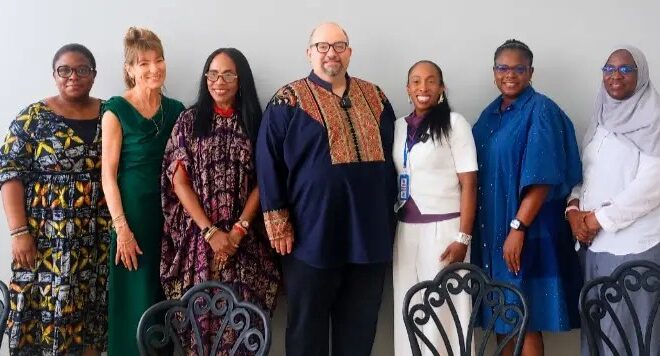
By NAN
LAGOS/Nigeria: Stakeholders in Nigeria’s education sector have intensified calls for stronger support systems, improved collaboration and policy reforms to advance inclusive education and ensure that no child is left behind, ahead of the 2026 World Inclusion Conference.
The call formed the focus of discussions at a media briefing held on Monday in Lagos, where organisers outlined plans for the two-day conference scheduled to commence on May 29.
Speaking at the briefing, Chief Executive Officer of Goldenlinks Educational Consultant and former National Executive Director of the National Inclusion Conference, Angelina Ikeako, said the event would focus on promoting excellence in inclusive education across the country.
The conference, themed “Embedding Inclusive Excellence: Supporting Neurodiverse Learning in Every Class,” is expected to bring together educators, policymakers, school proprietors, parents, caregivers and other stakeholders in the education sector.
According to Ikeako, the conference goes beyond academic discourse and is aimed at driving transformation and advocacy for equitable learning opportunities.
“The National Inclusion Conference is more than a conference for us.
“It is about transformation, advocacy and ensuring that every child receives the support, interventions and accommodation needed to succeed,” she said.
She lamented that many neurodiverse learners remain excluded from quality education despite being enrolled in schools due to inadequate support systems and learning accommodations.
“It is easy to assume that because children are in school they are being educated, but without the right accommodation and interventions, many neurodiverse learners are simply in school for compliance rather than meaningful learning,” Ikeako stated.
She stressed that inclusive education should not be limited to children with autism and dyslexia but should also accommodate learners facing mental health, social and economic challenges, as well as gifted children requiring specialised support.
Ikeako noted that inclusion affects nearly 20 per cent of the global population and remains critical for ensuring equal educational opportunities and economic participation.
Also speaking, President of the International Forum of Inclusion Practitioners, Mr. Daniel Sobel, said the conference would showcase innovative inclusion practices from Nigeria and other parts of the world.
“We are trying to say publicly that inclusion is a top priority in Nigeria.
“This conference celebrates and supports the vision that no child should be left behind,” Sobel said.
He called for a coordinated national approach to strengthen knowledge, capacity and implementation of inclusive education practices.
Sobel, who described himself as a former neurodiverse learner, said many children continue to experience stigma and misunderstanding due to learning differences.
“We need systemic change. This conference is calling on policymakers, educators, school leaders and parents to ensure that no Nigerian child is disadvantaged,” he said.
Executive Director of the Learning Place Centre, Mrs. Bolanle Adewale, described inclusive education as a fundamental human right supported by international conventions.
According to her, inclusive learning environments benefit both neurodiverse and neurotypical learners and create more balanced educational outcomes.
She advocated evidence-based teaching approaches, including Universal Design for Learning and differentiated instruction.
“Every child can learn. What matters is the environment, structures and support systems provided to help each child thrive,” she said.
Adewale further stressed the need to strengthen teachers’ capacity to create classrooms where all learners feel valued and supported.
“The conference will provide practical strategies and help educators understand how to implement inclusion effectively in their schools,” she added.
Project Lead of the National Inclusion Conference, Oluwatosin Oladipo, also urged government to increase investment in policies, funding and teacher training to strengthen inclusive education.
She noted that supporting neurodivergent learners requires specialised skills, continuous professional development and access to appropriate educational tools.
“Government needs to believe in inclusion and support it through policies, funding and capacity building.
“Teachers and caregivers must be equipped with the skills needed to support neurodivergent children effectively,” Oladipo said.
She added that sustained investment in educator training and caregiver support would help build an education system capable of meeting the diverse needs of all learners.
The conference is expected to serve as a platform for advancing discussions on inclusive excellence and practical strategies for supporting neurodiverse learning in classrooms across Nigeria.