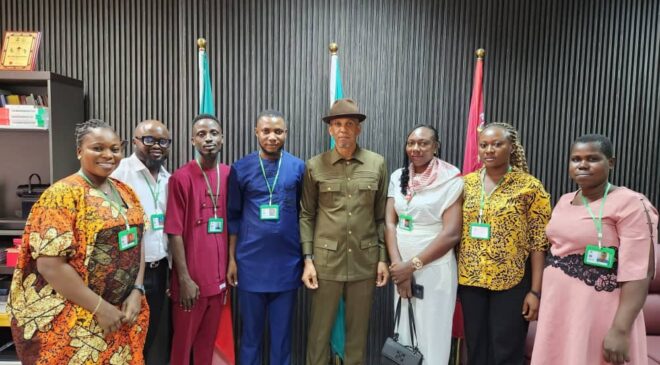
ABUJA/Nigeria: Senator Ede Dafinone has received members of the second batch of the National Health Fellows Programme in a preparatory meeting preceding their official inauguration and deployment across Delta Central communities. The courtesy visit on February 16 provided a platform for the fellows to present their profiles and share plans for outreach initiatives designed to improve early detection and preventive healthcare access.
The National Health Fellows Programme is structured to strengthen primary healthcare delivery by equipping young professionals with skills in preventive medicine, community engagement, leadership, and data-driven health interventions, with the goal of bringing essential services closer to residents and identifying illnesses before they become life-threatening.
During the interaction, Dafinone reflected on the impact of the programme’s first cohort, whom he supported throughout their engagement, noting that their activities focused largely on awareness campaigns for diabetes and hypertension—two conditions often described as silent threats because they frequently go undetected until complications arise.
According to him, members of the earlier batch conducted free medical screenings, organised community sensitisation programmes, and promoted early diagnosis across several communities, while also facilitating access to essential medications for vulnerable residents. Local accounts indicated that many beneficiaries learned their blood pressure or blood sugar status for the first time through those outreach efforts.
Health observers note that in many Delta Central communities where routine check-ups are uncommon, such interventions can significantly influence outcomes. Early detection of hypertension and diabetes helps reduce risks associated with stroke, kidney failure, and cardiovascular disease, while preventive education enables residents to adopt healthier lifestyles and monitoring habits.
The senator urged the new fellows to build on the foundation laid by their predecessors, stressing that their selection followed a rigorous and competitive process that reflects both their competence and leadership potential. He encouraged them to approach their responsibilities with discipline, professionalism, and a strong commitment to community service.
Public health experts continue to warn about the growing burden of non-communicable diseases in Nigeria, emphasizing that community-based programmes have become an essential complement to overstretched health facilities. By combining grassroots outreach with structured data collection, the fellows are expected to identify service gaps and tailor interventions to local needs.
With their inauguration scheduled for Tuesday, attention now shifts to implementation, as residents anticipate improved access to health information, screenings, and early support services. Stakeholders believe that if sustained, the initiative could strengthen preventive healthcare culture in Delta Central and reduce avoidable complications in the years ahead.