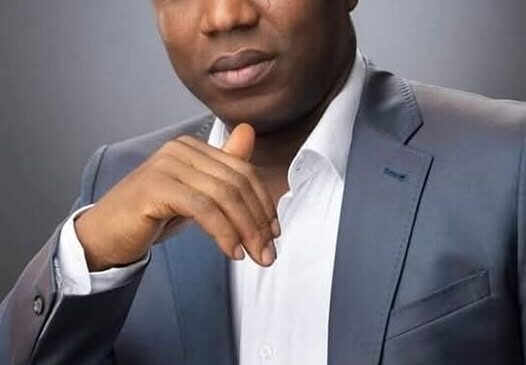
In a nation where silence is often rewarded and truth can come at a steep personal cost, some voices refuse to be muted. Today, as Omoyele Sowore turns 55, it is impossible to reflect on his life without acknowledging a stubborn, almost defiant commitment to speaking truth to power, not occasionally, not when convenient, but consistently, relentlessly, and without apology.
Sowore’s story is not merely the biography of a man; it is a chronicle of resistance. It is the story of a Nigerian who refused to accept that injustice is inevitable, that corruption is untouchable, or that citizens must endure in silence. His life’s work reminds us that courage is not an abstract virtue. It is a daily decision.
From his earliest days as a student activist, Sowore demonstrated a quality that would later define his public life: he would not retreat in the face of intimidation. At the University of Lagos, where many students simply navigated academic life quietly, he chose confrontation over comfort. He confronted injustice, questioned authority, and challenged systems that seemed immovable. That early activism was not youthful rebellion without direction; it was a preview of a lifetime of deliberate resistance.
What distinguished him even then was clarity of purpose. Sowore was not interested in popularity. He was interested in accountability. That clarity eventually found one of its most powerful expressions in Sahara Reporters, the platform he founded to expose wrongdoing, document abuse of power, and amplify voices often excluded from mainstream narratives. In a media environment where caution frequently dictates coverage, Sahara Reporters chose confrontation. It published what others hesitated to print. It asked questions many preferred to avoid. It reported stories that those in authority hoped would remain buried.
At this juncture, it is expedient to note that his resilient disposition to speaking truth to power was not without consequence. This is as his journey has been marked by arrests, detention, harassment, and sustained pressure from institutions uncomfortable with scrutiny. Nevertheless, what stands out is not the adversity itself; it is the refusal to bend. Repeatedly, he emerged from intimidation not quieter, but louder. Not discouraged, but more determined.
Without any iota of exaggeration, the pattern of Sowore’s struggles for the betterment of Nigeria and Nigerians is rare in many societies. This is as prolonged pressure wears down even the most committed reformers. Fatigue sets in. Compromise appears pragmatic. Silence becomes survival. Yet Sowore has consistently rejected the logic of surrender. His activism is rooted in a simple but powerful belief: that power must answer to the people, not the other way around.
Critics may disagree with his methods or positions, and in a democracy, disagreement is inevitable. However, even critics cannot deny the defining trait of his public life: he does not retreat. He does not recalibrate his convictions to suit the mood of authority. He does not negotiate his voice for comfort. In a political culture often shaped by caution, such consistency is disruptive.
In fact, Sowore’s impact extends beyond journalism or activism; he has helped redefine what civic courage looks like in contemporary Nigeria. He represents a model of citizenship that rejects passive observation. His life challenges Nigerians to reconsider the meaning of participation in public life. Is citizenship merely voting periodically, or does it require vigilance, questioning, and engagement?
Through decades of advocacy, he has argued, through both words and personal example, that democracy is not self-sustaining. It survives only when citizens insist on accountability. His voice has often served as a reminder that institutions are not sacred; justice is.
At 55, what makes Sowore’s journey especially compelling is endurance. Many activists burn intensely but briefly. Many journalists begin boldly but gradually adapt to the constraints of power. Sowore has remained consistent across decades of shifting political landscapes, changing administrations, and evolving national crises.
Consistency, in his case, is not stubbornness for its own sake. It is a disciplined refusal to normalize injustice. There is also something profoundly symbolic about his trajectory. He represents a generation that witnessed Nigeria’s democratic struggles firsthand and chose engagement rather than resignation. His work reflects an unwavering belief that transparency is not optional, that governance must be interrogated, and that silence in the face of wrongdoing is complicity.
For younger Nigerians, his example carries a particular weight. In an era where cynicism can feel justified, Sowore’s persistence offers a counter-narrative: that resistance, even when costly, is meaningful. That speaking out, even when uncomfortable, is necessary. That public pressure, sustained over time, can reshape national conversations.
It would be incomplete to celebrate Sowore without acknowledging the personal sacrifices embedded in his journey. Advocacy at his level is not an abstract intellectual exercise. It carries real consequences, legal battles, personal risk, and prolonged uncertainty. Yet he has continued, not because the path is easy, but because he believes retreat would betray the very principles he champions.
That is what makes this birthday more than a personal milestone. It is a reminder of what steadfast conviction looks like over time. It is a celebration not only of longevity but also of persistence under pressure.
Nigeria’s democratic journey remains unfinished. Its institutions continue to face challenges. Its citizens continue to demand accountability. In that ongoing story, figures like Sowore occupy a crucial space. They are not merely participants; they are catalysts. They disrupt complacency. They provoke conversation. They insist that public life must answer to public interest.
At 55, Sowore’s voice remains what it has always been: uncompromising, insistent, and unapologetically confrontational toward injustice. Whether one agrees with every position he holds is secondary. What cannot be dismissed is the consistency of his courage.
Birthdays often invite reflection. In Sowore’s case, reflection reveals a life defined not by comfort but by conviction. Not by convenience but by principle. Not by silence but by speech.
His journey reminds us that those who wait patiently for permission rarely deliver change. Those who refuse to be quiet when quiet is expected drive it.
As he marks another year, the significance of his life’s work is not found in titles or positions, but in impact, in the conversations sparked, the truths revealed, and the enduring challenge he poses to authority: that power must never be beyond scrutiny.
A society that values justice must value voices that refuse to retreat. Today, at 55, Omoyele Sowore stands as one of those voices. Moreover, in a time when courage can feel scarce, that alone is worth honoring.