By Mokobia Rita
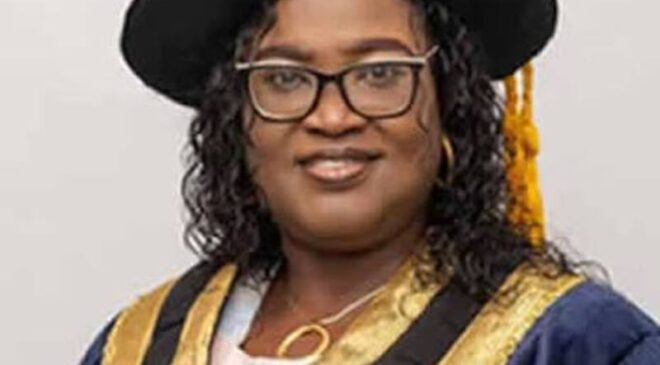
ASABA/Nigeria: Nigeria’s quest for sustainable development will depend largely on rebuilding leadership, strengthening community institutions and promoting merit over ethnic and political interests, the Pioneer Vice-Chancellor of the University of Delta (UNIDEL), Agbor, Prof. Stella Chinye Chiemeke, has said.
Prof. Chiemeke made the submission on Tuesday while delivering the keynote address at the 2026 Annual Public Service Lecture of the University of Ibadan Alumni Association (UIAA), Asaba Chapter, held at the Unity Hall, Government House, Asaba.
The event, organised in honour of former Delta State Head of Service, Barr. O. P. Origho, as he marked his 70th birthday, drew academics, public officials, traditional rulers, professionals, alumni and other guests.
Speaking on the theme, “Reimagining Nigeria from the Grassroots: Culture, Leadership and the Path to National Renewal,” the university administrator argued that meaningful national transformation cannot be driven from the nation’s capital alone but must begin within local communities through accountable leadership and stronger institutions.
She described culture as the foundation upon which governance and development are built, maintaining that policies and reforms are more likely to succeed when they reflect the realities and values of the people they are designed to serve.
Using an analogy from computer science, Prof. Chiemeke likened Nigeria to a computer system whose performance depends on its internal architecture, explaining that persistent challenges such as poverty, unemployment, weak institutions and poor governance are symptoms of systemic deficiencies rather than isolated failures.
She said Nigeria’s cultural diversity should be harnessed as a national strength, noting that indigenous governance traditions across different parts of the country demonstrate that participatory leadership has long been part of African society.
The keynote speaker, however, cautioned that ethnic loyalty, religious considerations and political patronage undermine development whenever they are allowed to take precedence over competence, accountability and national interest.
Recalling her tenure as Vice-Chancellor of the University of Delta, Agbor, she cited faculty elections conducted on the basis of merit rather than ethnic affiliation as evidence that institutional culture can change when fairness and competence are deliberately encouraged.
Prof. Chiemeke further observed that leadership responsibilities extend beyond presidents and governors to include local government officials, public administrators, traditional rulers and community leaders whose daily decisions directly affect citizens’ lives.
She identified weak accountability, excessive concentration of authority and limited public participation in governance as major obstacles to national development, urging greater citizen engagement in decision-making processes.
The former vice-chancellor also welcomed the Supreme Court judgment granting financial autonomy to local governments, describing it as an opportunity to strengthen grassroots governance and improve service delivery across the country.
She pointed to community-led development initiatives, including the Fadama Projects, community development associations, non-governmental organisations and local security networks, as examples of how grassroots participation can deliver sustainable results.
On the economy, Prof. Chiemeke advocated increased investment in agriculture, technology, vocational education and entrepreneurship, stressing that economic diversification remains essential for Nigeria’s long-term growth and resilience.
She added that national renewal would require evidence-based policymaking, stronger local leadership and greater inclusion of women, young people and other underrepresented groups in governance.
Earlier, Chairman of the University of Ibadan Alumni Association, Asaba Chapter, J. I. Kagho, Esq., said the annual lecture was dedicated to Barr. Origho in recognition of his contributions to the association and his years of service to the Delta State Public Service.Kagho said the lecture theme was timely, considering the economic and social challenges confronting the country, adding that the platform was intended to stimulate practical discussions on Nigeria’s future.
Chairman of the occasion and Delta State Head of Service, Dr. (Mrs.) Mininim Oseji, described Origho as a principled administrator whose leadership left a lasting impression on the state’s civil service.
She recalled that she was sworn in as a Permanent Secretary on the same day Origho assumed office as Delta State’s 10th Head of Service in October 2014, noting that working under him exposed her to valuable lessons in leadership, professionalism and stakeholder management.
In a goodwill message delivered by Dr. Oseji, Delta State Governor, Rt. Hon. Sheriff Oborevwori, congratulated Origho on his 70th birthday and commended his record of integrity, discipline and commitment to public service.
The governor described the annual lecture as an important platform for promoting dialogue on leadership and national development, noting that accountable and inclusive governance remains central to building stronger public institutions.
The ceremony also featured the induction of Prof. Stella Chinye Chiemeke as an Honorary Member of the University of Ibadan Alumni Association, Asaba Chapter, in recognition of her contributions to higher education, leadership and national development.
The annual public service lecture is one of the flagship programmes of the University of Ibadan Alumni Association, Asaba Chapter, providing a forum for discussions on governance, public policy and issues of national importance while recognising individuals who have made significant contributions to public service.