By Emmanuel Enebeli
From electricity and infrastructure to jobs, accountability, political participation and cultural identity, three grassroots consultations have brought some of the concerns shaping Ndokwa’s future into sharper focus.
Three town halls have ended. The conversation has only begun.
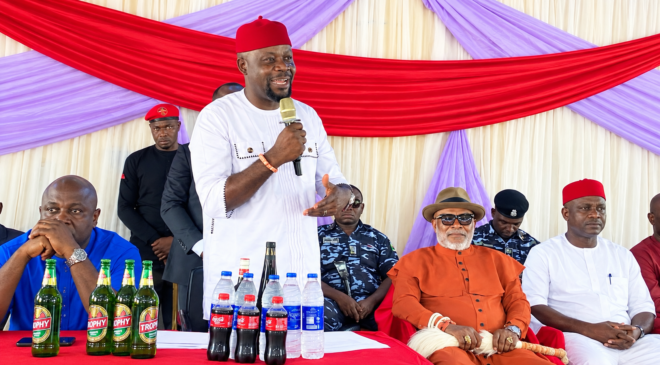
Across Ukwuani, Ndokwa West and Ndokwa East, the Ndokwa Neku Union (NNU) recently took its grassroots consultation to the people, creating a platform for residents to speak about the challenges confronting the area and the kind of future they want for Ndokwa.
The consultations, held in Obiaruku, Kwale and Ashaka, were organised around the theme, “The Masses’ Voice is Supreme.”
While the meetings did not produce a publicly released document setting out a numbered list of resolutions, the issues discussed, positions canvassed by NNU leaders and subsequent actions announced by the union provide useful insight into the priorities emerging from the exercise.
Here are 10 issues that stand out from the conversation.
- Reliable Electricity
Electricity emerged as one of the most pressing concerns.
For communities where small businesses, artisans and other economic activities depend heavily on electricity, unreliable power supply is more than an inconvenience. It affects production, income and the ability of young people to build sustainable livelihoods.
The NNU has consequently advocated an Independent Power Project (IPP) step-down as part of efforts to address the area’s electricity challenges.
The larger question is whether Ndokwa can move from dependence on an unreliable power supply to a more dependable energy system capable of supporting local economic growth.
- Better Roads and Infrastructure
For residents, development cannot be separated from infrastructure.
Roads connect communities to markets, schools, health facilities and administrative centres. Poor infrastructure increases the cost of movement and doing business while limiting opportunities for communities with agricultural and other economic potential.
The town-hall discussions therefore reinforce a familiar demand: infrastructure development must reach communities beyond the major urban centres.
- More Jobs and Economic Opportunities for Young People
Ndokwa’s young population represents both an opportunity and a challenge.
Without meaningful employment, entrepreneurship opportunities and avenues for acquiring marketable skills, many young people may continue to look outside the area for opportunities.
The demand is therefore not simply for jobs created by government. It is also for an environment in which agriculture, local enterprise, small businesses and emerging industries can thrive.
- Greater Political Participation
The consultations also point to the need for Ndokwa people to become more actively involved in the political process.
Political participation should not begin and end on election day.
The NNU has encouraged residents to take greater interest in political affairs, understand the choices before them and participate more deliberately in determining who represents their interests.
That approach places responsibility not only on political leaders but also on voters.
- Accountability from Elected Representatives
Another important part of the conversation is accountability.
The people who receive electoral mandates are expected to explain what they are doing with those mandates and how their programmes address the needs of their constituents.
This is particularly important in an area where residents regularly raise concerns about infrastructure, electricity, economic opportunities and other development challenges.
The decision by the NNU to engage prospective candidates ahead of the 2027 elections could provide an opportunity for voters to ask direct questions about programmes, priorities and measurable commitments.
- Unity Across the Three Local Government Areas
Ndokwa is divided administratively into three local government areas — Ndokwa East, Ndokwa West and Ukwuani — but the consultations have also underscored the importance of seeing the area as one community with shared interests.
For years, questions around political representation, development and identity have sometimes generated internal divisions.
A stronger collective voice, however, could improve Ndokwa’s ability to articulate common interests and pursue them consistently.
Unity, in this context, does not mean eliminating differences. It means finding enough common ground to pursue issues that affect the wider Ndokwa community.
- Protecting Ndokwa’s Cultural Identity
Development is not only about roads, electricity and economic opportunities.
There is also concern about preserving the identity, traditions and cultural heritage that distinguish Ndokwa communities.
The NNU leadership has spoken about strengthening cultural identity through initiatives such as an Ndokwa anthem, cultural activities and an Ndokwa Day.
For a younger generation increasingly shaped by social media, migration and global culture, preserving local identity will require more than speeches. It will require deliberate efforts to make Ndokwa culture visible, relevant and attractive to young people.
- Agriculture, Local Enterprise and Value Addition
Ndokwa’s economic future cannot be discussed without considering agriculture and local enterprise.
The challenge is how to move beyond producing raw materials and create more value within the communities where those resources originate.
Processing, storage, transportation, marketing and small-scale industries can potentially create jobs while keeping more economic value within the area.
The conversation should therefore move towards a development model that encourages people not merely to produce but also to process, package and market.
- Turning Natural Resources Into Local Prosperity
Ndokwa is endowed with natural resources, but the presence of resources does not automatically translate into prosperity for the people.
The bigger development question is how the area’s resources can contribute more meaningfully to local economic development.
That requires stronger advocacy, responsible resource management, investment in infrastructure and deliberate efforts to ensure that communities benefit from economic activities taking place within their environment.
The challenge is to move from resource presence to resource-driven development.
- A Development Agenda That Survives Politics
Perhaps the biggest lesson from the consultations is the need for continuity.
Development should not stop whenever political administrations change or when election seasons end.
Ndokwa needs a clear set of long-term priorities that political candidates can be asked to address regardless of party affiliation.
Such an agenda would give voters a basis for comparing candidates and give elected representatives a clearer standard against which their performance can be assessed.
It would also make development advocacy less dependent on personalities and more focused on measurable community interests.
Beyond the Town Halls
The real test of the NNU’s consultation exercise will not be how well the meetings were attended or how many issues were discussed.
It will be what happens next.
The union has already indicated that it intends to invite candidates for the 2027 elections to engage directly with Ndokwa voters and present their programmes and development plans.
That could become one of the most significant outcomes of the consultation process — if it develops into a sustained platform for questioning candidates, comparing promises and demanding accountability after elections.
For the people of Ndokwa, the issues are hardly new.
Electricity has been a longstanding concern. So are roads, employment, political representation, economic development and the preservation of cultural identity.
What the three town halls have done is bring these concerns into a more organised conversation.
The next step is turning conversation into a shared development agenda.
Because ultimately, the question is not only what Ndokwa wants.
It is whether Ndokwa can organise itself strongly enough to pursue what it wants — consistently, collectively and beyond the politics of any single election cycle.