By Hon Friday Okoh
As Nigeria approaches the 2027 general elections, the political space is experiencing economic reconfiguration, institutional reforms and shifting partisan alliances. The idea of “Continuity with Credibility” is the core of the argument for the retention of the ruling All Progressives Congress (APC) as it gets set to defend its mandate. “Political stability with credibility of institutions is an important currency for a developing country undergoing complex macroeconomic transitions. The APC is not just a political party but a stabilizing framework that can lead Nigeria through structural changes that short term administrations would otherwise abandon.
The main reason given for keeping the APC administration in place beyond 2027 is to ensure policy continuity. Policy somersaults have historically hindered Nigeria’s development, with administrations abandoning the uncompleted projects and strategic visions of their predecessors. This cycle results in wasted fiscal resources and systemic instability.
The current leadership of the APC has initiated long-term structural reforms to change the trajectory of the Nigerian economy. Of these, the liberalization of the foreign exchange market and the elimination of the expensive fuel subsidy regime are the most prominent. These are fundamental changes, which will have short-term inflationary effects, but intended to cut down fiscal deficits and systemic corruption.
If the APC loses power in 2027, policies will be reversed. There are chances that an opposition government will be tempted to artificially suppress forex rates or reintroduce subsidies for short-term political gain, undoing years of fiscal adjustments. Adhering to the APC rule provides opportunity for the structural reforms already under way to run, mature and stabilize so that they can ultimately deliver real macroeconomic benefits.
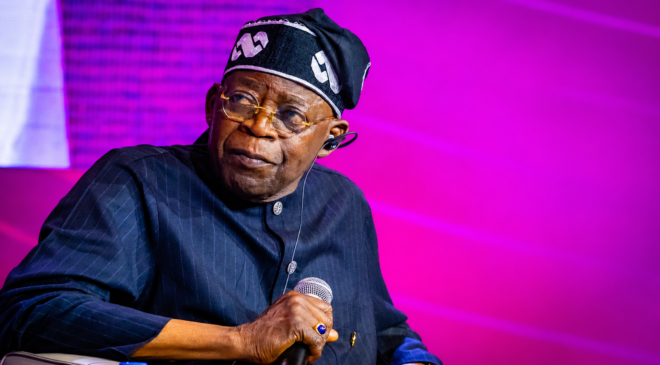
Governance credibility is built through visible, verifiable performance. The APC has based its governance narrative on massive infrastructure revival across the six geopolitical zones. The Tinubu administration has been faithful in capital expenditure, with infrastructure drive which it believes is the backbone of economic diversification. These are visible in the extension of standard gage rail lines linking major economic centers, such as the Lagos-Ibrahim Badamasi Babangida (IBB) Way corridors, for cheaper cargo and passenger transit, Maritime and Ports development and optimization at the Lekki and Badagry coastal maritime hubs of West Africa.
Infrastructure projects take a long time to get finished which are no doubt often longer than a single political term. By maintaining administrative continuity, Nigeria avoids the risk of these multi-billion dollar projects being stalled, thus allowing public investments to be transformed into productive assets that create gross domestic product (GDP) growth.
In addition to physical infrastructure, the administration has led the way on critical regulatory and institutional reforms to sanitize the country’s business environment. It depends greatly on these frameworks to build credibility with international markets, foreign direct investors and multilateral financial institutions.
The implementation of the Petroleum Industry Act (PIA) is a good example. In oil and gas, the PIA has separated regulatory oversight from commercial operations to create a level of transparency that has renewed investor interest in onshore and deepwater assets. The non-oil revenue base has also been widened through reforms in the solid minerals sector and aggressive digitization of tax administration by the Federal Inland Revenue Service (FIRS).
A predictable regulatory environment is important for long-term corporate planning. The APC’s continued stay ensures stability in the rules of engagement for both local and foreign businesses and avoids the regulatory friction that is often associated with chaotic transfers of power to fragmented opposition coalitions.
The security architecture in Nigeria is in a complex process of transition. The country faces a plethora of threats from banditry and kidnapping in the Northwest, to continuing insurgencies in the Northeast and secessionist movements in the Southeast. The APC-led government has shifted from a purely reactionary defensive posture to a proactive and technology driven security doctrine. This approach consists of the following; first, Modernization of Assets through the acquisition of advanced aerial surveillance platforms, unmanned aerial vehicles (UAVs) and mechanized hardware for the Armed Forces. Secondly, Inter-Agency Collaboration: Enhanced intelligence sharing among the Department of State Services (DSS), the military, and regular law enforcement to dismantle criminal networks. And thirdly, the Non-Kinetic Interventions through designing localized economic development programs to tackle the root causes of radicalization and crime such as youth unemployment and rural neglect. Above all the APC led Senate and House of Representatives passing of the Bill for State Police Law in June 2026 showcases the political will to tackle insecurity from the roots.
Without beating around the question of 2027, from a purely pragmatic political standpoint, based on the gains associated with continuity supported by credibility, the APC remains Nigeria’s most powerful electoral machine.