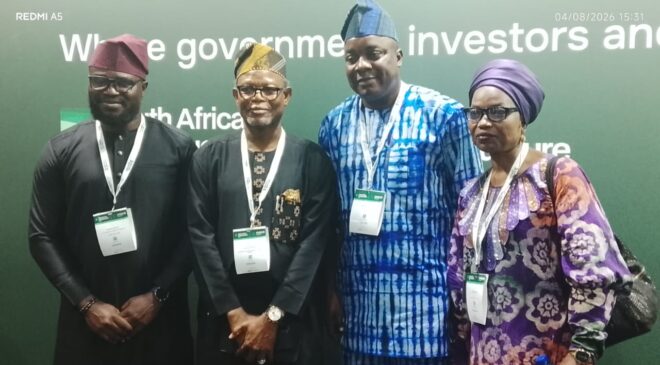
LAGOS/Nigeria: The National President of the Association of Waste Managers of Nigeria (AWAMN), Dr. Olugbenga Adebola, has called for urgent investment in sustainable infrastructure, warning that Nigeria’s waste management challenges cannot be resolved without a fully integrated and well-equipped system.
Speaking at the Infra360 session during the West Africa Infrastructure Expo held at the Landmark Event Centre in Lagos on Wednesday, Adebola said efficient waste management depends on seamless coordination across the entire value chain, from collection to final disposal.
Delivering a presentation titled “Sustainable Infrastructural Development: The Impacts on Integrated Waste Management Systems,” he emphasised that waste management must function as a unified system where collection, transportation, recycling, and treatment processes are properly aligned to achieve optimal results.
He noted that inefficiencies at disposal sites often disrupt operations, causing delays in waste collection and reducing overall service effectiveness.
According to him, with the right infrastructure in place, waste collection systems would achieve faster turnaround times and significantly improved service delivery.
Adebola urged stakeholders to rethink waste as an economic resource rather than mere refuse, describing it as “a material in the wrong place or in the wrong hands.”
He explained that when properly managed, waste holds significant economic value and can contribute to job creation and industrial growth.
He emphasised the importance of household waste bins as critical infrastructure for promoting waste segregation at the source, noting that sorting waste at the point of generation enhances recycling efficiency and reduces contamination.
He also highlighted the role of recycling facilities, composting plants, and waste-to-energy systems in reducing landfill dependence and promoting a circular economy.
Adebola added that improved waste traceability would enhance accountability, boost recycling potential, and reduce environmental pollution.
On public health implications, he warned that poor waste management practices could lead to blocked drainage systems, stagnant water, and the spread of vector-borne diseases.
He further cautioned against open burning of waste, describing it as a dangerous practice that releases toxic substances harmful to human health.
The AWAMN president called for increased investment in critical infrastructure, including waste collection vehicles, transfer loading stations, and sanitary landfill facilities.
He also stressed the need for strong regulatory frameworks, policy consistency, and strict enforcement to ensure sustainable waste management practices across the country.
Adebola underscored the importance of political will in driving reforms, noting that long-term environmental sustainability can only be achieved through deliberate and sustained government action.
He concluded that sustainable infrastructure remains the backbone of a resilient, efficient, and environmentally responsible waste management system in Nigeria.