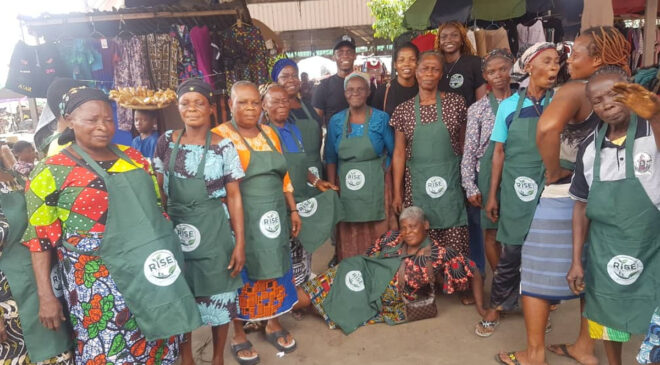
AKPA EDOK/Nigeria: A community-based waste management initiative has produced approximately one tonne of compost in Akwa Ibom State, demonstrating how organic refuse can be converted into a resource for farming while creating opportunities for informal waste workers.
The achievement was recorded under the RISE Project, implemented by the Association of Scrap and Waste Pickers of Lagos (ASWOL), with support from UMI Microgrants.
The initiative combines compost production with environmental education and community engagement, with a focus on encouraging responsible waste disposal and improving the participation of informal waste workers in sustainable waste management.
According to Project Coordinator Priscillia Oku, the programme brought together farmers, market women, young people, schoolchildren, community leaders and waste workers for practical training and awareness activities.
A major community training session took place on October 15 at Ikot Akpa Edok, Ndiya, in Ikono Local Government Area of Akwa Ibom.
The project team reported that the compost was successfully harvested despite difficulties in securing an affordable and suitable site for the activity. Persistent rainfall also disrupted the implementation schedule.
Approximately one tonne of compost was eventually produced and shared among farmers, informal waste workers, market women and other members of the community.
Some of the material was applied on a farm to demonstrate its potential agricultural use.
Beyond compost production, the initiative organised school-based sessions to introduce students to environmental responsibility and better waste management practices. Engagements with market participants also focused on the proper handling of waste and the value of recovering organic materials for productive purposes.
However, the project encountered administrative and logistical obstacles, including difficulties obtaining approval for visits to some schools and securing access to markets and relevant government officials.
The project team said some schools and farmers had expressed interest in receiving more tailored training following the initial engagements.
A key objective of the programme is to improve recognition of informal waste workers, whose activities contribute to waste recovery and environmental protection but who are often excluded from formal waste management arrangements.
By linking waste workers with farmers, the project seeks to demonstrate a practical pathway through which organic waste can be redirected from disposal sites and converted into useful agricultural material.
The next phase is expected to extend training to additional community members, build on the composting exercise and sustain the involvement of informal waste workers.
The reported output represents an initial result for the initiative. Its longer-term impact will depend on whether the community can sustain compost production, expand participation and establish reliable arrangements for using the finished material in agriculture.
