ABAKALIKI/Nigeria: Environmental rights advocate and Executive Director of the Environmental Defenders Network (EDEN), Barrister Chima Williams, has called on Nigerian universities to play a more active role in tackling climate change by transforming academic research into practical solutions that influence public policy and improve the lives of communities.
Williams, winner of the 2022 Goldman Environmental Prize for Africa, made the call while delivering the keynote address at the 2026 International Multidisciplinary Hybrid Conference on Climate Change and Environmental Sustainability hosted by Alex Ekwueme Federal University, Ndufu-Alike (AE-FUNAI), Ebonyi State.
Speaking on the theme, “Climate Change and Environmental Sustainability: Global Perspectives and Local Issues,” he said higher institutions should move beyond producing academic publications and become centres for climate innovation, environmental governance, civic engagement and policy reform.
According to him, climate change has evolved from a scientific projection into a daily reality, with communities increasingly experiencing floods, droughts, rising temperatures, biodiversity loss, erosion, desertification and threats to food security.
Williams said environmental sustainability should not be viewed solely as an ecological issue but as one that also affects public health, economic development, human rights and social justice.
While acknowledging international efforts through the United Nations Framework Convention on Climate Change (UNFCCC), the Kyoto Protocol and the Paris Agreement, he argued that developing countries continue to bear the greatest consequences of climate change despite contributing the least to global greenhouse gas emissions.
He cited Nigeria as an example, pointing to persistent oil pollution and gas flaring in the Niger Delta, desert encroachment in the northern region, coastal erosion, urban flooding and poor waste management as evidence of the country’s environmental challenges.
Williams, however, said the climate crisis also presents opportunities to promote renewable energy, restore degraded ecosystems, encourage sustainable economic models and strengthen resilience against future environmental shocks.
He urged academics, researchers and students to build partnerships that extend beyond conference halls and ensure that research findings inform legislation, public policy and community-based environmental initiatives.
“Research should not remain confined to journals and conference proceedings. It must reach communities, parliaments and policymaking arenas,” he said.
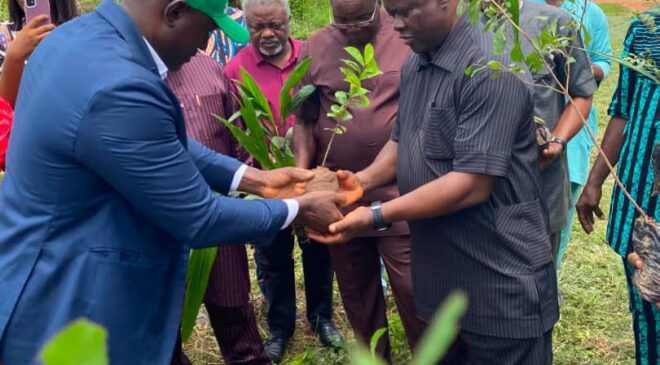
As part of activities marking the conference, Williams donated fruit and ornamental tree seedlings to the university on behalf of the Environmental Defenders Network and Chima Williams & Associates in support of the institution’s environmental sustainability initiatives.
He also proposed the establishment of a chapter of the Students Environmental Assembly of Nigeria (SEAN) at AE-FUNAI and pledged to institute two annual environmental awards to encourage cleanliness and environmental stewardship among students. The proposed Vice-Chancellor’s Award for the Cleanest Faculty will attract a cash prize of ₦200,000, while the Dean of Faculty of Arts Award for the Cleanest Hostel will carry a prize of ₦100,000.
The conference attracted academics, environmental professionals, policymakers, civil society representatives and students to examine climate change from both global and local perspectives and explore practical responses to environmental sustainability challenges.