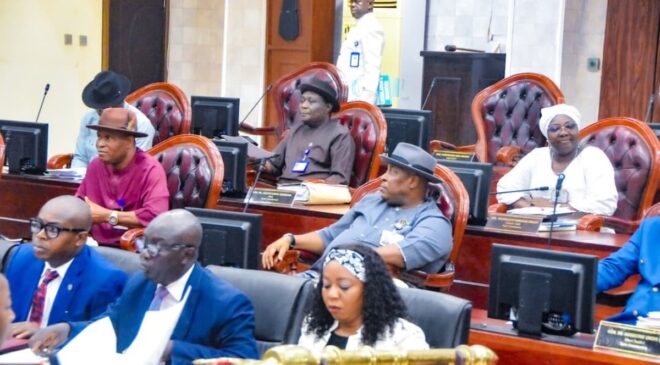
ASABA/Nigeria: The Delta State House of Assembly has passed an executive bill seeking to establish a statutory framework for the payment of a 13th-month salary to public servants in the state.
The legislation was passed on Tuesday, September 15, 2026, following its third reading during plenary presided over by the Speaker, Rt. Hon. Emomotimi Dennis Guwor.
The development followed the suspension of relevant standing orders to facilitate the immediate consideration of the bill. The motion, moved by the Leader of the House, Hon. Emeka Nwaobi, was adopted by the lawmakers.
Speaking after the passage, Guwor said the Assembly’s action represented a significant step towards strengthening the welfare of public servants and providing legislative backing for the additional salary payment.
He said the initiative reflected the responsibility of government to promote the security and welfare of the people, while describing the legislation as consistent with Governor Sheriff Oborevwori’s focus on workers’ wellbeing.
According to the Speaker, the institutionalisation of the payment is expected to provide public servants with greater certainty regarding the annual benefit, while supporting improved morale, productivity and service delivery.
Guwor commended Governor Oborevwori for initiating the policy and acknowledged the contributions of public servants to the development of Delta State.
Earlier, the Chairman of the House Committee on Establishment, Ethics and Privileges, Hon. Edafe Emakpor, presented the committee’s report on the bill.
Emakpor said the proposed legislation was designed to provide a legal framework for the payment and strengthen the welfare arrangements available to workers in the state public service.
He added that institutionalising the benefit would offer public servants greater assurance and support efforts to improve their overall wellbeing and productivity.
The passage of the bill marks a further step in the state government’s effort to move the 13th-month salary arrangement from an executive policy towards a statutory framework.
However, the Assembly’s passage does not by itself mean that the bill has become law. The remaining legislative requirements, including the necessary assent, must be completed before the proposed statutory provisions take effect.
The development is expected to generate further attention among public servants as the state moves towards formalising the annual additional salary payment and its implementation arrangements.