By Mokobia Rita
WARRI/Nigeria: Public school infrastructure in Delta State is set for another round of government intervention following the approval of ₦10 billion for classroom construction and furnishing in 92 primary and secondary schools across the state.
The decision was reached on Monday during the State Executive Council meeting presided over by Governor Sheriff Oborevwori at the Government House Annex in Warri, with the administration also approving more than 4,500 units of furniture to address shortages in public schools.
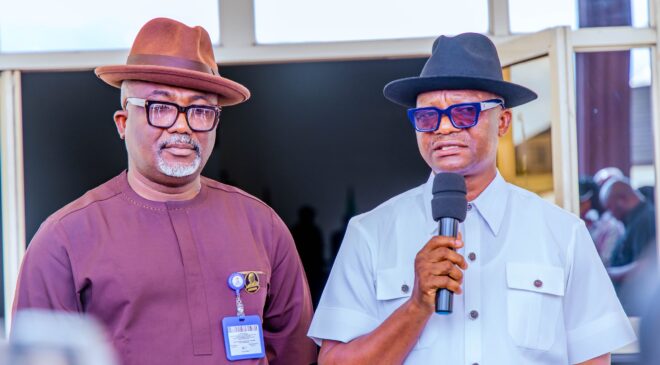
Commissioner for Works (Rural Roads) and Public Information, Mr Charles Aniagwu, announced the approvals while briefing journalists after the meeting. He was accompanied by the Chief Press Secretary to the Governor, Sir Festus Ahon.
Aniagwu explained that the classroom projects would be implemented under the first phase of the government’s school infrastructure programme, which is intended to address deficiencies in existing facilities and improve conditions for teaching and learning.
He said the intervention was informed by the need to provide adequate physical infrastructure in public schools, noting that the quality of the learning environment remained an important factor in the delivery of education.
The commissioner disclosed that the Executive Council had approved contracts covering selected schools, adding that the administration intended to extend infrastructure improvements to public educational institutions across different communities in the state.
Beyond the construction programme, the provision of over 4,500 units of school furniture is expected to ease the shortage of desks and chairs confronting some public schools.
Aniagwu said the furniture would improve classroom conditions for both teachers and learners, while making the affected schools more suitable for effective teaching and learning.
He also disclosed that the government was engaging community representatives and other stakeholders across the local government areas to establish the specific infrastructure requirements of schools and coordinate the distribution of interventions.
Relevant ministries and agencies, he said, had been instructed to maintain regular communication with stakeholders to support project implementation and monitoring.
The commissioner linked the approvals to Governor Oborevwori’s MORE Agenda, particularly its focus on expanding opportunities and ensuring that development projects reach communities throughout Delta State.
He also explained the decision to hold the Executive Council meeting in Warri instead of Asaba, describing it as part of the administration’s approach to making governance more accessible to residents across the state.
According to him, the Government House Annex in Warri had been upgraded to accommodate important government functions, including Executive Council meetings.
Aniagwu said taking major government activities outside the state capital would help residents in other parts of Delta feel included in the administration’s decision-making process and reinforce the message that governance was not restricted to Asaba.
The ₦10 billion education approval represents a significant commitment to public-school infrastructure. However, the eventual impact will depend on the quality of the construction work, timely delivery of the projects and equitable distribution of the approved furniture.
The government has not yet provided a school-by-school breakdown identifying the 92 beneficiary institutions and their locations across the state’s 25 local government areas.
Publishing the list would enable parents, teachers, community leaders and other education stakeholders to identify the benefiting schools and monitor the execution of the projects.
