
By the Editorial Desk
The week ending Sunday, September 27, 2026, presented Nigerians with a mixture of economic pressure, government intervention, institutional decisions and renewed demands for better public services.
At the national level, the economy remained at the centre of attention. Petrol prices came under renewed pressure even as inflation continued to moderate, while the Central Bank of Nigeria made a significant reduction in its benchmark interest rate.
Nigeria’s public debt also remained part of the economic conversation.
In Delta State, the long-running crisis on the Benin–Asaba Road finally moved into a new phase as the Federal Government commenced emergency intervention. The state’s education sector recorded developments involving university staff welfare and the expansion of postgraduate programmes, while allied health workers suspended their industrial action after reaching an interim understanding with government.
In riverine Burutu, however, residents took to the streets over what they described as unacceptable conditions in healthcare and other basic amenities.
Beyond the individual stories, one theme runs through many of the week’s developments:
Nigerians are increasingly looking beyond government announcements to what those decisions actually produce in their daily lives.
ECONOMY: Fuel Prices Put Fresh Pressure On Households
The cost of petrol returned forcefully to the national conversation this week, providing another reminder of how exposed Nigerian households and businesses remain to movements in the international oil market.
Reuters reported that petrol prices had risen to around ₦1,400 per litre in Lagos and Abuja, with prices reaching about ₦1,500 per litre in parts of northern Nigeria. Diesel prices were reported to have crossed ₦2,000 per litre. The latest increase was linked partly to higher international crude prices associated with tensions in the Middle East.
The immediate explanation is the increase in international crude prices.
But the Nigerian situation has a particularly interesting dimension.
Nigeria is an oil-producing country and now has the Dangote refinery operating at large scale. Yet higher international crude prices are still being transmitted into the domestic fuel market.
That reality demonstrates that the operation of a major domestic refinery does not, by itself, completely insulate the Nigerian economy from global oil-price movements.
For households, the issue is much more straightforward.
When petrol becomes more expensive, transportation operators face higher operating costs. Businesses that rely on generators or petrol-powered equipment also feel the pressure. Those costs eventually work their way into the prices of goods and services.
The renewed pressure has therefore brought the cost-of-living question back into sharp focus, even as other economic indicators show signs of improvement.
MONETARY POLICY: CBN Cuts MPR From 26.5% To 23%
Against the background of fuel-price concerns, the Central Bank of Nigeria made one of the week’s biggest economic announcements.
The Monetary Policy Committee reduced the Monetary Policy Rate by 350 basis points, from 26.5 per cent to 23 per cent, following its September 21–22 meeting. The CBN retained the Cash Reserve Requirement for deposit money banks at 45 per cent.
The decision is significant because the policy rate influences the broader cost of money in the economy.
For businesses, especially small and medium-sized enterprises, the important question is whether the reduction will eventually make credit more accessible and affordable.
For investors, the movement may influence decisions about fixed-income instruments and other investments.
For ordinary Nigerians, monetary policy can appear remote until it begins to affect the cost of borrowing, business expansion, employment and ultimately the prices of goods and services.
The rate cut also comes against the background of moderating inflation.
The National Bureau of Statistics reported that headline inflation fell marginally from 15.43 per cent in July to 15.39 per cent in August 2026. Month-on-month inflation also declined substantially, from 1.57 per cent in July to 0.71 per cent in August.
Those figures indicate that the pace of price increases has slowed.
But slower inflation should not be confused with falling prices.
That distinction remains important for households that are still dealing with the accumulated effect of previous price increases.
PUBLIC FINANCE: Nigeria’s Debt Remains Under Scrutiny
Nigeria’s latest public-debt figures also attracted attention during the week.
The Debt Management Office published the country’s debt position as at June 30, 2026.
The figures show that total public debt stood at ₦166.79 trillion, compared with ₦159.35 trillion recorded at the end of March 2026.
The increase inevitably raises questions about borrowing, debt servicing and fiscal sustainability.
However, the more useful question is not simply whether government is borrowing.
Governments borrow for infrastructure, social programmes and other development needs.
The critical issue is whether borrowing produces sufficient economic and social value to justify its cost.
A borrowed naira that finances productive infrastructure capable of generating economic activity is fundamentally different from borrowing that simply finances recurrent obligations without improving the country’s productive capacity.
This is why the quality of expenditure will remain as important as the size of the debt.
INFRASTRUCTURE: Benin–Asaba Road Finally Gets Emergency Rescue
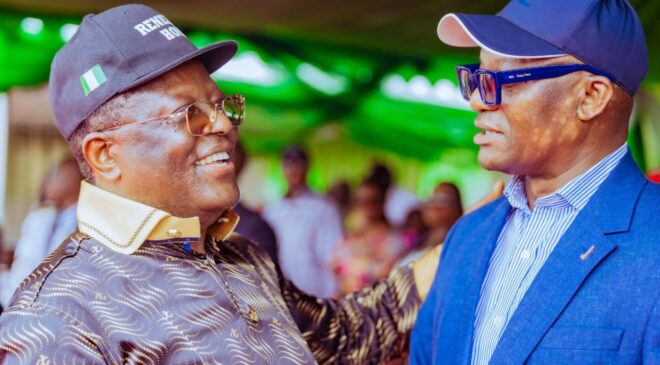
For Delta and Edo residents, this was arguably the most immediately relevant infrastructure story of the week.
The Federal Government commenced emergency repairs on the 125-kilometre Benin–Asaba Road after months of worsening deterioration, severe traffic congestion and growing hardship for motorists.
The Federal Ministry of Works directed major contractors to intervene across the three sections of the road to restore failed portions, while the entire route is to be redesigned for reconstruction with reinforced-concrete pavement.
The intervention followed growing public frustration over journeys that should ordinarily take a few hours but had become prolonged ordeals because of failed portions of the highway and resulting gridlock.
For Delta, the importance of the road cannot be overstated.
It is not merely a road between two cities.
It is an economic corridor connecting communities, markets, businesses and several parts of the country.
When it fails, the consequences are felt in transport fares, vehicle repairs, delivery schedules, food distribution and the movement of people.
The emergency repairs should therefore be welcomed as a necessary response to an urgent problem.
But the bigger test is what happens after the immediate crisis.
Nigerians have seen too many emergency repairs become temporary solutions to permanent infrastructure problems.
The promise of complete reconstruction therefore deserves close public attention.
DELTA EDUCATION: University Staff Get New Salary Structure

Education featured prominently in Delta State during the week.
Governor Sheriff Oborevwori announced approval of a new salary structure for academic staff of the state’s four universities, effective from August 2026, while the package for non-academic staff and workers in other state-owned tertiary institutions takes effect from September.
The announcement came during the inauguration of governing councils for three state universities.
The administration also highlighted the expansion of professional programmes and increased student enrolment in the state’s universities.
The development is significant because university staff welfare has a direct relationship with institutional stability.
But salary is only one component of university development.
As enrolment increases and professional programmes expand, institutions will also require adequate laboratories, libraries, accommodation, teaching personnel, research funding and effective governance.
The challenge for Delta is to ensure that growth in access to tertiary education is matched by corresponding growth in quality.
HIGHER EDUCATION: Novena University Opens New Postgraduate Frontier
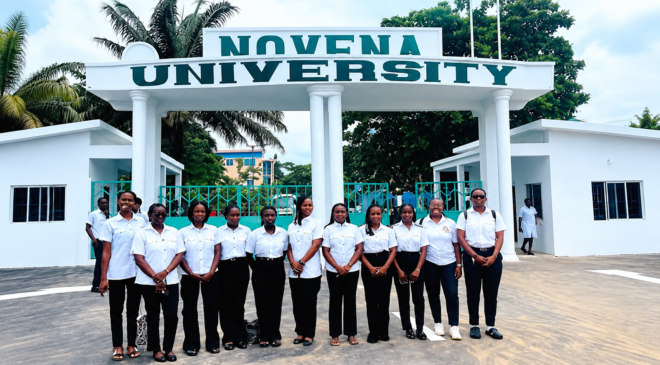
Another important education story emerged from Ogume.
The National Universities Commission has approved Novena University, Ogume, to commence Postgraduate Diploma, M.Sc. and Ph.D. programmes in Nursing and Medical Laboratory Science.
The programmes are to operate from the institution’s Amai Campus, with admission for the 2026/2027 academic session. The approval followed a resource-verification exercise covering faculty, laboratories, library resources, clinical postings and research facilities.
This is significant for Delta’s education landscape.
Postgraduate programmes in health-related disciplines have implications beyond the university itself.
They create additional opportunities for professionals seeking advanced qualifications and can contribute to the development of specialised manpower.
For a country facing persistent concerns about health-worker capacity and professional development, expanding quality postgraduate education in medical disciplines is potentially important.
HEALTH SECTOR: Delta Allied Health Workers Suspend Strike

The state’s health sector also experienced an important development.
Allied health professionals in Delta State suspended their industrial action after the state government committed to paying outstanding uniform allowances while discussions continue on other demands.
The workers resumed work on September 24 following the agreement.
Reports said the agreement included payment of ₦180,000 to workers on CONHESS 9 and above and ₦90,000 to those on CONHESS 8 and below, with payment expected by the first week of October.
The suspension provides temporary relief for patients who depend on public health facilities.
But it also demonstrates how quickly unresolved welfare issues can affect healthcare delivery.
A functioning health system depends not only on buildings and equipment but also on the people who operate it.
The coming weeks will therefore show whether the present agreement becomes the beginning of a lasting resolution or merely another temporary pause.
BURUTU: Protest Brings Basic Services Back Into The Spotlight
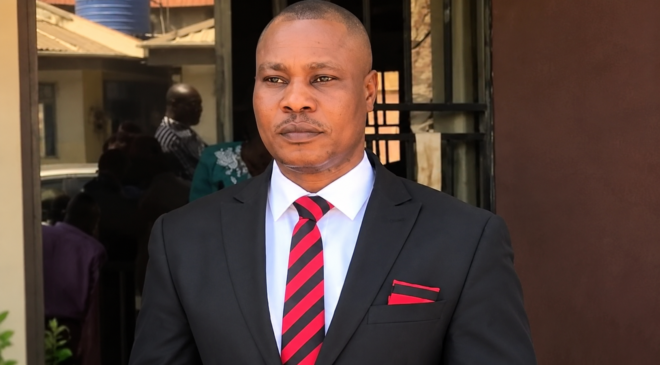
Perhaps one of the most striking Delta stories of the week came from Burutu Local Government Area.
Residents staged a protest over what they described as the poor state of basic amenities and healthcare services in the area. In an unusual escalation, protesters reportedly seized the official speedboat of the council chairman, Julius Takeme, to press their demands.
The protesters alleged that the area’s government hospital lacked adequate medical personnel, drugs and potable water. They also complained about electricity and other infrastructure at the local government headquarters.
These allegations should not be treated as independently established facts without further verification.
But the protest itself is a fact, and its message deserves attention.
Burutu is part of Delta’s extensive riverine environment, where geography can make the delivery of infrastructure and public services considerably more complicated.
That challenge, however, should not become a reason for permanent neglect.
If residents are raising concerns about access to healthcare, water, electricity and other essential services, the appropriate response should be fact-finding followed by concrete intervention where deficiencies are established.
The development also raises a broader question about local governance.
How effectively are local government resources being translated into services that citizens can actually see?
ENERGY: $300 Million Renewable Energy Fund Launched

Nigeria also took a significant step in the renewable-energy space with the commercial launch of the $300 million Nigeria Distributed Renewable Energy Fund.
The fund was launched by the Nigeria Sovereign Investment Authority, Africa50 and Sustainable Energy for All, with the initiative moving from fund structuring into active capital deployment.
The fund is designed to support distributed renewable-energy projects, including mini-grids and standalone solar systems, particularly for communities and businesses underserved by conventional electricity infrastructure.
This could become particularly significant for rural and riverine communities.
Nigeria’s electricity challenge is not simply about generating more power. It is also about getting electricity to communities and businesses that remain poorly served by the national grid.
For small businesses, reliable electricity can reduce dependence on petrol and diesel generators.
The fund therefore deserves attention not simply because of its dollar value but because of how effectively it eventually translates into projects on the ground.
SECURITY: Mass Abduction Protest Raises Fresh Questions

Security remained another major national concern during the week.
In Niger State, residents of communities around Dekara in Borgu district protested over the continued captivity of people abducted during a mass kidnapping in August.
Reuters reported that local residents said nearly 700 people, mostly women, children and elderly persons, remained in captivity more than a month after the attacks. The exact number of missing persons was itself one of the issues residents wanted authorities to establish through a proper headcount.
The protest was significant because it demonstrated that insecurity is not experienced merely as a security statistic.
For affected communities, kidnapping can shut markets, restrict movement, disrupt healthcare access and undermine farming and other economic activity.
The incident also raises questions about the effectiveness of rescue operations and the ability of security agencies to provide sustained protection for vulnerable communities.
Nigeria’s security conversation therefore continues to demand more than operations after attacks occur.
The Human Cost Of Custodial Failure
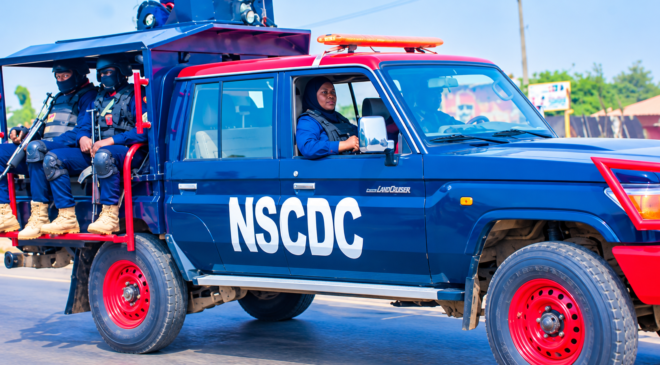
Another disturbing national story during the week concerned the deaths of detainees in Minna.
Reuters reported that 37 detainees, many of them teenage artisanal gold miners, died following an incident in an overcrowded detention cell.
Survivors alleged that guards sprayed an unidentified substance into the cell before several detainees developed breathing difficulties and collapsed. Authorities initially suggested a disease outbreak, while the circumstances remained under investigation. President Bola Tinubu ordered a probe and several senior NSCDC officials were suspended.
Because the investigation remains ongoing, the cause of the deaths should not be treated as conclusively established.
But the incident raises serious questions about detention conditions, overcrowding, emergency medical response and the protection of people in state custody.
Regardless of the eventual findings, the episode reinforces an important principle: people held in government custody remain entitled to humane treatment and access to appropriate medical care.
THE WEEK’S BIGGER PICTURE
When the week’s stories are viewed together, an interesting pattern emerges.
Nigeria is simultaneously attempting to reform, repair and rebuild. The CBN is adjusting monetary policy as inflation moderates. Government is dealing with the consequences of fuel-price volatility. The Federal Government is intervening in failing infrastructure. Delta is adjusting its tertiary-education system and negotiating with health workers.
A new renewable-energy fund is being deployed to address electricity-access problems. Communities such as Burutu are demanding better basic services. And security incidents continue to test the capacity of government institutions to protect citizens. These are not isolated stories.
They are different expressions of the same public expectation:
Government must increasingly translate decisions into results. An interest-rate cut matters when credit becomes more accessible. A fall in inflation matters when household purchasing power begins to improve. A road intervention matters when motorists can travel safely and predictably.
A salary increase matters when institutions become more stable and productive. A health-sector agreement matters when patients receive uninterrupted care. A renewable-energy fund matters when electricity reaches communities and businesses. And local government funding matters when residents can point to functioning services. This is the point at which policy meets everyday life.
OUR TAKE
The week has shown once again that Nigeria does not suffer from a shortage of policies, announcements or interventions.
The harder challenge is implementation. Citizens want to see whether today’s policy becomes tomorrow’s improvement. That is why the coming months will be important.
The success of economic reform will increasingly be measured in households. The success of infrastructure intervention will be measured on roads. The success of health policy will be measured in hospitals.
The success of education policy will be measured in classrooms and laboratories. And the success of governance at the local level will ultimately be measured by whether communities have access to the basic services for which public institutions exist. For Ndokwa Reporters, that remains one of the most important stories of the Nigerian experience: the distance between government decision and citizens’ lived reality.
The next week will tell us whether some of that distance is finally beginning to close.
— Editorial Desk, Ndokwa Reporters
