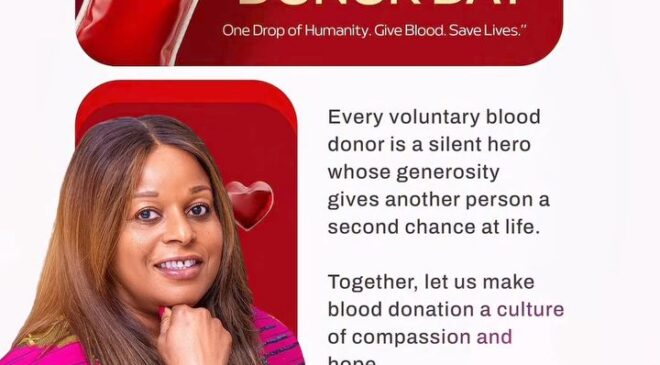
AWKA/Nigeria: Wife of the Anambra State Governor, Dr. Nonye Soludo, has called on eligible Nigerians to embrace regular blood donation, describing the practice as one of the most selfless and impactful contributions individuals can make towards saving lives and strengthening healthcare delivery.
Dr. Soludo made the appeal on Sunday in a message marking the 2026 World Blood Donor Day, where she paid tribute to voluntary blood donors for their invaluable role in supporting patients facing medical emergencies and critical health challenges.
Observed annually on June 14, World Blood Donor Day is dedicated to raising awareness about the importance of safe blood donation and recognizing individuals whose voluntary donations continue to save millions of lives worldwide.
The theme for this year’s celebration, “One Drop of Humanity: Give Blood, Save Lives,” highlights the life-changing impact of blood donation and the need for a sustainable supply of safe blood for healthcare institutions.
In her message, Dr. Soludo praised blood donors as unsung heroes whose acts of generosity provide hope and a second chance at life for countless patients.
She noted that every unit of blood donated has the potential to save lives, particularly those of accident victims, women experiencing complications during childbirth, patients undergoing surgery and individuals battling serious medical conditions.
“As we mark World Blood Donor Day, we celebrate selfless individuals who give a part of themselves to save the lives of others. Blood donation remains one of the simplest yet most powerful acts of compassion and humanity,” she said.
The governor’s wife stressed that the annual observance serves as a reminder of the urgent need for healthy individuals to donate blood regularly in order to maintain an adequate and reliable blood supply across healthcare facilities.
According to her, voluntary blood donors continue to make a remarkable difference in the lives of families and communities through their willingness to give without expecting anything in return.
She further stated that beyond saving lives, regular blood donation contributes significantly to strengthening the healthcare system by ensuring that blood is readily available whenever emergencies arise.
Dr. Soludo encouraged citizens who are medically fit to become regular donors, emphasizing that collective participation is essential to building a culture of compassion, solidarity and shared responsibility.
“Together, we can build a culture of compassion, solidarity and shared responsibility for one another’s well-being. A single donation can save multiple lives, and there can be no greater gift than the gift of life,” she added.
She urged individuals, corporate organisations, faith-based groups and community leaders to support awareness campaigns that promote voluntary blood donation, noting that a stronger culture of donation would help improve health outcomes and save more lives across the country.
Dr. Soludo reaffirmed the importance of collective action in ensuring that no patient is denied access to life-saving blood when it is needed most, while commending all donors whose generosity continues to make a lasting impact on society.