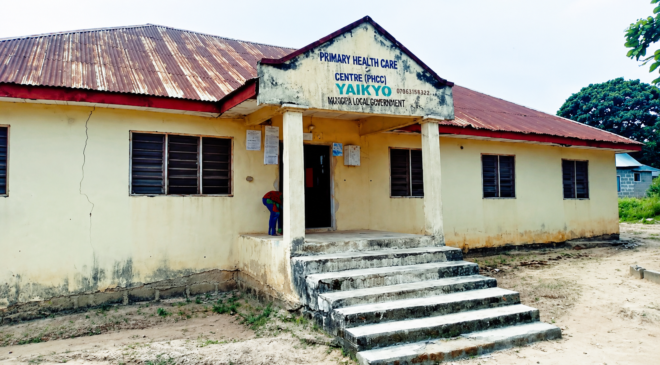
ABUJA/Nigeria: A new assessment of primary healthcare facilities in Nigeria has revealed widespread shortages of health workers and critical infrastructure, with only three per cent of the facilities surveyed meeting the national minimum staffing requirement.
The findings are contained in the 2026 Primary Health Centre Operational Capability Report produced by Orodata Science and Civic Tech.
The assessment covered 1,480 Primary Healthcare Centres (PHCs) across 277 Local Government Areas in Nigeria’s six geopolitical zones. It was conducted between October 2023 and June 2025 using the CheckMyPHC Digital Scorecard.
According to the report, 97 per cent of the assessed facilities failed to meet the national staffing benchmark, while 11 of the 16 states covered had no PHC that satisfied the minimum requirement.
The findings highlight significant challenges confronting frontline healthcare delivery, particularly in rural communities, which accounted for approximately 75 per cent of the facilities surveyed.
Beyond the shortage of health personnel, the assessment documented deficiencies in the physical condition of facilities and access to essential services.
It found that 40 per cent of the PHCs had broken ceilings or leaking roofs, while 38 per cent operated without electricity. Another 39 per cent relied on unsafe water sources, raising concerns about the conditions under which patients receive care and health workers perform their duties.
The report also identified gaps in maternal and newborn healthcare. Approximately 75 per cent of the assessed facilities lacked essential neonatal resuscitation equipment required to support emergency interventions for newborns experiencing complications during childbirth.
Accessibility remained another concern, with 66 per cent of the facilities reportedly lacking provisions for persons with disabilities and people with mobility challenges.
Orodata said the problems were often interconnected, with inadequate staffing occurring alongside poor infrastructure, unreliable power and water supplies, insufficient equipment and accessibility barriers.
The combination, it noted, could undermine the ability of PHCs to provide safe, dependable and equitable healthcare while placing additional pressure on available health workers.
The assessment also incorporated the experiences of community members. It reported that 51 per cent of those surveyed rated services at their local PHCs as poor.
However, the report noted that conditions varied across states and that some locations experienced challenges more severe than the overall assessment figures suggested.
Kano and Sokoto were identified among the states facing particularly serious challenges involving unsafe water, inadequate electricity and shortages of essential newborn equipment. Gombe, meanwhile, recorded an 80 per cent rate of PHCs without accessibility provisions, according to the assessment.
Orodata said the findings demonstrated the need for coordinated interventions based on verified facility-level evidence rather than isolated renovation projects or assumptions about healthcare needs.
It recommended that state authorities develop comprehensive intervention plans identifying affected facilities, specific deficiencies, responsible institutions, required resources and implementation timelines.
The organisation further called for measurable targets, regular monitoring and evaluation, accessibility-compliant renovations and the incorporation of community feedback into the assessment of interventions.
Among the immediate priorities identified were repairs to damaged roofs and ceilings, provision of safe water and improvement of electricity supply at facilities affected by unreliable power.
For PHCs without dependable electricity from the national grid, the report recommended the deployment of solar or hybrid power systems to support service delivery.
On staffing, Orodata urged the National Primary Health Care Development Agency (NPHCDA) and state PHC agencies to address frontline shortages through the recruitment, effective deployment and retention of health workers, particularly in underserved communities.
It also called for essential neonatal resuscitation equipment to be made available at PHCs offering delivery services.
The assessment was based on physical facility visits, direct observation, interviews with health workers and community members, photographs, GPS coordinates and facility records. Orodata said its CheckMyPHC Digital Scorecard was developed with reference to NPHCDA minimum standards and relevant inclusion requirements.
According to the organisation, the exercise was designed to generate reliable evidence that could guide implementation, resource allocation and monitoring of healthcare interventions at the facility level.
It stressed that the effectiveness of investment in primary healthcare should ultimately be measured by whether facilities become adequately staffed, properly equipped, safer, functional and trusted by the communities they serve.
The report’s findings cover the 16 states and 277 local government areas included in the assessment, providing a basis for targeted improvements in the affected facilities rather than a direct measurement of every PHC in Nigeria.