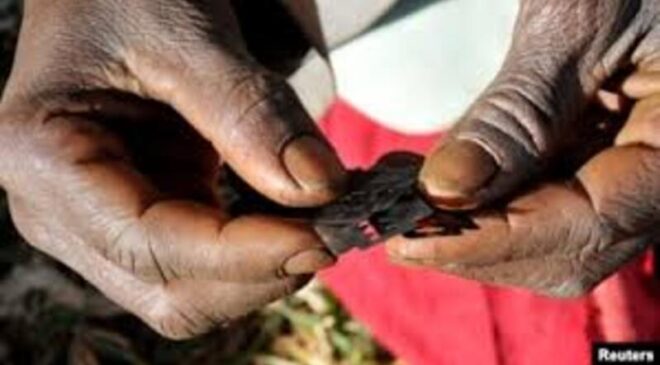
NAIROBI/Kenya: Courts across the world are increasingly becoming a critical frontline in efforts to end female genital mutilation (FGM), as survivors and women’s rights advocates turn to strategic litigation to strengthen enforcement of laws, close legal loopholes and defend existing protections from rollback, according to a new global report by Equality Now.
The report, Towards Justice: Global Challenges and Opportunities in Litigating Cases of Female Genital Mutilation, produced with legal research support facilitated through the Thomson Reuters Foundation’s global pro bono service, TrustLaw, examines how litigation is being used to confront FGM in Burkina Faso, India, Kenya, Liberia, The Gambia and the United States, while also analysing barriers to justice in ten countries across Africa, Europe, Australia and North America.
Equality Now said the growing recognition of FGM as a serious human rights violation over the past two decades has coincided with an expansion of criminal bans. However, the organisation noted that legal prohibitions alone are insufficient without strong implementation, survivor-centred justice systems and sustained political will.
“By examining how the law works in practice, we can better understand how to harness it effectively,” said Divya Srinivasan of Equality Now. “Our research finds that strategic litigation is one of the most powerful ways to challenge FGM by exposing gaps in protection, setting legal precedents and driving wider reform. But litigation alone is not enough. It must be backed by well-implemented and properly funded enforcement, alongside legal systems that protect survivors from further harm.”
FGM, defined as the partial or complete removal of external female genitalia for non-medical reasons, is internationally recognised as a grave human rights violation rooted in gender inequality and associated with severe physical and psychological harm. UNICEF estimates that 230 million women and girls globally have been affected by the practice. While Equality Now and its partners have documented evidence of FGM in 94 countries, only 59 currently have specific laws prohibiting it.
The report highlights how strategic criminal, civil and constitutional litigation can strengthen state responses by clarifying laws, exposing systemic failures and compelling governments to fulfil their human rights obligations. High-profile cases, it notes, can also empower survivors, raise public awareness and trigger broader social change within affected communities.
An example cited is the 2025 ruling by the ECOWAS Court against Sierra Leone, where FGM remains widespread. The court clarified the country’s obligations under constitutional and international law, calling for the criminalisation of FGM, protection of those at risk, compensation for survivors and the investigation and prosecution of perpetrators.
The report also underscores the importance of litigation in defending existing legal protections. In Kenya, coordinated legal action successfully upheld the Prohibition of Female Genital Mutilation Act after a constitutional challenge sought to legitimise the practice on grounds of consent, culture and bodily autonomy. The High Court’s 2021 ruling preserved one of Africa’s strongest anti-FGM laws and reaffirmed that cultural or religious arguments cannot override the fundamental rights of women and girls.
Similar legal tests are now unfolding in The Gambia, where efforts to repeal the ban on FGM have shifted from the legislature to the courts. Equality Now warned that any ruling favouring repeal could set a dangerous precedent by prioritising cultural or religious claims over rights to equality, dignity and freedom from violence.
Despite the existence of laws in many countries, the report found that prosecutions remain rare due to weak enforcement, low reporting rates, poor investigations, mishandled evidence and limited institutional prioritisation of FGM cases. Survivors often face stigma, intimidation and re-traumatisation during legal proceedings, while judges, prosecutors, police and health professionals frequently lack adequate training on FGM-related laws.
Equality Now stressed that ending FGM requires a multi-sectoral approach that combines robust legal action with health, education, child protection and community-based interventions. Governments, the report said, must strengthen and clarify laws, invest in professional training, ensure survivor access to free legal aid and enforce court decisions consistently.
Kathryn Beck, Head of Legal for TrustLaw at the Thomson Reuters Foundation, said legal pro bono support plays a crucial role in advancing such efforts. “Legal pro bono has a unique power to support the critical missions of organisations such as Equality Now. We hope this report strengthens anti-FGM laws and empowers frontline professionals working to protect the rights of women and girls worldwide,” she said.
The report was distributed by APO Group on behalf of Equality Now, which has, since its founding in 1992, contributed to reforming more than 120 discriminatory laws globally in pursuit of enduring gender equality.