By Magnus Emuji
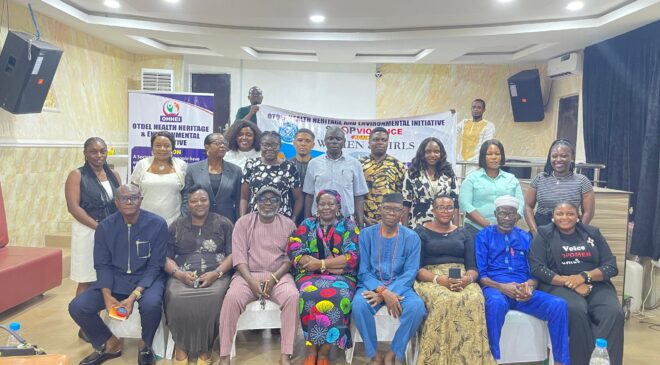
ASABA/Nigeria: Stakeholders in Delta State have been equipped with tools to promote gender inclusion and strengthen collaborative leadership in the fight against gender-based violence (GBV), following a capacity-building training organized by the Otdel Health Heritage and Environmental Initiative (OHHEI).
Speaking at the training, the Project Director of OHHEI, Mr. Peter Olayinka, who was represented by the organisation’s consultant, Juliet Obiajulu, expressed appreciation to participants for their commitment to advancing women’s inclusion in decision-making processes and addressing the growing challenge of GBV.
She noted that the training was designed to promote collective leadership and enhance participants’ capacity to influence policies, challenge harmful social norms, and drive sustainable social change through strengthened women-focused organisations.
Obiajulu explained that the initiative aligns with OHHEI’s mission as an indigenous non-profit civil society organisation committed to fostering sustainable development in education, health, environment, and social justice, particularly in promoting gender equality.
According to her, women often face systemic barriers in leadership spaces, including biased assessments and structural limitations that their male counterparts rarely encounter, despite evidence that gender diversity improves decision-making quality and fosters innovation.
Presentations at the session were led by facilitators, including Amb. Eris Jewo-Ibi, Chairperson of the Association Against Child Sexual and Gender-Based Violence, who highlighted cultural norms, domestic responsibilities, grassroots resistance and political obstacles as key barriers to women’s participation in decision-making.
In a separate presentation, the GBV Desk Officer in the Delta State Ministry of Women Affairs, Community and Social Development, Mrs. Rosemary Okpuno, emphasized that women’s perspectives and needs can only be effectively addressed when they are actively involved in governance and policy processes.
She identified cultural beliefs, unequal power relations, discrimination, lack of education, poverty and low self-esteem as some of the root causes of gender-based violence.
Okpuno warned that the consequences of violence and exclusion are far-reaching, including social disruption, physical and emotional trauma, economic setbacks and the reinforcement of harmful stereotypes that deepen inequality.
Also speaking, a resource person from the Delta State Ministry of Justice, Voke Angbagh, provided insights into the legal framework for addressing GBV in the state and Nigeria at large.
She clarified that rape attracts life imprisonment under the law and appealed to the State Chief Judge to designate special courts for the trial of sexual offences in order to accelerate justice delivery.
Angbagh noted that frequent adjournments remain a major challenge in prosecuting such cases, stressing that dedicated courts would ensure more efficient handling of GBV-related offences.
Participants were encouraged to apply the knowledge gained from the training to promote inclusive leadership and strengthen institutional responses aimed at preventing and addressing gender-based violence across communities in Delta State.