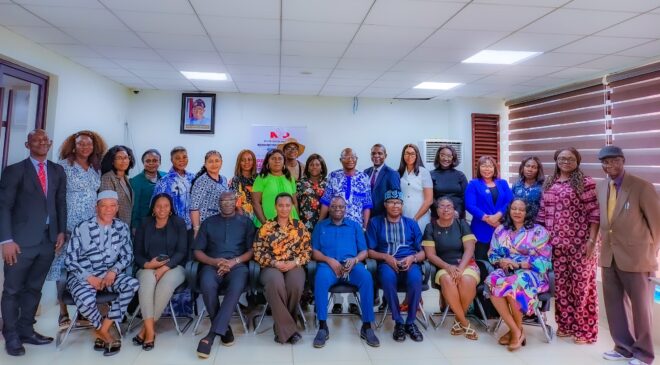
ASABA/Nigeria: The Nigerian Institute of Public Relations (NIPR), Delta State Chapter, has urged governments, public institutions, private organisations and other stakeholders to adopt strategic public relations as a key management tool for building public trust, strengthening democratic governance and driving sustainable development in an increasingly digital world.
The call was made by the Chairman of the chapter, Godfrey C. Osakwe, fnipr, during the chapter’s Special July General Meeting held at the Prof. Chike Edozien Secretariat in Asaba to commemorate the 2026 World Public Relations Day.
Speaking on the global theme, “The Golden Age of Strategic Public Relations,” Osakwe said rapid advancements in artificial intelligence, automation and digital technologies had transformed the communication landscape but could not replace the human values that underpin effective public relations.
According to him, while technology has enhanced information processing and content creation, qualities such as integrity, ethical judgment, empathy and the ability to build trust remain uniquely human and indispensable to the practice of public relations.
He explained that the future of the profession lies in what he described as the Human Operating System (Human OS), an approach that places people at the centre of communication through stakeholder engagement, dialogue, conflict resolution and relationship management.
Osakwe noted that strategic public relations has become increasingly important in addressing misinformation, disinformation, growing public distrust and societal polarisation, adding that practitioners play a vital role in protecting institutional reputation and fostering constructive engagement between organisations and the public.
He also described it as a source of pride that World Public Relations Day, now observed across the globe, was initiated by Nigerian communication strategist Mr. Ayeni Adekunle, saying the development reflects Nigeria’s contribution to the advancement of the global public relations profession.
Delivering the keynote lecture, communication scholar and lecturer at Delta State Polytechnic, Ogwashi-Uku, Dr. Emmanuel Akpoveta, identified ethical judgment, emotional intelligence, critical thinking, creativity, adaptability, cultural awareness, leadership and relationship management as competencies that distinguish public relations professionals from artificial intelligence.
While acknowledging the growing role of AI in content creation, data analysis and behavioural prediction, Akpoveta maintained that technology lacks conscience, wisdom and the moral capacity required to manage sensitive communication issues and complex human relationships.
He identified misinformation, deepfake technology, cybersecurity threats, digital manipulation, algorithmic bias and privacy concerns among emerging challenges confronting communication professionals, stressing the need for stronger ethical oversight in the application of digital technologies.
Osakwe urged members of the Institute and communication professionals to uphold professionalism, ethical standards, continuous learning and innovation to ensure that public relations continues to support responsible leadership, institutional credibility and national development.
The event attracted public relations practitioners, communication scholars, media professionals and other stakeholders who examined the evolving role of strategic public relations in strengthening public confidence and improving governance.