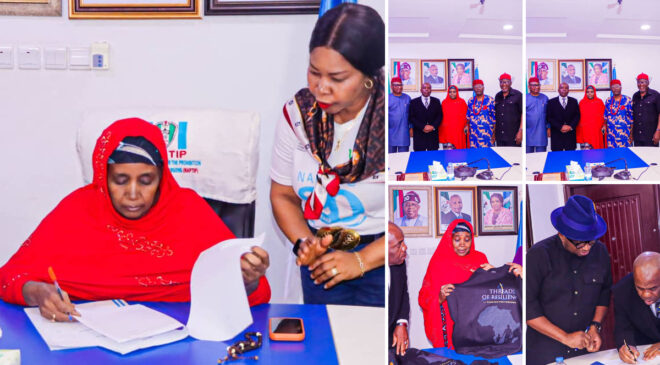
LAGOS/Nigeria: The National Agency for the Prohibition of Trafficking in Persons (NAPTIP) and Next2None Support Initiative have entered into an eight-year partnership aimed at using fashion, creative industries, sports and skills development to prevent human trafficking and support vulnerable young people in Nigeria.
The partnership, formalised through a Memorandum of Understanding (MoU) signed on August 27, 2026, will operate under the initiative tagged “Threads of Resilience: Fashion for Freedom.”
The programme is expected to begin its global rollout in the second quarter of 2027, with Abuja serving as the host city for an annual Global Fashion for Freedom event.
According to Next2None, the programme will run from 2026 to 2034 and initially target about 6,000 young Nigerians annually. Its training component is expected to reach approximately 1,000 participants in each of Nigeria’s six geopolitical zones.
The agreement was signed by NAPTIP Director-General, Binta Lami Adamu Bello; the agency’s Director of Legal and Prosecution, Mrs Ijeoma Amugo; Next2None Support Initiative Director-General, Mr Sam Obu, and Mr Frank Nwala.
The organisations said the partnership was designed to complement conventional anti-trafficking measures by addressing some of the socioeconomic vulnerabilities that can expose young people to exploitation.
Obu said trafficking networks were increasingly taking advantage of digital platforms and other avenues to target vulnerable people, including through social media, deceptive job advertisements, fraudulent migration arrangements and online relationships.
He argued that efforts to combat trafficking should therefore extend beyond rescuing victims to preventing vulnerability and creating legitimate economic opportunities.
“Human trafficking is no longer just a law enforcement challenge; it is a crisis of poverty, unemployment, and lack of opportunity,” Obu said.
The initiative is built around three broad areas: prevention, empowerment and rebuilding.
Under the prevention component, the partners plan to use fashion campaigns, school-based programmes, digital advocacy and community engagement to educate young people about trafficking risks and online safety.
The empowerment component will provide vocational and digital training in areas including fashion design, textile production, leather work and garment care. Participants will also receive training in areas such as e-commerce, financial literacy and branding, with the stated aim of helping them develop sustainable sources of income.
The third component focuses on survivors of trafficking, internally displaced persons and returnees. It is expected to provide vocational rehabilitation, mentorship and mental health and psychosocial support as part of efforts to assist reintegration.
The organisations also plan to use fashion as a platform for human-rights advocacy, with emerging designers and survivors expected to present collections built around themes of resilience, recovery and freedom.
Next2None said it would seek collaboration with international fashion companies, including Gucci, Balenciaga, Versace and Hugo Boss. However, the available announcement describes these as prospective engagements, rather than confirmed partnerships.
The programme is similarly expected to involve Nigeria’s film industry and international filmmakers through anti-trafficking films, documentaries and awareness productions, alongside practical training opportunities for young people interested in filmmaking.
Sports will form another part of the proposed campaign. The organisers said they were pursuing potential partnerships with international sports organisations, including FIFA, the International Handball Federation and the National Basketball Association, for football, handball and basketball-related initiatives.
The sports component is intended to use grassroots activities, athlete ambassadors and sports clinics to reach young people who may be vulnerable to exploitation.
NAPTIP is expected to provide government-level coordination and technical support, including facilitating engagement with relevant government institutions and United Nations agencies.
Next2None, meanwhile, will lead implementation of the initiative, according to the statement announcing the partnership.
The organisations said a Monitoring, Evaluation and Learning framework would be used to assess the programme’s progress, with indicators including employment outcomes, survivor rehabilitation and funds mobilised.
The partnership between the two organisations is not entirely new. NAPTIP’s own published material has previously identified Next2None as a partner in efforts involving public enlightenment on human trafficking through documentaries, films and sports.
The new agreement expands that collaboration into a longer-term programme centred on prevention, economic empowerment and survivor support.
Next2None called on businesses, development organisations, foundations, philanthropists, volunteers, brand representatives and foreign missions to support the initiative.
The organisation said the broader objective was to use creative industries and skills development alongside existing anti-trafficking interventions to reduce vulnerability among young Nigerians and strengthen support for people affected by trafficking.