ASABA/Nigeria: Delta State Government has expanded its healthcare infrastructure with new diagnostic and treatment equipment while recruiting more than 700 health workers to strengthen staffing in public medical facilities across the state.
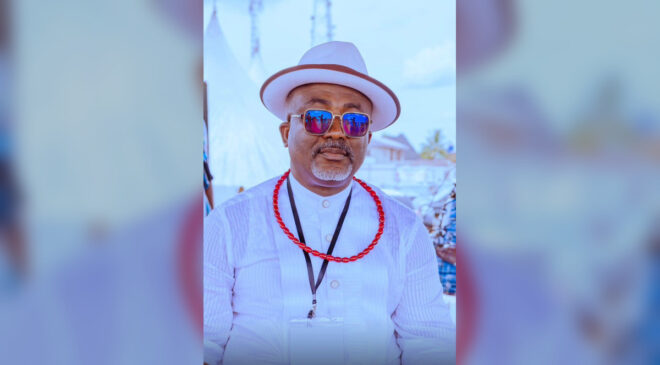
The development was disclosed by the Chief Press Secretary to Governor Sheriff Oborevwori, Sir Festus Ahon, during an interview on Independent Radio FM 92.3, Benin, in which he highlighted interventions by the administration in the health sector.
Ahon said three 1.5-Tesla, helium-free MRI machines had been installed in the three senatorial districts, with facilities at Asaba Specialist Hospital, Central Hospital, Warri, and Delta State University Teaching Hospital, Oghara, equipped with the scanners.
The state had earlier announced the acquisition of the three MRI machines as part of efforts to improve access to specialised diagnostic services. The machines were described by the state Health Commissioner, Dr Joseph Onojaeme, as helium-free systems intended to reduce maintenance challenges and improve access to MRI services.
According to Ahon, the government has also provided CT scanners and other radiology and laboratory equipment to public hospitals.
He said eight dialysis machines had been distributed among Asaba Specialist Hospital, Central Hospital, Warri, and the Delta State University Teaching Hospital, Oghara, while 25 4D ultrasound machines were deployed to general hospitals across the state’s 25 local government areas.
The equipment rollout builds on the multi-billion-naira medical equipment programme commissioned by the governor in June 2025, which included dialysis machines, 4D ultrasound scanners and CT scanners.
Ahon said the distribution of the ultrasound machines was designed to bring advanced diagnostic services closer to residents and reduce the need for patients to travel outside the state for certain examinations.
He also said the administration had continued to provide free healthcare for children aged between zero and five years, while expanding coverage under the Delta State Contributory Health Scheme.
According to the governor’s spokesman, more than three million residents are currently enrolled in the scheme. He further said 10,000 widows were among beneficiaries receiving healthcare coverage and monthly stipends of ₦15,000 from the state government.
The claim on the number of enrollees was made by Ahon during the radio interview and has not been independently verified in the material available for this report.
On the health workforce, Ahon said the state government had recruited more than 700 personnel to address staffing gaps in public health institutions.
The recruitment was announced earlier in 2026, with allocations made to several institutions, including the Hospital Management Board, Delta State University Teaching Hospital, the College of Health Technology, Ovrode, Asaba Specialist Hospital and Warri Central Hospital.
He said Governor Oborevwori had also directed that vacancies created by the departure of doctors and nurses should be filled promptly, particularly as medical professionals leave the country in search of opportunities abroad.
Ahon further disclosed that the government had approved monthly tax-free allowances of ₦200,000 for doctors and ₦100,000 for health officers.
The measures, he said, were intended to improve the welfare of health professionals and help the state retain skilled personnel.
Beyond equipment and staffing, Ahon identified investment in health education as another component of the administration’s strategy.
He cited the College of Health Technology at Ovrode in Isoko North Local Government Area, which is intended to train middle-level health professionals, as well as the College of Medical Sciences at Southern Delta University, Ozoro.
The Nigeria Medical Association’s Delta State branch had previously identified the College of Health Technology, Ovrode, the College of Medical Sciences at Southern Delta University and the College of Nursing, Onicha-Uku, among the administration’s health-sector interventions. The association also cited the provision of MRI machines and 4D ultrasound scanners.
The state’s health interventions come amid continuing efforts to improve diagnostic capacity, specialist services and the availability of medical personnel in its public hospitals.
Ahon said the measures formed part of the Oborevwori administration’s MORE Agenda, particularly its focus on healthcare infrastructure, access to medical services and development of the state’s health workforce.