By Ese Obote-Ogwu
OWERRE-OLUBOR /Nigeria: The intervention covers 50 maize farmers and 20 poultry farmers under the FADAMA component of the state’s economic support programme.
Seventy farmers in Owerre-Olubor community, Ika North-East Local Government Area of Delta State, have received agricultural inputs under the Delta Community Action for Resilience and Economic Stimulus (D-CARES) programme, in an intervention aimed at improving agricultural production and strengthening rural livelihoods.
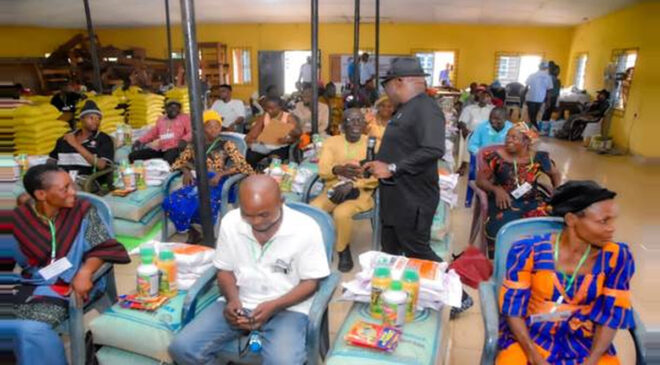
The beneficiaries received the support during an exercise led by the Commissioner for Economic Planning and Chairman of the D-CARES State Steering Committee, Mr Sonny Ekedayen, under Result Area 2, implemented through the FADAMA component of the programme.
The beneficiaries comprise 50 maize farmers and 20 poultry farmers, who received inputs intended to support their respective farming activities and improve productivity.
Speaking during the distribution, Ekedayen reaffirmed the state government’s commitment to supporting farmers, small-scale entrepreneurs and vulnerable households through interventions designed to create economic opportunities and improve living conditions.
He said the programme had extended support to farmers across communities in Delta State, noting that the latest distribution was part of ongoing efforts to strengthen agricultural activities and improve beneficiaries’ livelihoods.
According to the commissioner, maize farmers received improved seeds, fertilisers, herbicides and fungicides, while poultry farmers were provided with day-old chicks, feed covering the starter-to-finisher stages, and medication.
Ekedayen emphasised that the agricultural inputs were provided as grants rather than loans, urging beneficiaries to deploy them productively and use the opportunity to build sustainable farming businesses.
He encouraged the farmers to manage the support carefully, explaining that its long-term value would depend on their ability to translate the inputs into improved production and more reliable household incomes.
Earlier, the State Coordinator of D-CARES, Dr Patience Ogbewe, described the FADAMA component as an important agricultural intervention aimed at increasing farm output and improving nutrition across the state.
Ogbewe said the programme adopted a comprehensive approach to agricultural support, with monitoring mechanisms intended to ensure that the assistance delivered tangible benefits to the intended recipients.
The State Project Coordinator for FADAMA and Technical Head of D-CARES Result Area 2, Ms Therese Omame, said some farmers had initially expressed doubts during the programme’s sensitisation activities because of previous experiences with unfulfilled promises by other groups.
She said the presentation of the inputs demonstrated that the beneficiaries were receiving the support promised to them, urging them to apply the resources judiciously to improve their farming operations.
Omame encouraged the farmers to take ownership of the intervention and ensure that the inputs contributed to increased productivity and better economic prospects for their families.
The Deputy President-General of Owerre-Olubor, Mr Austin Elumeze, commended the intervention, saying the community had not witnessed a similar level of support for farmers in the preceding eight years.
Elumeze said the initiative would be remembered by the community and expressed hope that the beneficiaries would make effective use of the assistance.
The farmers welcomed the distribution with songs and dancing, expressing appreciation for the support and pledging to use the inputs responsibly.
Owerre-Olubor is an agrarian community in Ika North-East Local Government Area, where maize production is an important economic activity. The intervention is expected to support participating farmers as they work to improve output and sustain their agricultural enterprises.
