By Mokobia Rita.
ASABA/Nigeria: Delta State’s internally generated revenue has increased from about N75 billion to N204 billion, according to the Commissioner for Works (Rural Roads) and Public Information, Charles Aniagwu, who said the rise was strengthening the state’s capacity to fund infrastructure and support economic activities at the grassroots.
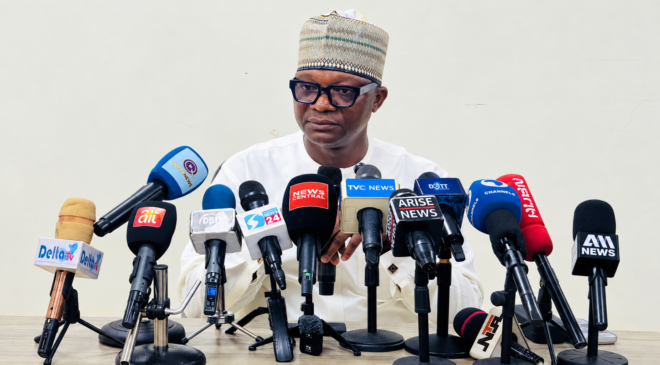
Aniagwu disclosed this on Friday, September 18, 2026, during a press briefing on the state of the economy, government interventions and development prospects at the State Information Hall, Prof. Chike Edozien Secretariat, Asaba.
The commissioner said the improvement in revenue had provided the state government with greater room to execute development projects while deploying resources to programmes designed to support residents and stimulate activities within local communities.
He attributed part of the state’s improved financial position to increased economic activities and the wider changes in federal revenue flows, saying Delta was seeking to convert available resources into projects and interventions that could have direct effects on residents.
Aniagwu pointed to the state’s ongoing construction and rehabilitation of roads, bridges and flyovers as examples of how public resources were being deployed, saying the projects were also opening up economic opportunities across different parts of Delta.
He said the administration was particularly interested in ensuring that resources reaching government were circulated within the local economy through infrastructure projects, support for small businesses and interventions targeted at people operating at the grassroots.
According to him, the strategy was based on the expectation that stronger local businesses would generate more economic activity and, consequently, improve the state’s tax base.
“The more we give, the more revenue we’re also going to get from their businesses through tax, and the more people are going to live a better life,” Aniagwu said.
He described the approach as a cycle in which government resources are channelled into productive activities, beneficiaries expand their businesses and the resulting economic activity generates additional revenue for government.
The commissioner also disclosed that the state had directed local government councils to begin empowerment initiatives targeting nano and micro businesses, with the aim of helping small operators strengthen their businesses and improve their livelihoods.
He said the intervention was particularly important because small-scale businesses form a significant part of economic activity within communities, where many residents depend on petty trading, services and other informal enterprises for their livelihoods.
Aniagwu also linked the state’s revenue position to its ability to sustain infrastructure development, workers’ welfare and other government obligations, saying the administration had continued to mobilise contractors for projects across the state.
He cited the Second Niger Bridge access road interchange at Issele-Azagba, maintenance work on the First Niger Bridge and other infrastructure interventions as examples of developments he said were contributing to improved connectivity and economic activity.
On education, the commissioner said the state was undertaking rehabilitation of schools affected by vandalism and was also working on the production and distribution of furniture to schools across Delta.
He further said Delta residents were benefiting from the Nigeria Education Loan Fund, noting that students in the state’s universities were among those accessing the federal education financing scheme.
Aniagwu said the state’s approach was not limited to increasing revenue but also involved determining how available funds could be deployed to support economic activity and improve the welfare of residents.
He also spoke on the recent N5 billion cash intervention announced by Governor Sheriff Oborevwori for grassroots communities, saying the decision to work through ward councillors was informed by their proximity to residents and knowledge of vulnerable people within their communities.
According to him, councillors were considered better positioned to identify potential beneficiaries, while the state government would establish a monitoring committee to oversee implementation.
Aniagwu said the combination of improved revenue, infrastructure spending and grassroots interventions was intended to strengthen economic activity from the community level upward.
The commissioner also acknowledged the challenges created by the Federal Government’s economic reforms, including the removal of fuel subsidy, but maintained that increased allocations to states and local governments had created additional fiscal space for interventions.
He said Delta’s responsibility was to ensure that whatever resources became available were translated into projects and programmes capable of producing measurable benefits for residents.
Aniagwu’s latest remarks come days after the Delta State House of Assembly passed the bill seeking to institutionalise the payment of a 13th-month salary for public servants. That development has already been separately reported by Ndokwa Reporters, making the state’s revenue position and its deployment to grassroots economic activity a distinct focus for this report.