LAGOS/Nigeria: Nigeria’s response to snakebite emergencies faces significant challenges, including the high cost of antivenom, delays in reaching hospitals and harmful first-aid practices, medical and wildlife experts have warned.
The experts called for improved access to treatment, public education and safer handling of snake encounters, noting that the combination of medical and environmental factors continues to expose vulnerable communities to preventable injuries and deaths.
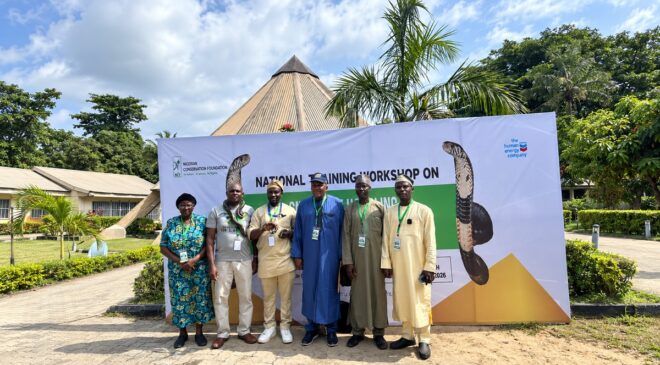
The warning came during a two-day national workshop on snakebite handling, treatment and management held at the Lekki Conservation Centre, Lagos, on October 27 and 28, 2026.
Figures presented at the workshop indicated that Nigeria records an estimated 43,000 snakebite cases annually, with between 1,099 and 2,500 deaths reported each year.
Medical expert Abubakar Ballah described snakebite envenoming as a neglected tropical disease requiring greater attention from health authorities, particularly in areas where residents face difficulties accessing medical facilities and essential medicines.
Ballah identified the carpet viper as a major contributor to snakebite fatalities in Nigeria, attributing about 66 per cent of reported deaths to the species.
He also cited World Health Organisation estimates indicating that snakebites cause a substantial global health burden, with millions of cases annually resulting in tens of thousands of deaths and hundreds of thousands of permanent disabilities.
According to Ballah, Gombe, Plateau, Bauchi, Benue and Taraba are among the states with significant snakebite risks, particularly around the Niger-Benue trough and Sudan Savanna.
Farmers, herders, hunters and children are among the most vulnerable groups, he said, explaining that exposure often increases during farming activities, the rainy season and harvest periods.
Ballah identified the carpet viper, puff adder and black-necked spitting cobra as three medically important snakes in Nigeria. Their venom can cause severe bleeding, tissue destruction, kidney injury, neurological complications and respiratory paralysis.
He warned that victims could face worse outcomes when treatment is delayed or when people resort to dangerous remedies before reaching a hospital.
Practices such as tying tight tourniquets around affected limbs, cutting bite wounds, applying animal dung and using unproven traditional treatments can complicate patients’ conditions, he said.
Drawing on clinical experiences, Ballah noted that some patients had died after delayed hospital presentation and inappropriate first aid, while others recovered following early medical attention and appropriate treatment.
Antivenom affordability remains a major concern
The cost of antivenom was identified as one of the major obstacles to effective snakebite management. Ballah said a vial could cost between ₦170,000 and ₦250,000, creating a financial burden for patients and their families.
He also pointed to poor road networks, limited access to healthcare facilities and inadequate blood bank services as factors that could delay or complicate treatment.
Ballah called for dependable supplies of quality-assured antivenom, proper storage facilities, improved referral systems and stronger community education.
He stressed that antivenom should be administered by trained healthcare professionals when clinically indicated, with patients monitored for possible allergic reactions and other complications.
Residents urged to avoid handling snakes
In a separate presentation titled “Dangerous Snakes of Lagos State, Nigeria,” wildlife conservation expert Dr Mark Ofua advised residents against attempting to catch, kill or handle snakes.
Ofua explained that encounters could occur in mangroves, swamps, farms, gardens, construction sites, drains, residential compounds and storage areas.
He urged residents to exercise caution in such environments and contact trained personnel equipped with appropriate tools whenever a snake is discovered.
Among the species he highlighted for particular attention in Lagos were the puff adder, black-necked spitting cobra, forest cobra, green mamba and Gaboon viper.
He also discussed the boomslang and carpet viper, while noting that the presence of some species, particularly the carpet viper, required confirmation through local records.
Ofua cautioned against relying solely on a snake’s head shape, pupils, colour or size to determine whether it is dangerous, noting that visual identification can be unreliable and protective equipment does not eliminate the risk of a bite.
For suspected snakebite cases, he advised victims to remain calm, minimise movement, immobilise the affected limb, remove tight items such as rings and bracelets, and seek emergency medical attention immediately.
He warned against cutting or sucking the wound, applying tourniquets, using traditional remedies or attempting to chase and kill the snake.
Where venom enters the eyes, Ofua recommended immediate and prolonged rinsing with clean water.
Conservation experts call for coexistence
Earlier, the Director-General of the Nigerian Conservation Foundation (NCF), Dr Joseph Onoja, highlighted the ecological importance of snakes, particularly their role in controlling rodent populations and maintaining biodiversity.
Onoja warned that unchecked increases in rodent populations could heighten public-health risks, including exposure to infections such as Lassa fever.
He called for greater public understanding of wildlife and encouraged Nigerians to adopt safer ways of responding to snake encounters rather than automatically attempting to kill the animals.
“It becomes important that we learn to live as one in harmony with nature and more specifically snakes,” he said.
The workshop focused on improving knowledge and practical approaches to snakebite prevention, handling, treatment and management.
The discussions highlighted the need for a coordinated response that combines public awareness, prompt medical attention, affordable antivenom and stronger healthcare services to reduce avoidable snakebite deaths.
