By Elumelu Felix
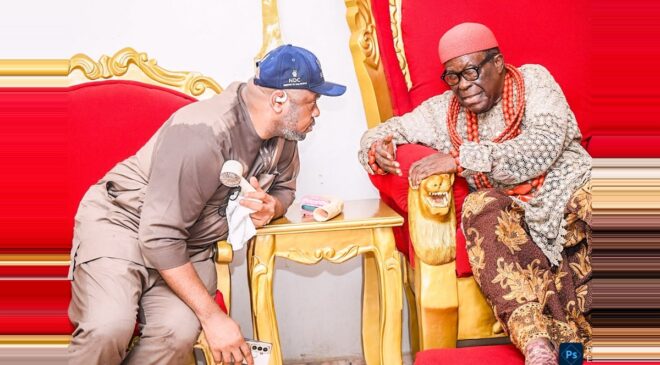
KWALE/Nigeria: Reliable electricity, economic opportunities and accountable political representation featured prominently as the Delta North senatorial candidate of the Nigeria Democratic Congress (NDC), Rt. Hon. Victor Ochei, led party candidates on consultation visits to traditional institutions in Utagba-Ogbe and Emu Kingdoms.
During the visits on Friday, October 23, 2026, Ochei argued that Ndokwa communities should derive greater benefits from the natural resources found in their environment, particularly natural gas, which he said could support improved electricity supply and stimulate economic activities across the region.
The former Speaker of the Delta State House of Assembly first met with the Obi Ndu Eze Council of Chiefs in Utagba-Ogbe, where he presented his development vision and urged residents to assess political aspirants by their records, competence and plans for the future.
Drawing on his background as a power engineer, Ochei identified the Okpai Power Plant as an important energy asset that could feature in efforts to improve electricity supply across Delta North. He questioned the continued power challenges confronting communities located in an area endowed with significant gas resources.
He maintained that better electricity access could reduce operating costs for small businesses, encourage investment, support industrial activities and create employment opportunities for young people.
For Ochei, the issue goes beyond electricity supply to the broader question of how resource-rich communities can translate their natural advantages into improved living standards. He argued that political representation should focus on policies capable of connecting local resources with jobs, enterprise and community development.
The senatorial candidate also urged voters to examine the performance of candidates seeking their mandate rather than relying solely on campaign promises. In making his case, he referred to his tenure as Speaker of the Delta State House of Assembly, citing constituency projects and the renovation of the Assembly complex among the achievements associated with his leadership.
Members of the delegation included Dr. Ugochukwu Nwokolo, popularly known as Overdo; Engineer Edwin Nzei, the NDC candidate for Ndokwa/Ukwuani Federal Constituency; the party’s candidate for Ndokwa West State Constituency; and the NDC Delta North chairman, Hon. Aaron Udoka Ebenuwa.
From the chiefs’ council, the delegation proceeded to the palace of HRM Isaac Obi, the Oduosa I of Utagba-Ogbe. The visit attracted attention in Kwale, with residents gathering along streets and around commercial areas as the team moved through the community.
At the palace, Ochei paid homage to the monarch and again referred to his record as Speaker, including the passage of the Anti-Kidnapping Law during his tenure, as evidence of his legislative experience.
Obi, accompanied by members of his traditional council, received the delegation, offered prayers for the candidates and urged them to remain committed to the development of Ndokwa Nation.
The consultation continued in Emu Kingdom, where the delegation met with HRM Johnson Ekpechi, the Obueweh of Emu Kingdom. Ochei reiterated his commitment to effective legislative representation and said improved electricity should be a priority for communities seeking to expand businesses and attract investment.
Ekpechi expressed support for the development agenda presented by the candidates, linking its emphasis on production and value creation to the wider need for Nigeria to move towards a more productive economy.
The consultations placed electricity, infrastructure, economic transformation and accountability at the centre of the NDC candidate’s engagement with traditional institutions. They also provided an opportunity for the party to present its priorities to community leaders as political activities gather momentum ahead of the 2027 general elections.
Ochei maintained that Ndokwa’s natural resources should deliver more tangible benefits to local communities through policies that encourage industrialisation, support young people and improve living conditions.
However, translating these proposals into measurable improvements would require practical plans, effective coordination among relevant authorities and clear pathways for communities to benefit from the region’s energy resources. The visits marked a campaign commitment; the delivery of improved electricity and broader economic gains remains a matter for future policy and implementation.
