Compiled By Emmanuel Enebeli
ASABA/Nigeria: The week ending Saturday, September 12, 2026, produced stories across Nigeria and Delta State that went beyond the day’s headlines.
From the continuing debate over the economy and the approach of the 2027 elections to a community celebrating the arrival of a transformer after two years without public electricity, the week’s developments raised familiar but important questions about governance, development and the future.
Here are some of the issues that stood out.
Nigeria’s Economy: Growth Against Household Pressure

Nigeria’s economic reforms remained an important part of the national conversation.
The International Monetary Fund says reforms have strengthened the country’s macroeconomic resilience and projects 4.1 per cent growth for 2026. But the same assessment notes that poverty and food insecurity remain serious concerns and that global food and fuel price pressures could worsen the situation for vulnerable households.
That leaves Nigeria with a difficult balancing act: maintaining economic stability while ensuring that the benefits of recovery reach ordinary people.
The question is increasingly shifting from “Is the economy recovering?” to “Are Nigerians feeling the recovery?”
The 2027 Question Gets Louder
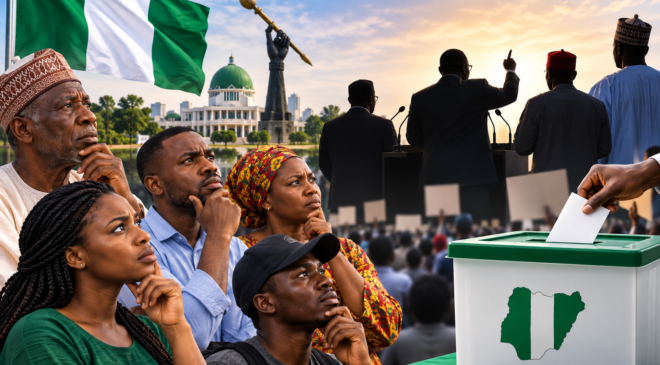
Graphic generated with the help of Artificial Intelligence (AI).
Politics also continued to move towards 2027.
INEC has already formally set the electoral process in motion and has stressed the importance of maintaining a credible voters’ register.
Across the country, political actors are beginning to position themselves.
But for voters, the important issue should be what comes after the political positioning.
Who has a realistic programme?
Who understands the economy?
Who has practical ideas for security, infrastructure and employment?
And who is prepared to be held accountable?
Those questions will become increasingly important as the political season develops.
A Community’s Two-Year Wait for Electricity

In Delta State, the story of Opete Community in Udu Local Government Area offered a powerful illustration of how basic infrastructure affects everyday life.
Residents had reportedly spent more than two years without public electricity after their transformer broke down. A new 500KVA transformer was donated to the community this week, prompting celebrations among residents.
The story is more than the arrival of a transformer.
It is a reminder that electricity remains an economic issue.
For traders, artisans and small businesses, prolonged outages can mean higher operating costs, reduced productivity and lost income.
The transformer may restore hope in Opete, but the larger national question remains: how can Nigeria build an electricity system that communities and businesses can depend on consistently?
Delta Youth Takes Innovation to the World
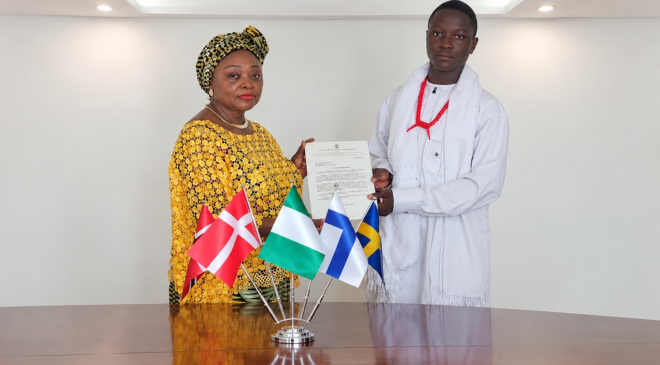
There was also a positive story from Delta’s younger generation.
Delta student Chiedu Uchemmadu Richards represented Nigeria at the 2026 Stockholm Junior Water Prize international final in Sweden with a water-purification innovation.
His project, the Self-Healing Intelligent Biofilter Water Purification System, explores the use of beneficial bacteria from fermented oil bean to develop a biofilm capable of helping remove contaminants from polluted water.
The significance extends beyond one student’s achievement.
Nigeria needs an environment where young innovators can move from school projects to properly tested and potentially scalable solutions.
Stories like this are reminders that the country possesses considerable intellectual and creative potential among its young people.
Culture Takes Centre Stage in Onicha-Olona
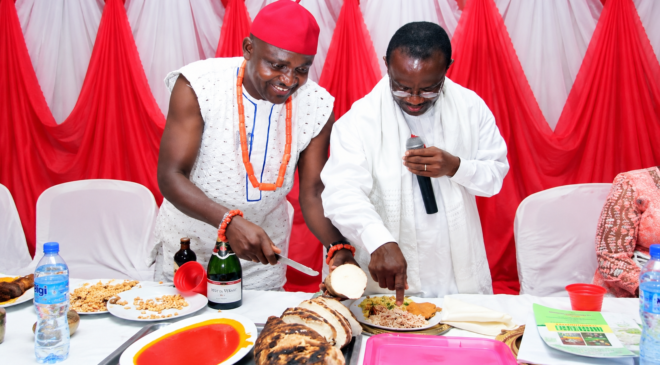
Another important Delta development is the beginning of the 2026 Annual New Yam Festival of Onicha-Olona, scheduled for September 13 to 26.
The festival provides an opportunity for the community to celebrate its agricultural heritage, traditions and communal identity. Security preparations have also been announced ahead of the festivities.
For communities across Delta State, traditional festivals remain important not only as cultural celebrations but also as occasions for homecoming and intergenerational transmission of heritage.
The challenge is ensuring that culture remains meaningful to younger generations while maintaining the values at the heart of the traditions.
Team Delta Goes for Another Sporting Opportunity

Sport provided another major Delta story this week.
About 400 athletes and 63 technical officials representing Team Delta arrived in Calabar for the South-South zonal elimination ahead of the Enugu 2026 National Sports Festival and the National Intermediate Games. The zonal elimination for the National Intermediate Games is scheduled to conclude on September 12, after which states will proceed with the zonal elimination for the National Sports Festival.
Delta’s reputation as a strong sporting state means expectations will naturally be high.
But beyond medals, competitive sport provides young people with opportunities for discipline, exposure and personal development.
And in Ndokwa…
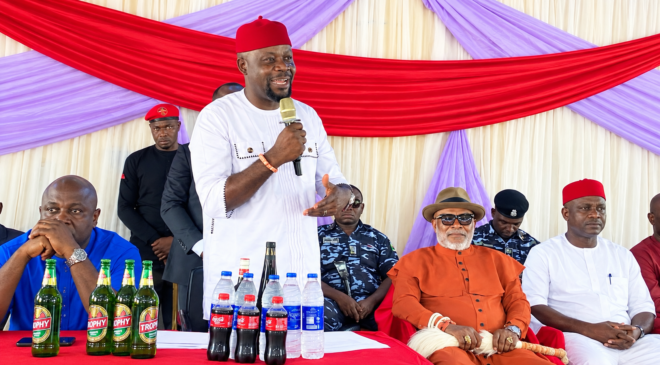
The week also saw the continuation of an important conversation within Ndokwa.
The Ndokwa Neku Union’s grassroots consultations across Ukwuani, Ndokwa West and Ndokwa East have brought issues including electricity, infrastructure, political participation, accountability, unity and cultural identity into sharper focus.
The significance of the exercise will ultimately depend on what follows the consultations.
Will the concerns raised become a coherent development agenda?
Will political candidates be challenged to respond to them?
Will voters use the opportunity to demand measurable commitments?
Those questions may prove more important than the meetings themselves.
Looking Ahead
As a new week begins, several stories deserve continued attention.
Nigeria’s economic performance and the effect of global energy pressures will remain important.
The political environment will continue to move towards 2027.
In Delta, communities will continue to demand infrastructure and development, while cultural and sporting activities will provide opportunities for community engagement.
And across Ndokwa, the conversation about political participation and development is likely to continue.
The week’s events therefore leave us with a simple observation:
The biggest stories are not always the loudest ones.
Sometimes they are found in a community waiting two years for electricity, a young student presenting an innovation on an international stage, athletes travelling in search of another opportunity, or citizens asking what they should expect from the politicians seeking their votes.
Those are the stories that deserve not only to be reported, but also to be understood.