ABUJA/Nigeria: Evidence-based analysis of the growing enlistment of African nationals into Russia’s war in Ukraine has remained scattered and largely anecdotal, with regulators across the continent only beginning to grasp the scale of the phenomenon. Official responses so far have been limited to isolated national statistics, leaving analysts without a comprehensive continental picture.
A newly released resource kit by the African Digital Democracy Observatory, compiled by investigators at Code for Africa, seeks to close that gap. The dossier aggregates verified public evidence to map the methods, channels, and coercive tactics allegedly used to recruit or deceive African citizens into fighting in the war involving Russia and Ukraine. It includes a fact-sheet of key trends, a synthesis of credible reports from watchdog media and specialist research bodies, and a baseline database documenting Africans identified as recruits or casualties. Investigators say the resource will be updated regularly and made available to African researchers probing the issue.
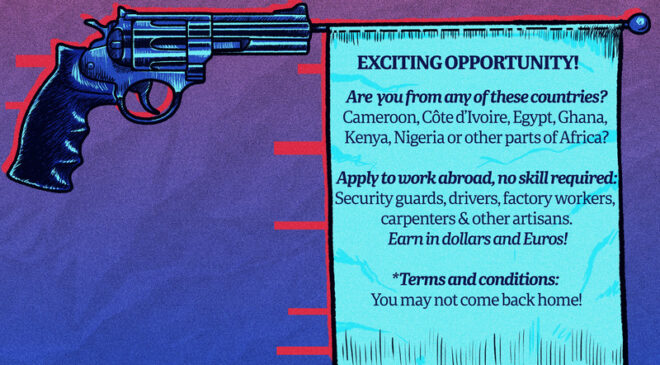
According to the initial findings, many recruits are drawn in through deceptive or exploitative schemes orchestrated by profit-seeking intermediaries who often operate covertly and outside legal frameworks. While comprehensive figures remain elusive, casualty and missing-person reports are rising sharply. Intelligence agencies in Kenya told parliament this week that more than 1,000 of its citizens had been recruited, with at least 67 reported missing in action or injured. Authorities in Nigeria have also issued public warnings about fraudulent recruitment offers that have left citizens stranded on the battlefield.
Responding to concerns, Andrey Podyolyshev denied any involvement by his government, attributing the recruitment to “independent actors,” while the Russian diplomatic mission in Nairobi dismissed Kenya’s parliamentary report as “dangerous and misleading propaganda.”
The observatory’s consolidated database currently lists 316 Africans believed to have been killed in action based on European research, alongside 25 confirmed deaths and 15 individuals verified as prisoners of war in Ukraine. Researchers caution that these figures likely understate the true scale. Ukrainian officials estimate at least 1,436 African nationals have been identified within Russian ranks, while independent researchers in France place the probable total between 3,000 and 4,000 fighters.
Investigators said requests for comment sent to both Russian and Ukrainian authorities received no response before publication. The observatory pledged to continue updating its datasets and releasing supplementary analytical tools, while offering technical support to African newsrooms and civil society organisations examining recruitment patterns within their regions.