By Mokobia Rita
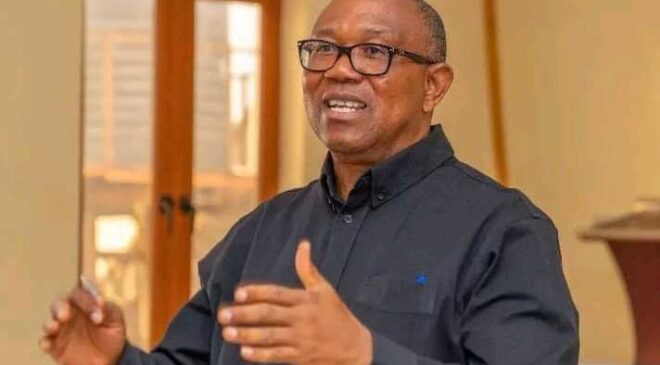
ABUJA/Nigeria: Former Anambra State Governor and Labour Party presidential candidate in the 2023 general elections, Mr. Peter Obi, has called for a decisive military response to Nigeria’s worsening insecurity, declaring that terrorists must be confronted with force rather than negotiation.
Speaking during a live interview on Arise Television, Obi outlined what observers describe as a tougher security posture, insisting that any nation serious about its survival must respond firmly to acts of terror, especially in the face of escalating violence across the country.
His comments come against the backdrop of renewed national outrage following the killing of Brigadier-General Oseni Braimah and several soldiers in a deadly insurgent attack in Borno State, an incident that has further exposed the depth of Nigeria’s security challenges.
Reacting to the attack, Obi described the killing of senior military officers as a direct assault on Nigeria’s sovereignty, stressing that such an incident should provoke immediate and decisive retaliation.
“Any serious country cannot absorb such a blow and remain passive,” he said, adding that the loss of top-ranking officers in a single attack is unacceptable and demands a strong national response.
Departing from calls in some quarters for dialogue with armed groups, Obi firmly rejected negotiations with terrorists, arguing that such engagements often embolden criminal elements rather than weaken them.
Instead, he advocated a strategy anchored on intelligence-driven military operations and sustained pressure on insurgent networks, aimed at dismantling their capacity to carry out attacks.
Drawing from his experience as governor of Anambra State, Obi pointed to what he described as a successful security framework implemented during his tenure. He recalled seeking approval from former President Olusegun Obasanjo to take decisive action that restored order in the state.
According to him, the strategy yielded tangible results, including a prolonged period of relative peace with minimal incidents of kidnapping and armed robbery, an achievement he said was acknowledged by security authorities at the time.
While emphasising the need for forceful intervention, Obi cautioned that military action alone cannot resolve Nigeria’s deep-rooted security crisis. He attributed the current situation to years of systemic governance failures, youth neglect, and declining social values.
“The insecurity we face today did not happen overnight—it is the result of accumulated leadership failure,” he noted.
To address the crisis, he proposed a two-pronged approach involving immediate crackdown on criminal elements through decisive force, alongside long-term reforms focused on governance, justice, education, and economic inclusion.
He stressed that sustainable peace would require not only enforcement but also the rebuilding of institutions capable of addressing the root causes of insecurity.
Obi also underscored the need for national unity, expressing readiness to collaborate with political leaders across regional and party lines, including Nasir El-Rufai and Rabiu Kwankwaso.
He pledged a hands-on leadership approach, assuring Nigerians that he would be physically present in crisis areas to oversee security efforts.
“Leadership must be seen and felt. I will be there,” he said.
Obi’s remarks have intensified national discourse on security, highlighting the growing demand among Nigerians for firm, proactive, and result-oriented leadership in tackling insurgency, banditry, and other forms of violent crime.