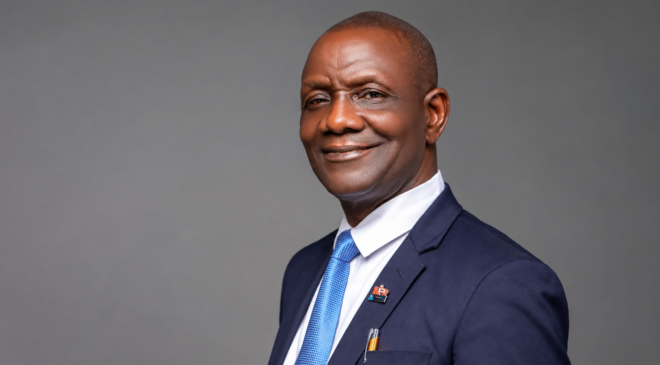
ASABA/Nigeria: The Delta State Government has urged parents and caregivers to take a more active role in monitoring their children’s relationships, movements and behavioural changes as part of efforts to prevent substance abuse, criminality and other social vices.
The Director-General of the Delta State Bureau for Orientation and Communications, Dr Fred Latimore Oghenesivbe, made the call during an engagement on Big Heart 92.1FM in Asaba, stressing that the fight against drug abuse must begin with stronger family supervision.
Oghenesivbe said parents, particularly those whose work schedules kept them away from home for long periods, needed to pay closer attention to the people their children associated with and changes in their conduct.
He warned that inadequate parental supervision could leave young people vulnerable to peer pressure, criminal networks and illicit drug activities.
According to him, the consequences of substance abuse extend beyond individual users, with implications for education, family stability, productivity, public safety and the state’s human capital.
The Bureau chief also expressed concern over reports of increasing involvement of young women in illicit drug distribution in Delta State, saying the development required coordinated intervention by government, families, schools, communities and law enforcement agencies.
He linked part of the problem to the growing attraction of young people to quick wealth, warning that the desire for fast financial gains could push some into criminal activities, including the illicit drug trade.
Oghenesivbe particularly advised parents with substantial financial resources to exercise caution in the amount of disposable money given to their children without adequate monitoring.
He said parents should be alert to unexplained changes in their children’s spending patterns, academic performance, friendships, movements and general behaviour.
He stressed that early intervention could prevent experimentation with illicit substances from developing into more serious substance-use problems.
The Director-General further disclosed that the state government was considering recommendations that could include the introduction of drug integrity tests for students seeking admission into tertiary institutions in Delta State.
He stressed that any such measure would be subject to appropriate approvals and policy considerations.
Oghenesivbe said consideration could also be given to drug testing in connection with certain leadership appointments, promotions or nominations, arguing that substance dependence or functioning under the influence of psychoactive substances could affect judgement, discipline and productivity.
He, however, maintained that prevention should remain central to the state’s strategy, with greater emphasis on public enlightenment, parental responsibility, counselling, rehabilitation and community participation.
Oghenesivbe said the state’s Drug-Free Delta Campaign, implemented in collaboration with the National Drug Law Enforcement Agency (NDLEA), would enter its second phase on September 21, 2026.
He said the next phase would deepen sensitisation among students and young people on the health, social, security and economic consequences of substance abuse and illicit drug trafficking.
According to him, the first phase of the campaign recorded progress through the establishment of War Against Drug Abuse (WADA) Clubs in schools visited during the exercise.
He commended Governor Sheriff Oborevwori for supporting the state’s drive towards a Drug-Free Delta, saying the objective was to create an environment in which young people could develop their potential and contribute meaningfully to the state’s economy.
The Bureau chief also praised personnel of the NDLEA Delta State Command for their enforcement efforts.
He disclosed that the command had seized illicit drugs valued at more than ₦2 billion across Delta State within the past 12 months, describing the development as evidence of the agency’s determination to disrupt the supply and distribution networks fuelling substance abuse.
Oghenesivbe, however, said enforcement alone could not resolve the drug problem.
He called for sustained cooperation among families, schools, traditional and religious institutions, community leaders, civil society organisations, government agencies and security authorities.
The Director-General urged parents and caregivers to regard themselves as the first line of defence against substance abuse, stressing that protecting young people from criminal influences and illicit drugs begins with responsible guidance and supervision at home.