By Ufuoma Egbe
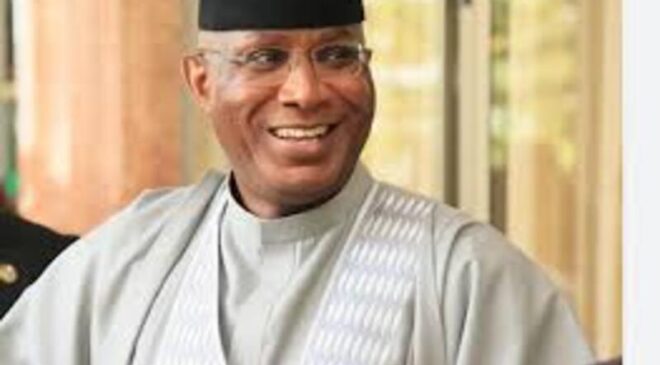
Political power is measured not by the lofty titles a leader holds, but by the lives they transform. When Senator Ovie Omo-Agege emerged as the Deputy President of the Senate in the 9th National Assembly, it was hailed as a watershed moment for Urhobo Pepole. Ranking as Nigeria’s sixth-highest public official, with direct access to the presidency and Aso Rock power brokers, his office commanded unmatched privilege. The expectations of the Urhobo people were rightfully high: this was supposed to be the golden era of strategic human capital development, institutional placement, and lasting economic empowerment for Urhoboland.
Many believed his unprecedented influence at the centre would translate into massive youth empowerment, strategic federal appointments, quality infrastructure, and lasting economic opportunities for Urhobo communities. Years later, however, critics argue that those expectations remain largely unfulfilled.
While other political leaders have used such high office to place the next generation of their people in strategic positions across federal ministries, departments, and agencies (MDAs), Senator Omo-Agege failed to build a lasting legacy of human empowerment for Urhobo people.
What was meant to be a legacy of generation-defining empowerment turned into a tragic tale of missed opportunities, systemic commercialization of public trust, and political miscalculation.
No fair critique can erase the physical infrastructure linked to Senator Omo-Agege’s tenure. Projects like the Federal Polytechnic and the Defence Space-related institution in Orogun stand on Urhobo soil. However, bricks and mortar cannot substitute for human capital—and where higher-tier, generational opportunities arose, political maneuvering took precedence over the Urhobo interest.
The Lost Federal University:
Omo-Agege facilitated the establishment of a specialized Federal University of Medical Sciences in Ndokwaland—one of only six in the country and the only one in the South-South. Widely seen as a calculated move to buy Ndokwa votes for his 2023 gubernatorial bid, the gamble failed: the Ndokwa electorate voted elsewhere, leaving Urhoboland permanently deprived of a premier tertiary health institution, and this is a loss of a once-in-a-generation opportunity.
The Tantita Subcontract Disparity:
Under the pipeline surveillance contract awarded to Tantita Security Services, leaders like High Chief Government Ekpemupolo (Tompolo), Chief Ayiri Emami, and King Ateke Tom ensured their local operatives received living wages, creating visible youth empowerment. Conversely, the subcontract managed by Omo-Agege’s camp paid local operatives meager stipends ranging from ₦60,000 to ₦120,000—a sum so demotivating that when the contract faced public scrutiny, not a single beneficiary stood up to defend it from Omo-Agage’s camp.
The Monetization and Diversion of Federal Job Slots:
The most devastating indictment of Omo-Agege’s era lies in the management of federal employment opportunities. A Deputy Senate President naturally receives significant recruitment quotas across Federal Ministries, Departments, and Agencies (MDAs). Rather than leveraging these slots to build an elite corps of Urhobo technocrats within the federal civil service, those opportunities were systematically compromised.
Instead of placing qualified Urhobo graduates in strategic agencies like the Nigeria Customs Service, NNPCL, NIMASA, EFCC, DSS, NDLEA, Federal Character Commission, and the Federal Civil Service, allegations persist that these slots were treated as commodities—sold for up to ₦1.5 million each or weaponized for external personal political settlements to the detriments of Urhobo youths!
The Alleged Commercialization:
Omo-Agege’s close aides, most prominently, Ajos—allegedly ran a lucrative trade selling federal job slots to the highest bidders from other ethnic groups, he reportedly used the proceeds to acquire home abroad and relocate his family to the UK. Omo-Agege can’t claim ignorance of this syndicate in his office.
Political Dilution:
The slots that were not sold were distributed across the broader South-South and Delta State to cultivate political goodwill ahead of 2023 governorship election, resulting in neighboring ethnic groups, like the Itsekiris securing more federal placements through Omo-Agege’s office than all eight Urhobo Local Government Areas combined.
The NIMASA Fiasco, Why Urhobo Youths Should Weep:
In one of the most egregious instances, Omo-Agege’s Chief of Staff compiled and vetted a list of roughly over 40 intelligent Urhobo youths for career-defining appointments at the Nigerian Maritime Administration and Safety Agency (NIMASA). However, the list was recalled by Ajos for administrative “re-engineering” aimed at commercializing the slots. By the time he finished shopping for possible slots buyers, the window closed, the deadline had passed, and over 40 Urhobo families lost life-changing placements forever, imagined what that could have translated into in the next 10 to 15 years, with many rising to an executive position in NIMASA? Omo-Agege and his boys do us this one!
The Path to 2027: Demand Accountability Over Rhetoric
Rather than securing permanent, career-track positions for the young men and women who campaigned for him to win elections into the 8th and 9th Assemblies, Omo-Agege kept many on small monthly stipends—a classic political strategy that uses economic vulnerability to enforce perpetual loyalty.
Today, scores of these educated youths remain unemployed, left with little choice but to vent their frustration on social media. As the political landscape shifts toward the 2027 general elections, the Urhobo electorate must face hard truths:
The Urhobo Nation cannot afford to vote based on sentiment, vanity titles, or campaign slogans. Every candidate seeking executive or legislative office in 2027 must be judged strictly on track records and verifiable human capital delivery.
Prioritize Sustainable Futures:
Renovation of classroom blocks and temporary handouts do not feed families or build regional influence. True empowerment means securing the future of our graduates so they can stand on their own feet.
The future of the Urhobo Nation depends on demanding leaders who treat political influence not as private property to be monetized, but as a public trust to be converted into enduring opportunities for their people. That is the standard by which every leader must be held.
Ufuoma Egbe, Public Affairs Analyst, writes from Eku, Delta State.