By Rita Mokobia.
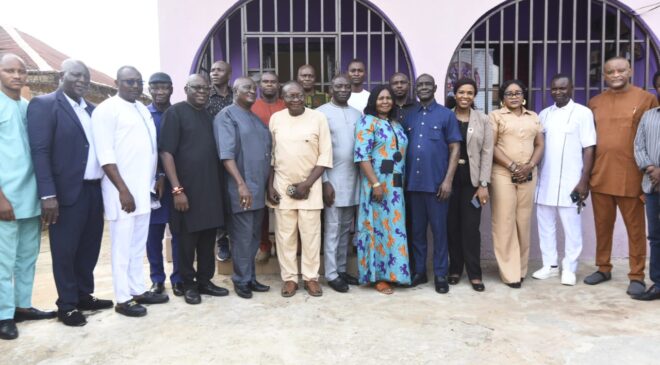
ASABA/Nigeria: Concern over Nigeria’s deepening social tensions and security challenges dominated discussions in Asaba as journalists, media executives, communication experts, and public officials gathered to commemorate the 2026 World Press Freedom Day with renewed calls for ethical journalism and conflict-sensitive reporting.
The event, organised by the Delta Online Publishers Forum (DOPF) under the theme, “Journalism as a Tool for Conflict Prevention and Peace Building,” evolved into a broader conversation on the responsibility of the media in safeguarding democracy, promoting national cohesion, and preventing the spread of narratives capable of triggering unrest, especially ahead of future elections.
Delivering the keynote address, Associate Professor of Mass Communication at Dennis Osadebay University, Asaba, Dr. Gideon Udechukwu Isika, challenged journalists to reclaim their role as defenders of truth and social stability in an increasingly polarized society.
Dr. Isika described the theme of the event as timely and urgent, warning that Nigeria’s democracy was facing mounting pressure from insecurity, misinformation, and unresolved social conflicts.
According to him, journalism remains one of the most powerful instruments for shaping public understanding, managing tensions, and fostering peaceful coexistence when practiced with professionalism and integrity.
“Anytime symptoms of conflict begin to manifest—whether through ideological differences, struggles for dominance, or varying perceptions of justice—journalists must rise to interpret, inform, and guide public understanding responsibly,” he said.
The communication scholar identified frustration, psychological tension, and competing interests as some of the factors fueling conflict within society, stressing that journalists must prioritise factual, balanced, and development-oriented reporting capable of reducing societal divisions.
He also expressed concern over what he described as the growing tendency among some journalists in government-owned media organisations to abandon their watchdog role in favour of protecting vested interests.
According to him, media professionals must resist pressure and remain committed to ethical standards regardless of ownership influence or political considerations.
Dr. Isika further advocated collaboration between journalists, government institutions, and civil society stakeholders in building a peaceful and more cohesive society.
He maintained that adherence to professional ethics and responsible communication would help strengthen democracy and reduce friction within communities.
In separate goodwill messages, stakeholders at the event echoed the need for professionalism, accuracy, and ethical conduct in journalism practice.
Director-General of the Delta State Orientation and Communications Bureau, Dr. Fred Latimore Oghenesivbe, commended DOPF for organising what he described as an impactful and timely programme.
He encouraged journalists to invest in continuous learning, professional certification, and capacity building, particularly as the country gradually approaches another election cycle.
The Delta State Director of the National Orientation Agency (NOA) also stressed the importance of peace and public vigilance, noting that both journalists and citizens had crucial roles to play in exposing credible information and defending justice in society.
She referenced recent incidents of police brutality in Delta State as examples of why responsible journalism and civic engagement remain essential.
Chairman of the Nigeria Union of Journalists (NUJ), Delta State Council, called on practitioners to embrace creativity, verification, and fact-checking as essential tools for credible journalism.
He proposed the establishment of a Journalism Council of Nigeria to regulate and strengthen professional standards within the media industry.
Also speaking, Chairperson of the Nigeria Association of Women Journalists (NAWOJ), Delta State Chapter, Comrade Sonia Unobunjo, praised DOPF for sustaining quality journalism and promoting responsible publications within the media space.
She reaffirmed NAWOJ’s commitment to collaborating with other professional bodies to strengthen journalism practice and ethical reporting in the state.
In his closing remarks, Chairman of DOPF, Emmanuel Enebeli, reminded journalists of their responsibility as custodians of public trust, particularly in periods of political tension and electoral activities.
“As we approach this critical period, the burden on journalism becomes even greater. Our platforms must serve as instruments of peace, not triggers of unrest,” he said.
Enebeli reiterated the forum’s commitment to ethical journalism, strategic communication, and responsible reportage aimed at preventing crises and strengthening collaboration between the media and relevant institutions.