By Fred Latimore Oghenesivbe, Esq.
Elections are ultimately decided by the quality of leadership offered to the people, the credibility of a candidate’s record and the confidence citizens have in the direction of their state. In every democratic contest, the electorate asks a fundamental question: who has demonstrated the capacity to deliver progress, protect stability and create a stronger future?
As Delta State approaches the 2027 governorship election, that question becomes even more important. The issue before Deltans is not simply about ambition, political history or personal aspirations. It is about performance, results and the leadership required to consolidate the remarkable transformation taking place across the state.
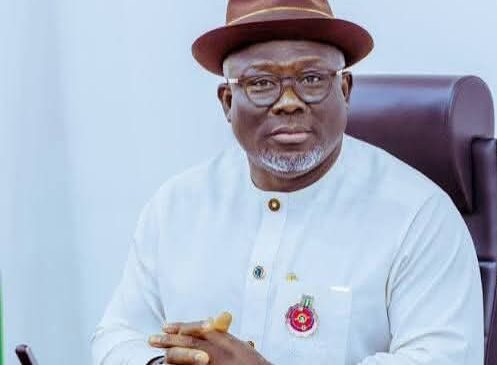
This is why the argument for continuity under Governor Sheriff Oborevwori is becoming increasingly compelling. In less than one political cycle, the administration has established a record of purposeful governance anchored on infrastructure renewal, economic expansion, social development, peace and security, and a leadership philosophy built around inclusion and accountability.
The 2027 election will therefore not be determined by sentiments of entitlement or political familiarity. It will be determined by the strength of governance records and the ability of candidates to convince Deltans that they represent the best pathway to the future.
Chief Great Ogboru remains one of Delta State’s most recognised political figures. His participation in the state’s democratic journey and his persistence in pursuing his political ambitions are part of Delta’s political history. However, democracy is not a reward system for endurance alone. Political experience must be matched by a compelling vision, a demonstrable record and a clear explanation of how a proposed alternative would deliver better results for the people.
The question in 2027 will therefore not simply be about who wants to govern Delta State. The question will be about who has earned the confidence of Deltans through measurable achievements and a clear commitment to their collective progress.
Governor Sheriff Oborevwori’s administration came into office with the MORE Agenda; Meaningful Development, Opportunities for All, Realistic Reforms and Enhanced Peace and Security, as a governance framework designed to address the critical needs of the state. The agenda represents a commitment to sustainable development, economic opportunities, institutional improvement and a government that responds directly to the aspirations of its people.
The administration’s strongest argument going into 2027 is its record of delivery. Across Delta State, infrastructure development has become one of the defining features of the Oborevwori administration. Major road projects, bridges, flyovers, urban renewal initiatives and improved connectivity across communities have reinforced the government’s commitment to opening up economic opportunities and improving the quality of life of citizens.
The construction and rehabilitation of strategic infrastructure have not been pursued merely as physical projects but as economic interventions. Good roads and efficient transportation networks reduce the cost of doing business, improve movement of goods and services, connect communities and stimulate investment. The administration’s infrastructure drive reflects an understanding that development must create the foundation for sustainable economic growth.
Beyond infrastructure, Governor Oborevwori’s economic management has strengthened Delta’s position as one of Nigeria’s leading sub-national economies. With its strategic advantages in oil and gas, agriculture, maritime activities, commerce and human capital, Delta continues to occupy a significant position in Nigeria’s economic landscape. State officials have highlighted Delta’s ranking among Nigeria’s largest economies, attributing the growth trajectory to strategic investments, infrastructure development and private-sector confidence.
Good governance is also reflected in institutional performance and public administration. The recognition of Delta as one of Nigeria’s best-governed states, including its ranking second in the 2025 CIAPS Governance Performance Index, reflects external assessment of the administration’s approach to governance, service delivery and management of state affairs.
The significance of these achievements is that they demonstrate a government focused not only on projects but on creating a functional development system. Governor Oborevwori has shown that leadership is about building confidence, maintaining stability and creating the conditions for citizens and businesses to thrive.
Another defining strength of the administration has been its commitment to peace, security and political inclusiveness. Delta State is a diverse society with different ethnic groups, communities and interests. Effective governance requires the ability to unite people, encourage dialogue and create an atmosphere where development can flourish.
Through consultation and stakeholder engagement, the administration has promoted a leadership style that emphasises cooperation rather than confrontation. Stability remains one of the most valuable assets any government can provide because development cannot thrive in an environment of uncertainty.
Human capital development has also remained central to the administration’s vision. A state’s future is determined not only by roads and buildings but by the quality of education, healthcare, skills development and opportunities available to its people. Investments in these areas represent investments in the next generation of Deltans.
The argument for continuity in 2027 is therefore based on consolidation. Development is not achieved through constant disruption of policies and programmes. It requires consistency, patience and the ability to allow well-designed initiatives to mature and produce lasting benefits.
For any challenger, including Chief Great Ogboru, the burden will be to explain why Delta should abandon a government with a visible record of performance and embrace a different direction. The electorate will naturally ask: What new ideas are being introduced? What specific challenges require a change of leadership? How will a new administration outperform a government already delivering measurable results? These questions are at the heart of democracy.
Deltans have always demonstrated political awareness and a strong understanding of governance issues. They are increasingly interested in practical results rather than political rhetoric. They want leadership that creates opportunities, improves infrastructure, strengthens the economy and protects the peace necessary for development.
The All Progressives Congress in Delta State enters the 2027 election cycle with a powerful message: continuity based on performance. The party’s argument is not simply about retaining power; it is about sustaining a development trajectory that has positioned Delta as a leading state in governance, infrastructure and economic potential.
Governor Sheriff Oborevwori’s administration has presented a model of steady, focused and people-oriented leadership. His record provides the foundation for a renewed mandate based on consolidation, expansion and greater opportunities for Deltans.
The 2027 election will ultimately be decided by the people. Their judgment will be guided by their experiences, their assessment of the present and their expectations for the future.
The choice before Deltans is therefore not about political turn-taking. It is about performance, competence and the leadership capable of taking the state to the next level.
For Delta State, continuity under Governor Sheriff Oborevwori represents the opportunity to consolidate achievements, strengthen development and build a more prosperous future.
***
Dr. Fred Latimore Oghenesivbe, Esq, is the Director-General of the Delta State Bureau for Orientation and Communications, Governor’s Office Asaba. He’s a member of the International Communication Association (ICA).