By Chinedu Ogum
KWALE/Nigeria: Plans to develop the Kwale axis into a major agro-processing and industrial centre could create new opportunities for farmers, traders and young people in Ndokwa West. But the proposal’s ultimate value will depend on how quickly investment commitments translate into operating businesses and local economic benefits.
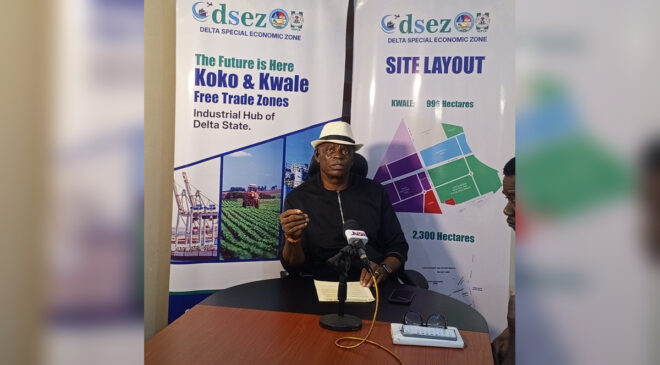
The Delta Special Economic Zone Management Company recently outlined plans to develop the state’s economic-zone clusters at Kwale and Koko into centres for manufacturing, agro-processing, energy and logistics.
During a media briefing on October 8, the company’s chairman, Brigadier-General Mike Ndubisi (retd.), said the 3,200-hectare scheme comprises approximately 2,200 hectares at Koko and 1,000 hectares at Kwale.
The briefing also featured a proposal for as many as 120 agro-processing factories around the Kwale axis within five years.
The proposal has attracted attention because of the potential connection between industrial processing and the agricultural activities that sustain many households across Ndokwa.
However, the proposed number of factories represents a future ambition, not evidence that the facilities have been financed, built or commissioned. A report published by The Trumpet on October 9 also raised questions about the status of investor agreements, financial commitments and implementation progress.
For farmers, the central question is whether the industrial plans will create dependable markets for locally produced crops.
Cassava farmers, fish producers and other agricultural operators could benefit if processing facilities establish reliable purchasing arrangements, provide clear product standards and pay farmers promptly. Transporters, retailers, technicians and other small businesses could also benefit from increased commercial activity.
But those outcomes will not occur automatically.
Industrial development requires financing, dependable electricity, transport infrastructure, water supply, skilled labour and a business environment capable of sustaining production. Farmers may also need improved access to storage facilities, extension services, equipment and cooperative arrangements that allow them to supply processors consistently.
The proposed development therefore raises several questions that deserve clear answers.
Which investors have signed binding agreements? How much capital has been committed? Which facilities are under construction? When will the first factories begin operations? What proportion of employment will be available to residents of Ndokwa communities?
The implications for host communities also need careful attention. Land acquisition, environmental protection, waste management and community consultation must be addressed transparently as projects advance.
The Federal Ministry of Environment published an environmental and social impact assessment disclosure concerning the proposed Special Agro-Processing Zone and associated facilities at Kwale in August 2024. That process provides an important basis for examining environmental safeguards and the concerns of affected communities.
The state government and zone management should make available relevant project milestones, investor commitments, environmental safeguards and realistic timelines.
The proposed industrial development deserves serious attention, but its success should not be measured by projected factory numbers alone.
The real test will be whether factories begin operating, farmers secure dependable markets, residents obtain meaningful employment and local businesses expand.
Kwale’s industrial vision could become a significant opportunity for Ndokwa. Turning that possibility into a sustainable economy will require transparent implementation and measurable results.