By every passing administration, Nigerians are fed the same rehearsed lines: corruption will be fought, institutions will be strengthened, and impunity will end. Yet year after year, corruption adapts, survives, and in many cases thrives, especially in the country’s most strategic sectors. The oil and gas industry, the backbone of Nigeria’s economy and the source of its deepest political contradictions, remains the clearest proof that corruption in Nigeria is not confronted with seriousness, but handled with caution, compromise, and kid gloves.
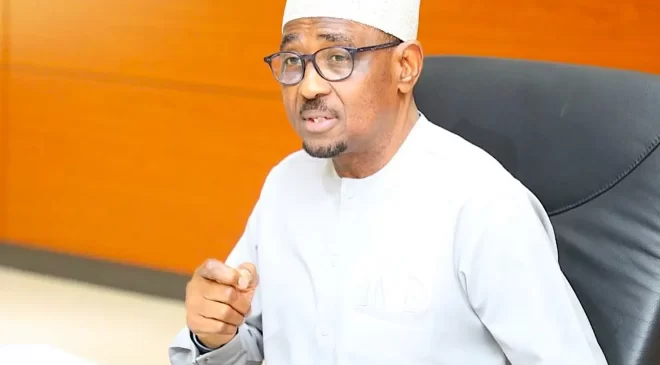
The recent resignation of Farouk Ahmed, Chief Executive of the Nigerian Midstream and Downstream Petroleum Regulatory Authority (NMDPRA), alongside Gbenga Komolafe of the Nigerian Upstream Petroleum Regulatory Commission (NUPRC), has once again exposed Nigeria’s weak response to allegations of high-level wrongdoing. Their exits followed public accusations and growing disquiet about regulatory integrity. Yet what Nigerians received was not an announcement of investigations, probes, or forensic scrutiny, but a tidy State House press release announcing resignations and replacement nominees.
This is the problem in its rawest form: in Nigeria, resignation is often treated as closure. In saner climes, resignation is merely the beginning of accountability. Here, it is too often the end of scrutiny.
Just days before Farouk Ahmed’s resignation, Aliko Dangote, Africa’s most prominent industrialist, accused him publicly of corruption. This was no idle allegation from a political opponent or social media commentator. Dangote operates at the heart of Nigeria’s downstream petroleum ecosystem, and his words carry economic and institutional weight. When such an accusation is made, especially against the head of a critical regulator, the appropriate response is not administrative silence or quiet exit, but an immediate, transparent, and independent investigation.
Anything less sends a dangerous message: that power protects, that resignation cleanses, and that accountability is optional.
Nigeria’s experience shows that corruption in key sectors, oil and gas, power, defence, infrastructure, and public finance, has never been treated as a national emergency. Instead, it is managed like a public relations inconvenience. Leaders speak loudly about corruption in opposition, then whisper about it in power. Files are opened, committees are set up, but consequences are rare. The corrupt are not punished decisively; they are merely recycled, rehabilitated, or quietly allowed to retreat into comfortable obscurity.
The unresolved saga involving Yahaya Bello, former governor of Kogi State, illustrates this dysfunction perfectly. Despite serious allegations and public drama, the case has dragged on with delays, evasions, and institutional hesitation. To the ordinary Nigerian, the lesson is clear: justice moves swiftly only when the accused is weak, unknown, or politically expendable.
The oil and gas sector, however, is where this indulgence becomes catastrophic. This is a sector that should be governed with iron discipline, not velvet gloves. Billions of dollars flow through it. Decisions made by regulators affect fuel prices, foreign investment, government revenue, and national stability. When regulators themselves are accused of corruption and allowed to exit without thorough examination, the credibility of the entire system collapses.
The Petroleum Industry Act (PIA) was sold to Nigerians as a landmark reform, a clean break from the opaque, politicized petroleum governance of the past. New institutions like NMDPRA and NUPRC were created to replace the old structures that had become synonymous with inefficiency and rent-seeking. Nigerians were told that professionalism would replace patronage, transparency would replace secrecy, and accountability would replace impunity.
Barely a few years later, those promises already look fragile.
If the heads of both regulatory agencies can resign under a cloud without a comprehensive reckoning, then the PIA risks becoming yet another reform captured by the same old culture. Institutions do not become credible simply because they are new; they become credible because misconduct is punished decisively and transparently.
This is why resignation is not enough. Farouk Ahmed must be investigated. Fully. Publicly. Without political interference. The allegations made against him go to the heart of regulatory integrity. An investigation must examine licensing decisions, enforcement actions, relationships with regulated entities, revenue remittances, and any potential conflicts of interest. If he is innocent, the investigation will clear his name. If he is guilty, the law must take its course. Anything else is an insult to Nigerians.
But the issue goes beyond individuals. Both NMDPRA and NUPRC must be subjected to comprehensive forensic audits. Not cosmetic reviews. Not internal assessments. Forensic audits conducted by independent professionals with full access to records, transactions, and correspondence since the agencies’ inception.
Such audits should interrogate how licenses and permits were issued or delayed, whether regulatory discretion was abused, how revenues were assessed, collected, and remitted, procurement practices and contract awards, and internal governance structures and compliance mechanisms.
Nigeria must understand that forensic audits are not acts of hostility; they are acts of responsibility. In sectors as sensitive as oil and gas, trust cannot be assumed; it must be earned, verified, and constantly reinforced.
President Bola Ahmed Tinubu has moved swiftly to nominate replacements and seek Senate confirmation. Speed may signal decisiveness, but speed without accountability is hollow. New appointments cannot substitute for unresolved questions. Appointing fresh faces while sweeping old issues under the carpet only perpetuates the cycle Nigerians know too well: scandal, silence, reshuffle, repeat.
Nigeria has been here before, most notably under Muhammadu Buhari, whose anti-corruption credentials were once unquestioned but ultimately undermined by selective enforcement and institutional timidity. The rhetoric was strong; the outcomes were weak. Nigerians learned, painfully, that slogans do not jail the corrupt, systems do.
If this administration truly wants to differentiate itself, it must abandon the culture of gentle handling. Corruption in key sectors is not a minor infraction; it is an existential threat. It fuels poverty, weakens institutions, distorts markets, and erodes public trust. Treating it with kid gloves is not neutrality, it is complicity.
The international community is watching. Investors are watching. Ordinary Nigerians, battered by inflation, fuel costs, and economic uncertainty, are watching. They do not need more assurances; they need evidence that no one is too powerful to be scrutinized.
The choice before Nigeria is stark. It can continue the tradition of managing corruption quietly, protecting elites while preaching reform. Or it can finally confront corruption with the seriousness it deserves, through investigations, prosecutions, audits, and consequences that go beyond resignation letters.
Until Nigeria chooses the latter, every new administration will keep repeating the same promise, every scandal will end the same way, and corruption, especially in strategic sectors, will continue to walk free, unbothered and undefeated.