By Ambassador Chuks Ododo
When the lender applauds and the household crumbles, who is the reform actually for?
Imagine a father who has restructured his debts, rebuilt his credit rating, and earned the admiration of every financial institution that monitors his account. His discipline is commendable. His trajectory, on paper, is sound.
Now imagine his children have not eaten properly in months. His daughter left school because the fees became unaffordable after his “restructuring.” His son needs medication that the local clinic no longer stocks. His wife has learned to cook one meal where there were once two, and to call it enough.
The lender sees a success story. The family lives a different one entirely.
This is Nigeria in 2026, a country earning international commendation for macroeconomic reform while presiding over one of the most severe cost-of-living crises in its modern history. The contradiction is not accidental. It is structural. And until it is confronted honestly, the reform will continue to succeed on every metric except the one that matters most: whether ordinary Nigerians are better off.
“A nation that cannot feed its people cannot claim to be growing. It is merely performing growth for the satisfaction of those who will never go hungry.”
WHAT THE REFORM HAS ACHIEVED — CREDIT WHERE IT IS EARNED
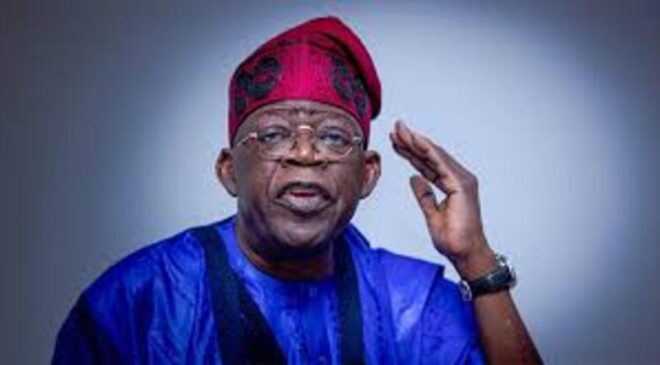
Intellectual honesty requires acknowledging what the Tinubu administration’s economic programme has accomplished since May 2023, because dismissing it entirely would be as misleading as the uncritical praise it receives abroad.
The removal of the petrol subsidy, a policy that consumed an estimated N4.4 trillion in 2022 alone, according to NNPC data, eliminated one of the most fiscally destructive expenditures in Nigerian history. The subsidy was regressive in practice: while it suppressed transport costs for all, the World Bank’s own analysis found that the wealthiest 20% of Nigerians captured approximately 43% of its benefits, while the poorest 40% received barely 18%. As a fiscal policy instrument, it was indefensible.
The unification of the exchange rate, ending the multiple-window system that had enriched currency arbitrageurs and distorted capital allocation for years, was overdue and necessary. Foreign reserves, which had fallen below $33 billion in mid-2023, have recovered. Foreign direct investment confidence, while still fragile, has improved. The signal to international markets that Nigeria is willing to absorb short-term pain for structural correction was received and rewarded.
The IMF’s commendation, the World Bank’s supportive language, and the improved sovereign credit outlook are not fabricated. They reflect genuine macroeconomic movement in a direction that, in the long term, could benefit everyone.
The question is not whether the reform was necessary. It was. The question is whether a reform that was necessary for the economy is being implemented in a way that is sustainable for the people inside it.
WHAT THE SPREADSHEETS DO NOT SHOW
The macroeconomic indicators that earn applause in Washington are experienced very differently on the streets of Kano, Ajegunle, and Makurdi. The data, even by the government’s own admission, is severe.
Nigeria remains home to the largest concentration of extremely poor people on earth. The World Bank’s most recent poverty estimates indicate that over 100 million Nigerians live below the international poverty line. The National Bureau of Statistics multidimensional poverty index, released in late 2024, found that 63% of Nigerians, approximately 133 million people, are multidimensionally poor, meaning they experience deprivation across health, education, and living standards simultaneously. This figure has not meaningfully improved since the reform began; independent assessments suggest it may have worsened.
Inflation, which the reform was partly designed to address through exchange rate correction and fiscal discipline, instead accelerated to levels not seen in a generation. The Consumer Price Index reached above 33% year-on-year by early 2025, driven overwhelmingly by food inflation, which exceeded 40% in multiple measurement periods. For a population where the average household spends 56–60% of its income on food (NBS Household Survey data), this is not a macroeconomic statistic. It is a daily emergency.
Nigeria’s out-of-school population remains the world’s largest. UNICEF’s most recent estimates place the figure at approximately 18–20 million children, a number that education researchers and civil society organisations argue is an undercount, given that it relies on survey data that does not fully capture nomadic, displaced, and conflict-affected populations in the North East and North West. Every child not in school today is a worker, taxpayer, and citizen that the Nigerian economy will not have in fifteen years. The economic reform does not account for this loss because its time horizon does not extend that far.
Youth unemployment and underemployment, when measured honestly, including those working fewer than 20 hours per week or in informal survival activities unrelated to their qualifications, remains a crisis that the headline NBS unemployment figure of approximately 5% (under revised ILO methodology) structurally obscures. Independent labour economists estimate effective youth labour underutilisation at 35–50% in urban centres, depending on how the denominator is constructed. A generation of educated, ambitious young Nigerians is being told the economy is reforming, while their lived experience of that economy is deteriorating.
THE MISSING ARCHITECTURE: WHY REFORM WITHOUT PROTECTION IS NOT REFORM
The critical failure of the Nigerian reform programme is not the reform itself. It is the sequencing. The liberalisation was implemented before the social protection system was ready to absorb its impact on the most vulnerable, and three years later, the protection system is still not functioning at the scale required.
This is not a new mistake. It is the oldest mistake in the structural adjustment playbook, and it has been documented exhaustively.
Indonesia, during its post-1997 crisis reform, removed fuel subsidies but simultaneously deployed the Jaringan Pengaman Sosial social safety net programme to 9.6 million households before the subsidy was withdrawn. The safety net was not announced after the pain began. It was in place before the first price increase hit.
Brazil’s Bolsa Família conditional cash transfer programme, reaching 14 million families at its peak, was not a charitable afterthought to Lula’s fiscal reforms. It was a structural component of the reform itself, designed, funded, and scaled as a non-negotiable condition of the austerity measures that accompanied it. Between 2003 and 2014, Brazil lifted 30 million people out of extreme poverty while maintaining the macroeconomic discipline the IMF required. Both things were possible because the government refused to treat them as competing priorities.
India’s reform experience is equally instructive. When the Modi government implemented the Goods and Services Tax (GST) in 2017, a significant structural reform with immediate cost-of-living implications, it was accompanied by the Pradhan Mantri Jan Dhan Yojana financial inclusion programme, which had already banked over 300 million previously unbanked citizens, creating the infrastructure through which direct benefit transfers could reach the poor at speed. The sequencing was deliberate: build the delivery mechanism first, then reform.
Nigeria’s equivalent programme, the National Social Investment Programme and its successor frameworks, has reached, by its own reporting, a fraction of the population it was designed to serve. Independent journalism, including investigations by civic organisations like BudgIT, has documented systematic delivery failures, ghost beneficiaries, political capture of disbursement lists, and geographic concentration of benefits in politically favoured areas rather than poverty-concentrated ones. The programme exists on paper. It does not exist, at a sufficient scale, in the lives of the people who need it.
THE COST OF GOVERNANCE: THE SACRIFICE THAT WAS NEVER SHARED
There is a dimension of Nigeria’s economic crisis that neither the IMF’s spreadsheets nor the government’s defenders adequately confront: the extraordinary cost of governing Nigeria relative to the revenue available and the services delivered.
Nigeria’s National Assembly remains among the most expensive legislatures in the world relative to national income. Its 2024 budget of N370 billion exceeds the total federal allocation for basic education, a striking inversion in a country with 20 million out-of-school children. BudgIT estimates the annual cost per senator at approximately N1.2 billion and per House member at N900 million, inclusive of salaries, allowances, constituency projects, and operations. Its broader analysis of the 2024 Appropriation Act found that recurrent governance expenditure across the executive and legislative branches consumed a share of national revenue that dwarfs comparable figures in peer countries undertaking similar reforms. By contrast, the UK Parliament costs approximately £550 million annually for both chambers combined while governing a significantly larger and more complex economy.
Beyond the legislature, the Presidential fleet, State House running costs, and a sprawling machinery of Special Advisers and Assistants, the political patronage infrastructure that has survived every administration continues absorbing resources that any serious reform programme would have reduced first. Nigeria allocates a higher proportion of revenue to its own political infrastructure than almost any comparable democracy, while the schools, hospitals, and social programmes that justify that infrastructure remain chronically underfunded.
When a government asks its poorest citizens to bear the cost of subsidy removal and fiscal consolidation while leaving the cost of governing them largely untouched, the message is unmistakable: the sacrifice is yours. Our comfort is not part of the negotiation.
This is not merely a fiscal issue. It is a legitimacy issue, and legitimacy is the one resource no economic reform can succeed without.
When a government asks its poorest citizens to absorb the cost of fuel subsidy removal, exchange rate correction, and fiscal consolidation while the cost of governing those citizens remains largely untouched, the message received is not “we are reforming together.” The message received is “the reform is yours to bear. Our comfort is not part of the negotiation.”
This is not merely a fiscal issue. It is a legitimacy issue. And legitimacy is the one resource no economic reform can succeed without.
Ghana, under its own IMF-supported programme from 2022, reduced its cabinet from 88 to 48 ministers and implemented a 30% cut in discretionary government spending as a visible, early signal that the austerity was shared. Rwanda spends less than 7% of its national budget on general public services. Nigeria’s equivalent figure, depending on how it is calculated, exceeds 30%.
WHAT MUST CHANGE: THREE NON-NEGOTIABLE PRIORITIES
The reform should not be abandoned. It should be completed, which means completing the part that has been neglected.
First, social protection must be scaled to match the scale of the shock. A conditional cash transfer programme biometrically registered, delivered through mobile money, conditional on school attendance and primary healthcare engagement, publicly tracked, and independently audited, must reach a minimum of 15 million households within 18 months. This is not charity. It is the structural companion to liberalisation that every successful reform programme in the developing world has required. The fiscal cost estimated at approximately N2.5–3 trillion annually for meaningful coverage is significant but manageable within a reformed fiscal framework, particularly if governance costs are simultaneously reduced, and leakage from existing programmes is eliminated.
Second, the cost of governance must be visibly and verifiably reduced. A 25% reduction in executive and legislative recurrent expenditure over two years would generate both fiscal savings and political legitimacy. The symbolism of shared sacrifice is not a luxury in a reform programme. It is the condition upon which public patience depends. Without it, the reform is one election away from reversal because a population that believes the sacrifice is theirs alone will vote accordingly.
Third, education and primary healthcare must be treated as emergency investments, not residual budget lines. Nigeria’s 20 million out-of-school children represent the single largest threat to the long-term success of the economic reform, because an economy cannot grow faster than its human capital allows. A three-year emergency enrolment programme combining school feeding (proven across multiple African contexts to increase attendance by 20–30%), fee waivers, accelerated teacher recruitment, and mobile classroom infrastructure in the most deprived areas, is not social spending. It is an economic infrastructure investment with a 15–20 year return horizon.
THE QUESTION THE REFORM MUST ANSWER
The father metaphor is not a rhetorical device. It is the lived experience of millions of Nigerian households in 2026 households where the macroeconomic indicators are moving in the right direction, and the kitchen is moving in the opposite direction.
Economic reform is not measured by what the lender says. It is measured by what the citizen experiences. And if the citizen’s experience documented, quantified, and visible to anyone willing to look at hunger, school withdrawal, healthcare collapse, and deepening insecurity, then the reform, however structurally necessary, is failing in its most essential obligation.
The IMF cannot eat its own commendation. The World Bank cannot school a child with a favourable credit assessment. Foreign reserves do not cook. Exchange rate stability does not heal.
*Only a government that measures its own success in the same units its poorest citizens measure their suffering in meals eaten, in children in school, in clinics that function, in wages that buy what they bought last year will build the kind of economy that deserves to be called reformed.*
Nigeria has the resources, the institutional capacity, and the human talent to build a reform programme that satisfies both the lender and the household. Indonesia did it. Brazil did it. India did it. The question has never been whether it is possible. The question is whether those in power will choose to do it or whether they will continue to accept the applause from Washington while the silence from their own citizens grows louder.
The father’s credit score is improving. His children are still hungry.
That is not reform. That is a choice.