By Emmanuel Enebeli
Identity matters. It creates a sense of belonging, history and common purpose. But identity alone does not build roads, create jobs, attract investment or keep young people economically productive.
The larger question for the Ndokwa area is whether a shared socio-economic outlook can be developed around the communities and local government areas that make up the region.
There is room for such thinking. Agriculture, small businesses, local markets, professional services, natural resources, transport links and the skills of people at home and in the diaspora can become parts of a coordinated economic strategy.
What is often missing is coordination. Communities may pursue projects separately. Professionals may work individually. Businesses may operate without a strong regional network. Political advocacy may become louder during elections and quieter afterwards.
An economic-region approach would ask practical questions: Which agricultural value chains can be developed? Which roads and power projects would unlock the most economic activity? Which markets can be strengthened? What skills do young people need? How can local enterprises access finance, technology and larger markets?
This does not require everybody to agree on every question of identity or politics. It requires agreement on development priorities.
A serious regional economic agenda could begin with measurable goals: better transport connections, reliable electricity, agricultural processing, stronger SMEs, skills development, digital access and investment promotion.
The conversation should also move beyond government. Traditional institutions, community organisations, professional groups, businesses, youth organisations, women’s groups and the diaspora all have roles to play.
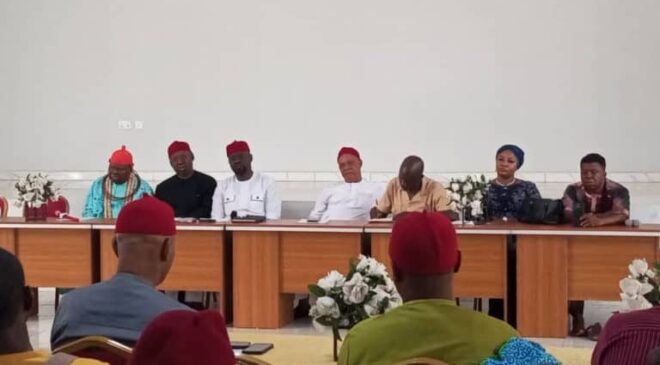
The ongoing town-hall consultations by the Ndokwa Neku Union provide an opportunity for this wider conversation. The final meeting is scheduled for September 6 in Ashaka, following earlier sessions in Ukwuani and Ndokwa West.
Ndokwa should therefore ask itself a harder question than who will represent us: What kind of economy do we want to build, and what are we prepared to do collectively to build it?
Political representation matters. But economic power determines how much freedom a community has to shape its own future.