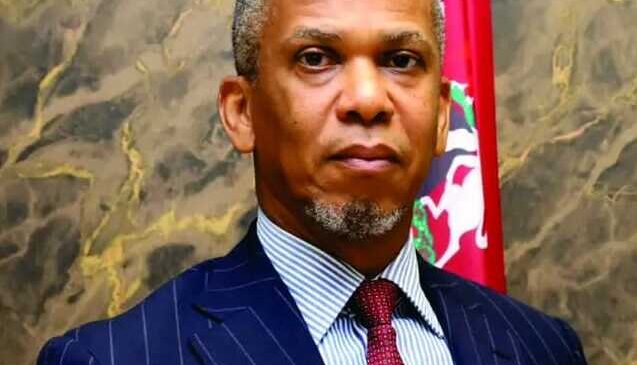
SAPELE/Nigeria: Senator Ede Dafinone, representing Delta Central Senatorial District, has raised alarm over the growing culture of hostility and personal attacks in the political space, calling on Urhobo youths to adopt issue-based engagement as political activities ahead of the 2027 general elections begin to gather momentum.
In a strongly worded message, the lawmaker expressed concern over what he described as a disturbing trend in political discourse, particularly on social media, where loyalty to political actors is increasingly being expressed through insults, divisive rhetoric, and attacks on perceived opponents.
Dafinone warned that such a trajectory poses a threat not only to healthy democratic engagement but also to the unity and long-standing cultural values of the Urhobo people, who are widely regarded for their sense of respect, dignity, and communal harmony.
“As political awareness and participation continue to grow, it is important that our youths understand that democracy thrives on robust but respectful engagement,” he stated, noting that disagreement is a natural part of politics but must never degenerate into bitterness and character assassination.
With the 2027 elections on the horizon, the senator urged young political actors and supporters to channel their energy towards constructive advocacy, focusing on policies, ideas, and developmental priorities rather than personalities.
He emphasized that politics should not be reduced to a battleground of insults, stressing that campaigns built on hatred and division ultimately weaken the very society they seek to lead.
“We must not allow political differences to erode the bonds that hold us together as a people. Beyond party lines and individual ambitions, we share a common heritage and collective future that must be protected,” Dafinone said.
The lawmaker, who has maintained a reputation for measured political engagement, reiterated his personal commitment to civility, noting that despite facing criticism and provocations, he has consistently chosen restraint over retaliation.
According to him, such discipline is essential for building credibility and fostering a political culture that encourages dialogue rather than conflict.
Dafinone further pointed out the fluid nature of political alliances, cautioning that today’s adversaries may become tomorrow’s partners in governance, making it imperative for political actors to avoid burning bridges through reckless statements and actions.
“There are no permanent enemies in politics, only evolving interests centered on the progress of our people,” he said, urging stakeholders to act with foresight and maturity.
He also decried the tendency of some supporters to engage in public disputes that project the Urhobo nation in a negative light, warning that such actions could undermine the collective image and bargaining strength of the people within the broader political landscape.
Calling for a reset in political conduct, the senator charged Urhobo youths to take the lead in redefining engagement standards by promoting respectful dialogue, tolerance, and integrity in all political interactions.
He stressed that leadership is not only about ambition but also about character, noting that the manner in which political goals are pursued is just as important as the goals themselves.
Dafinone concluded by urging all stakeholders to prioritize unity, discipline, and responsible communication as the political season gradually unfolds, insisting that only through such values can sustainable progress and meaningful development be achieved in Delta Central and beyond.