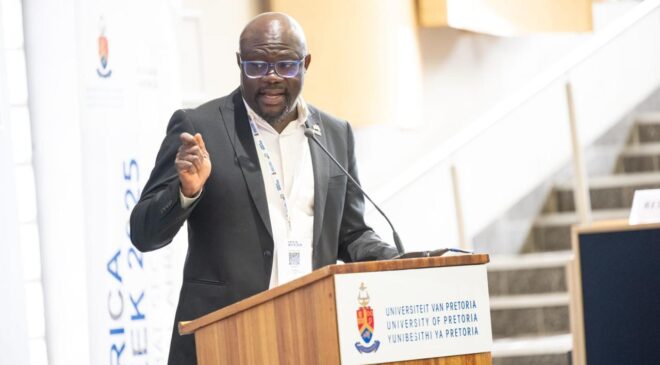
PRETORIA/South Africa: A Professor of African Politics and International Relations at the University of Pretoria, Christopher Isike, has warned that recurring attacks on foreign nationals in South Africa are weakening the country’s soft power and undermining its leadership ambitions on the African continent.
Speaking in a telephone interview from Pretoria, the scholar said the trend raises serious questions about South Africa’s ability to sustain its position as a regional and continental leader, particularly within the Southern African Development Community (SADC) and other global platforms.
“There is no justification for Africans attacking fellow Africans. Such actions directly diminish South Africa’s image and credibility as a leading voice on the continent,” he said.
Isike noted that South Africa’s participation in influential blocs such as BRICS and the G20 places it under heightened scrutiny, adding that leadership in such spaces requires internal cohesion and respect for African solidarity.
“For South Africa, it subtracts from its soft power. The country presents itself as a sub-regional leader and a continental gateway, but it must reconcile that with its domestic realities,” he stated.
He attributed the persistence of xenophobic violence partly to inconsistent enforcement of the law, including failure to adequately prosecute offenders, stressing that impunity continues to fuel the cycle of attacks.
According to him, South Africa stands to benefit significantly from migration, particularly in terms of skills and economic integration under frameworks such as the African Continental Free Trade Area (AfCFTA).
“If South Africa fully understands these benefits, it cannot allow such behaviour to continue. It risks losing the gains of regional cooperation,” he said.
The academic warned that continued violence against foreign nationals could trigger wider economic and diplomatic consequences, including strained relations and reduced cooperation from other African states.
He also pointed to existing external pressures, including trade uncertainties tied to agreements such as the African Growth and Opportunity Act (AGOA) with the United States.
Isike urged the South African government to intensify public sensitisation on peaceful coexistence and regional integration, while also calling on affected African governments to take proactive measures to protect their citizens abroad.
He concluded that South Africa’s long-term growth depends on openness and inclusivity, noting that many of its citizens live and work across the continent, and that any inward-looking posture could weaken its strategic position in Africa.