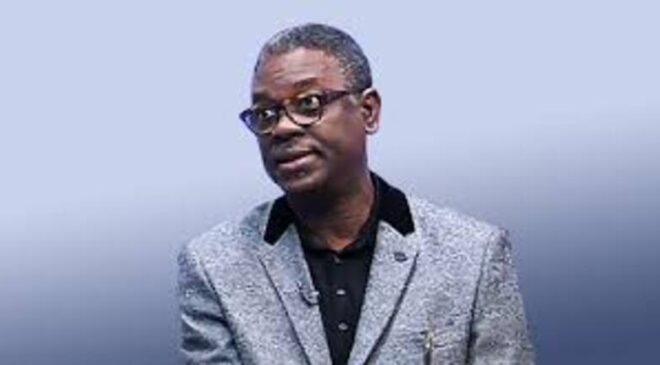
LAGOS/Nigeria: Former Political Adviser to former President Olusegun Obasanjo, Akin Osuntokun, has warned that whoever emerges as Nigeria’s president in 2027 may ultimately disappoint Nigerians if the country’s fundamental constitutional and governance challenges remain unresolved.
Osuntokun, who spoke in an interview with Sunday Sun, argued that the nation’s political discourse has become excessively focused on presidential succession rather than addressing the structural defects in Nigeria’s constitutional arrangement, which he described as the root cause of the country’s persistent crises.
According to him, the concentration of power at the centre, a legacy of prolonged military rule, has transformed the presidency into the most coveted political office in the country, fueling intense competition and patronage politics while weakening the principles of federalism.
“The centre has become too powerful due largely to years of military rule and centralised governance. There is this obsession to get there because it operates under the spirit of winner-takes-all and disbursement of patronage,” Osuntokun said.
The former presidential aide maintained that the focus of Nigerians ahead of the next general election should be constitutional reform rather than the personalities seeking to occupy Aso Rock.
He argued that even if a candidate widely perceived as competent and reform-minded, such as Peter Obi, eventually becomes president, the existing political structure would significantly limit his ability to deliver on campaign promises.
“Whoever becomes president under the current structure will likely disappoint Nigerians because the system itself is flawed,” he stated, adding that entrenched interests within the political class, the National Assembly and other institutions would continue to frustrate meaningful reforms.
Osuntokun also weighed in on the administration of President Bola Ahmed Tinubu, saying some of the government’s economic policies, including fuel subsidy removal and exchange rate reforms, were painful but necessary measures to stabilise the economy.
While acknowledging the need for such reforms, he criticised what he described as poor communication and a lack of visible sacrifice by political leaders, insisting that Nigerians would be more willing to endure hardship if leaders demonstrated empathy and shared in the burden.
“If you are asking Nigerians to make sacrifices, you should lead by example. That is the only way it will work,” he said.
The former political adviser further advocated the decentralisation of power, creation of state police and a return to true federalism, arguing that Nigeria’s current security and developmental challenges stem largely from excessive centralisation.
On allegations that the Tinubu administration is weakening opposition parties, Osuntokun said the issue again underscored the dangers of concentrating enormous powers in the presidency.
“The enormous powers vested in the presidency make abuse almost inevitable. That is why constitutional reform is what the country needs,” he noted.
He also expressed doubts about the complete independence of the Independent National Electoral Commission (INEC), citing the constitutional arrangement that allows the president to appoint the commission’s chairman and influence its funding through the executive and National Assembly.
According to him, as long as the presidency remains overwhelmingly powerful, political actors will continue to seek control of institutions that should ordinarily function independently.
Osuntokun concluded that Nigeria’s long-term stability and development depend less on who occupies the presidency and more on the country’s willingness to undertake far-reaching constitutional reforms capable of strengthening institutions, promoting genuine federalism and reducing the excessive powers concentrated at the centre.
“The focus should not be on who becomes president alone. The focus should be on fixing the constitution and restructuring the country,” he said.