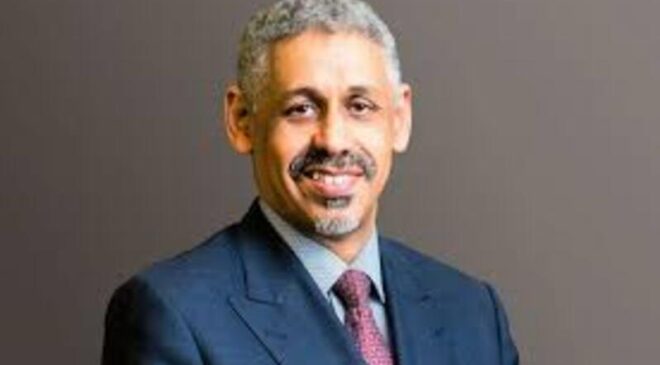
BRAZZAVILLE/DRC: The Board of Governors of the African Development Bank (AfDB) Group has thrown its weight behind the leadership of AfDB President, Dr. Sidi Ould Tah, endorsing his ambitious “Four Cardinal Points” strategic vision and calling for accelerated reforms to strengthen Africa’s financial architecture and development financing.
The endorsement came at the close of the Bank Group’s five-day 2026 Annual Meetings held in Brazzaville, Republic of Congo, where governors from member countries expressed overwhelming support for Ould Tah’s plans to mobilise large-scale resources for Africa’s development and reposition the institution as a more agile and responsive development partner.
Chairman of the AfDB Board of Governors and Congo’s Minister of Economy, Planning, Statistics and Forecasting, Ludovic Ngatsé, said the governors had approved and encouraged Ould Tah to implement his vision aimed at strengthening Africa’s capacity to act and exert greater influence in an increasingly fragmented global environment.
Responding to the endorsement, Ould Tah welcomed what he described as a clear and overwhelming vote of confidence from the governors, assuring stakeholders that the Bank would remain focused on delivering practical solutions to Africa’s pressing development challenges.
“I have listened to you, and I have heard you,” Ould Tah declared during the closing ceremony, stressing that the meetings had ignited a new momentum for action, transformation and regional integration across the continent.
More than 4,000 participants from over 81 countries attended the meetings, which were held under the theme, “Mobilizing Large-Scale Resources for Financing Africa’s Development in a Fragmented World.”
The annual gathering, the first under Ould Tah’s presidency since assuming office in September 2025, featured a high-level presidential dialogue involving Congo’s President Denis Sassou-N’Guesso, President Faustin-Archange Touadéra of the Central African Republic, Gabon’s President Brice Clotaire Oligui Nguema and the AfDB President.
Several major financial commitments were announced during the meetings. Angola pledged €6.5 million towards the 17th replenishment of the African Development Fund (ADF), bringing the number of African countries contributing to the fund to 25 and total commitments to more than $190 million.
The meetings also secured more than $3 billion in commitments to the Congo Basin Blue Fund, a regional initiative aimed at promoting environmental conservation and sustainable development across 17 African countries.
In another major development, Japan announced $10 million in support of the African Facility for Medicines and Medical Equipment (AMEF), one of the flagship programmes unveiled during the event.
A landmark announcement came from President Sassou-N’Guesso, who disclosed that beginning January 1, 2027, citizens of all African countries would enjoy visa-free entry into the Republic of Congo, a move widely hailed as a significant boost to regional integration and intra-African mobility.
Welcoming the decision, Ould Tah described it as “a courageous and deeply pan-African decision” that aligns with broader continental efforts to deepen economic and social integration.
Despite concerns over the Ebola outbreak reported in neighbouring Democratic Republic of Congo and Uganda before the meetings, Congolese authorities, working with the World Health Organisation, Africa Centres for Disease Control and Prevention, and the AfDB, successfully implemented comprehensive safety measures that ensured a safe and successful event.
At the conclusion of the meetings, Ould Tah reaffirmed his commitment to transforming the African Development Bank into what he called a “solutions bank,” one that remains closely connected to the needs of member countries, supports national and regional financial institutions, and prioritises job creation, entrepreneurship and economic opportunities for Africa’s youth and women.
He also called for greater mobilisation of domestic resources, value addition to Africa’s raw materials and stronger partnerships with civil society organisations, philanthropists and the African diaspora, whom he described as indispensable partners in the continent’s development journey.