By Emmanuel Enebeli
ASHAKA/Nigeria: The Ndokwa East Local Government Area is set to host the final leg of the Ndokwa Neku Union (NNU) three-local-government-area Town Hall Meeting on Sunday, September 6, 2026, at the Ashaka Event Hall, Ashaka.
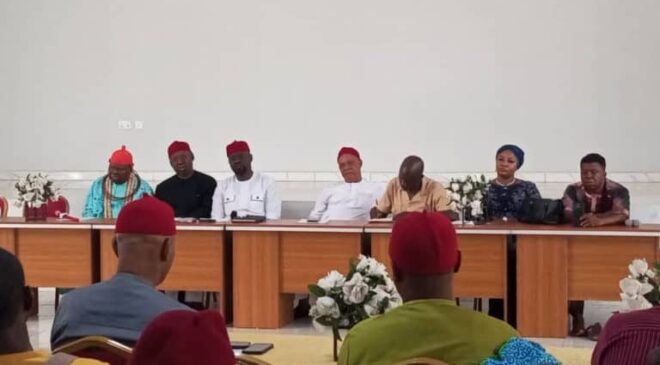
The meeting is part of the NNU’s grassroots consultation programme across Ndokwa East, Ndokwa West and Ukwuani, designed to gather the views and priorities of residents before the union develops a broader agenda for unity and sustainable development.
The consultation is being held under the theme, “The Masses’ Voice is Supreme,” and is expected to bring together traditional rulers, community and political leaders, clan presidents-general, Community Development Committee chairmen, women and youth representatives, farmers, business owners, professionals, craftsmen and other stakeholders.
The Ukwuani session was held on August 16 at the Dorcas Event Centre, Obiaruku, while the Ndokwa West meeting followed on August 30 at Ndokwa House, Kwale. The Ndokwa East session will complete the three-leg consultation.
At the Ndokwa West meeting, NNU President-General Chief Amechi Asugwuni said the consultations were intended to identify issues capable of uniting the people and forming the basis of a common development agenda.
Electricity, infrastructure, political participation and accountability have featured among the concerns raised during the consultations. The NNU has also called for stronger citizen participation in governance beyond voting during elections.
The union has renewed advocacy for an Independent Power Project step-down and encouraged support for electrification initiatives that could improve power supply and stimulate economic activity.
The NNU has also emphasised cultural identity through initiatives including the Ndokwa anthem, cultural activities and Ndokwa Day celebrations.
For Ndokwa East, the consultation provides an opportunity for communities to move beyond broad demands and identify specific priorities that can be pursued collectively. Roads, erosion, electricity, education and other basic infrastructure remain recurring concerns across communities in the area.
The significance of Sunday’s meeting will ultimately depend not only on what is discussed but on what happens after the consultations. The next challenge will be translating the views gathered from the three local government areas into clear, measurable and achievable priorities, with mechanisms for follow-up and accountability.
As stakeholders gather in Ashaka, attention will therefore be on the issues communities place before the NNU and whether the three-stage exercise can produce a practical development roadmap capable of giving the people a stronger collective voice.