By Mokobia Rita.
ASABA/Nigeria: Stakeholders at the 2026 Annual General Meeting (AGM) Public Lecture of the Delta State Chapter of the Nigerian Institute of Public Relations (NIPR) have called for a fundamental shift towards accountable leadership, ethical governance and strategic communication, describing them as indispensable pillars for sustainable development and Nigeria’s national transformation.
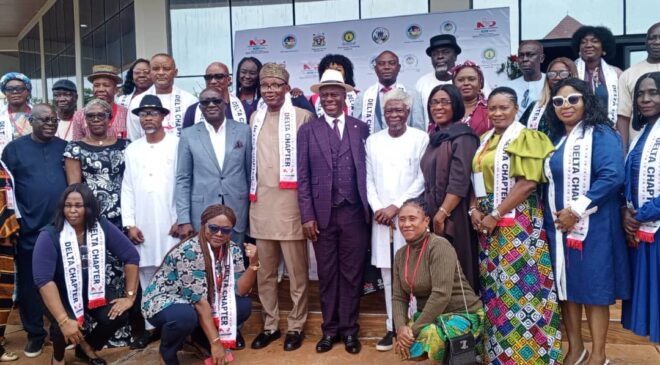
The consensus emerged at the public lecture held on Thursday in Asaba, where public relations professionals, academics, government officials, communication experts and development stakeholders converged to deliberate on the theme: “Leadership, Accountability and Sustainable Development in Nigeria: The Strategic Intersection of Public Relations for National Repositioning.”
Speakers at the event maintained that Nigeria’s development aspirations would remain elusive unless leadership at all levels is anchored on transparency, institutional accountability and effective communication capable of rebuilding public confidence in governance. They argued that public relations has evolved beyond image management into a strategic governance function that promotes dialogue, trust and citizen participation in public affairs.
In his welcome address, Chairman of the Delta State Chapter of the NIPR, Mr. Godfrey C. Osakwe, FNIPR, described the lecture as a timely intervention aimed at stimulating meaningful conversations on leadership, accountability and national development. He expressed appreciation for the impressive turnout, saying it reflected the commitment of practitioners and stakeholders to advancing good governance and restoring public trust in institutions.
According to Osakwe, sustainable development cannot thrive in an environment where accountability is weak and public confidence in leadership continues to decline. He stressed that public relations practitioners occupy a strategic position in bridging the gap between government and the governed by fostering transparency, mutual understanding and constructive engagement.
“Nigeria’s journey towards sustainable development begins where leadership embraces accountability and public relations becomes the bridge between governance and the trust of the people,” he stated.
Delivering the keynote lecture, the Vice-Chancellor of Dennis Osadebay University, Asaba, Professor Samuel Ovuete Aghalino, described Nigeria as a nation richly endowed with natural and human resources but constrained by leadership challenges, weak institutions and declining public trust. He noted that despite the country’s enormous potential, widespread poverty, unemployment and governance deficits continue to impede meaningful socio-economic development.
Professor Aghalino argued that Nigeria’s progress depends on strengthening institutions, promoting accountability and encouraging active citizen participation in governance. He urged public relations practitioners to redefine their role beyond publicity by serving as ethical communicators, trusted advisers and nation-builders capable of facilitating dialogue between leaders and citizens. According to him, governance should be viewed as a stakeholder-centred process in which communication plays a central role in building consensus and public confidence.
“If leadership failure is a disease, strategic communication is part of the cure,” the Vice-Chancellor remarked, adding that modern public relations has become an indispensable instrument for promoting transparency, enhancing policy acceptance and strengthening democratic governance.
Also speaking, Professor of Political Science at Dennis Osadebay University, Professor Dode Robert Oghenedoro, said effective leadership is measured by the ability to inspire confidence, mobilise people and responsibly manage public resources for the common good. He stressed that visionary leadership must be guided by integrity, accountability and a genuine commitment to national development. He further underscored the importance of strategic communication in promoting national consciousness, protecting institutional credibility and sustaining public trust, describing trust as one of the most valuable assets in governance.
In his goodwill message, the Director-General of the Delta State Capital Territory Development Agency, Hon. Patrick Ukah, urged public relations practitioners to remain sensitive to public opinion and continuously gauge citizens’ perceptions of government policies and leadership. He challenged communication professionals to provide honest feedback to those they serve, saying effective public relations requires understanding public sentiment and helping leaders respond appropriately to the expectations of the people.
Chairman of the occasion and Chairman of the Delta State Bureau for State Pensions, Sir Edwin Ogidi-Gbegbaje, commended the Delta State Chapter of the NIPR for organising what he described as a thought-provoking and impactful lecture. He expressed confidence that the quality of presentations and discussions would enrich public discourse and contribute meaningfully to strengthening accountability, ethical leadership and sustainable development in Nigeria.
The lecture attracted a wide spectrum of participants, including public relations practitioners, academics, policymakers, media professionals, students and public sector officials, who engaged in robust discussions on the future of governance and strategic communication. As the event drew to a close, participants agreed that Nigeria’s quest for sustainable development will depend not only on sound policies but also on visionary leadership, accountable institutions and effective communication capable of rebuilding trust between government and the citizens.