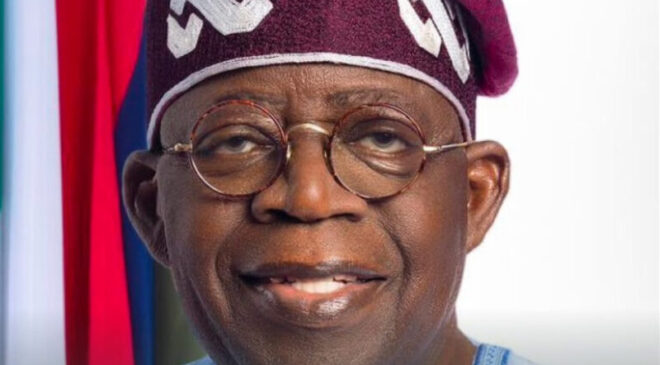
ABUJA/Nigeria: The Peoples Democratic Party (PDP) has launched a scathing critique of the APC-led Federal Government, accusing the administration of President Bola Ahmed Tinubu of presiding over what it described as the “normalisation of absurdity” in governance, with grave consequences for legislative integrity, national security and Nigeria’s international standing.
In a press statement issued on Wednesday and signed by the National Publicity Secretary of the PDP, Comrade Ini Ememobong, the opposition party said recent developments under the Tinubu administration underscored a disturbing pattern in which actions previously regarded as unacceptable were increasingly becoming routine.
The PDP drew attention to what it described as a serious anomaly surrounding the recently passed Tax Act, citing claims by a member of the House of Representatives, Hon. Abdussamad Dasuki, of a disparity between the version of the law enacted by the National Assembly and the copy subsequently gazetted.
According to the party, the alleged insertion of provisions not approved by lawmakers constitutes a “criminal act” capable of eroding public trust in the legislative process. The PDP warned that treating the matter with levity, as it claimed had become customary under the current administration, would further undermine confidence in democratic institutions.
The party commended Hon. Dasuki for what it described as his courage and diligence, and demanded a comprehensive investigation into how the alleged insertions found their way into the gazetted law. It further called for the commencement date of the Tax Act, currently slated for January 1, 2026, to be shifted by at least six months to allow for investigations, proper publication of the authentic version and extensive public enlightenment.
Beyond domestic governance, the PDP accused the Tinubu administration of presiding over a steady decline in Nigeria’s regional and global influence, attributing this to poor leadership and misplaced priorities. The party referenced the recent detention of Nigerian Air Force aircraft and personnel in Burkina Faso, which it said contradicted initial denials by the Federal Government, as well as new visa restrictions imposed on Nigerians by the United States.
According to the PDP, the U.S. decision, which affects both immigrant and non-immigrant visas, was reportedly linked to rising insecurity and the government’s inability to effectively address security challenges, particularly in northern Nigeria. The party described the development as unprecedented, arguing that Nigeria had never faced such treatment even under military rule.
The statement also criticised what it termed the politicisation of security matters, citing recent controversies surrounding the promotion of presidential security aides. It further pointed to Nigeria’s decline in the 2024 Global Firepower ranking, where the country reportedly dropped from 36th to 39th position, as evidence of weakening military capacity.
The PDP equally faulted President Tinubu’s absence at the 68th Ordinary Meeting of ECOWAS Heads of State and Government held in Abuja, noting that while the President was represented by Vice President Kashim Shettima, his attendance at a political event the following day created a negative perception about Nigeria’s commitment to regional stability.
According to the party, such actions undermine Nigeria’s long-standing leadership role in West Africa and contribute to what it described as the growing loss of respect for the country under the current administration.
In its concluding remarks, the PDP called on the Tinubu-led government to prioritise governance over politics, urging increased investment in critical sectors such as security, education, roads and healthcare, rather than what it alleged was the funding of political structures ahead of the 2027 general elections.
“The stakes are too high for business as usual,” the party warned, stressing that legislative credibility, international reputation and regional leadership are national imperatives, not partisan concerns. The PDP maintained that Nigerians deserve “solutions, not excuses,” and called for transparent governance, evidence-based policies and urgent corrective action to halt what it described as institutional decline.