By Dr. N.M Darigho Odedede
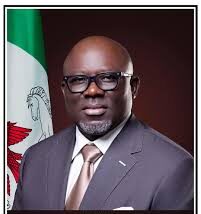
Politics in Delta State has entered a new era—a dispensation where performance has begun to speak louder than propaganda and governance louder than mere political rhetoric. At the center of this emerging reality is Governor Sheriff Oborevwori, whose resounding infrastructural revolution and people-driven “Delta First” policy have fundamentally transformed the political equation in the state and directly earned him overwhelming endorsement for a second-term ticket under the All Progressives Congress (APC).
For several years in Delta State, many politicians have campaigned with lofty promises of what they will do only to disappear after elections, leaving Deltans stranded with deteriorating roads, abandoned projects, unemployment, and lack of human capital development. However, Governor Sheriff Oborevwori appears determined to redefine political leadership through visible projects and measurable developmental initiatives. Across the length and breadth of Delta State, the flagship of governance is no longer hidden in press statements or political billboards; they are boldly visible in communities, major link roads, highways, schools, drainage systems, bridges, healthcare centers, and economic projects, transforming the socio-economic landscape in Delta State.
From Delta Central to Delta South and Delta North, the Oborevwori administration has embarked on aggressive infrastructural development that has restored public confidence in government. Roads that were once synonymous with years of neglect and decadence are now opening rural economies and reconnecting communities to opportunities in urban towns of the state. Flood-prone areas are receiving long-overdue drainage interventions. Strategic urban renewal projects are modernizing cities and improving commercial activities. These are not cosmetic achievements designed merely for headlines; they are practical interventions touching the daily realities of ordinary Deltans. Yet, beyond infrastructure, the true strength of Governor Oborevwori’s administration lies in his unwavering “Delta First” philosophy: a leadership doctrine that places the collective interest of the people above personal ambition, sectional politics, or political vendetta.
In a politically diverse state often threatened by communal crises and power struggles, Governor Oborevwori has consistently projected inclusiveness, calmness, accessibility, and maturity in governance. Rather than govern with bitterness or political exclusion, he has embraced a leadership culture that accommodates various interests while sustaining peace and stability across the state. This approach has significantly reduced political tension and strengthened public trust in government. Therefore, the growing popularity of the Oborevwori administration is not a coincidence but rooted in the reality that people naturally gravitate toward leaders who demonstrate sincerity, fairness, and visible results. The grassroots stakeholders increasingly identify with his administration because they can physically see and feel the impact of governance. Little wonder, his government was nicknamed “Street Credibility.”
Political observers now acknowledge that Governor Oborevwori has achieved what many considered impossible by building a broad political consensus through governance performance rather than intimidation or political theatrics. His calm but strategic leadership style has gradually transformed him into one of the most politically influential figures in contemporary Delta politics and Nigeria. This explains why the APC leadership structure and critical stakeholders view him as a strategic electoral asset capable of consolidating political stability and delivering victory for President Bola Ahmed Tinubu in the coming 2027 general elections. In modern politics, parties do not merely reward loyalty; they reward political values, public acceptance, and performance credibility. Governor Oborevwori has successfully built all three indices of good governance.
Indeed, Governor Oborevwori’s second-term ticket is not merely a political endorsement; it is a referendum on performance from a pan-Delta governor. It reflects the growing belief that continuity in governance is necessary to sustain the infrastructural momentum and developmental stability currently reshaping Delta State. Perhaps most significantly, Governor Oborevwori’s political rise sends a powerful message across Nigeria’s democratic landscape: that leadership anchored on development, accessibility, unity, and people-oriented governance can still command massive political legitimacy.
As the next electoral cycle gradually approaches, one reality continues to dominate political discussions across Delta State. Governor Sheriff Oborevwori has not merely secured political relevance through alliances or accurate political permutations; he has earned public confidence through visible governance, infrastructural transformation, and an unwavering commitment to putting Delta first. Once this tempo is sustained, Governor Obotevwori would be setting a record for his predecessors to break or surpass.
Dr. N.M. Darigho Odedede is a development communicator who writes from Abraka, Ethiope East LGA, Delta State.