By Mokobia Rita.
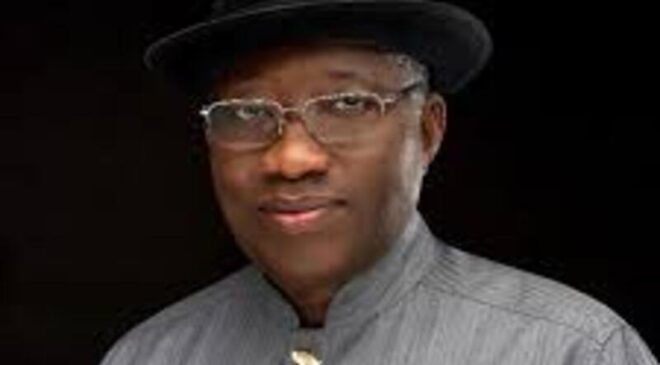
ABUJA/Nigeria: Tension mounted across Nigeria’s political landscape on Tuesday as a Federal High Court sitting in Abuja prepared to deliver a landmark judgment on the eligibility of former President Goodluck Jonathan to contest the 2027 presidential election, in a case already generating intense constitutional and political debate nationwide.
The matter, presided over by Justice Peter Lifu, centres on whether Jonathan, who assumed office following the death of late President Umaru Musa Yar’Adua and later won the 2011 presidential election, remains constitutionally qualified to seek the nation’s highest office again.
The suit was instituted by lawyer Johnmary Jideobi, who is asking the court to declare the former president ineligible to participate in the 2027 presidential race.
The plaintiff argued that Jonathan had already taken the presidential oath twice and should therefore be barred from seeking the office again under the provisions of the 1999 Constitution.
Jideobi further urged the court to restrain the Independent National Electoral Commission (INEC) from accepting or publishing Jonathan’s name should he emerge as a presidential candidate ahead of the next general election.
The legal battle gained fresh political significance after reports emerged that a faction within the Peoples Democratic Party (PDP), allegedly led by Kabiru Tanimu Turaki, granted Jonathan a waiver and adopted him as its sole presidential candidate for the 2027 election, reigniting debates over succession, power and constitutional interpretation.
At the centre of the dispute is the interpretation of Sections 1(1), 1(2), 1(3) and 137(3) of the Constitution, with lawyers on both sides presenting sharply opposing arguments during proceedings.
Jonathan’s supporters maintain that his ascension to office in 2010 was through constitutional succession rather than electoral victory, insisting that he only secured one presidential mandate in his own right after winning the 2011 election.
Opponents, however, argue that constitutional restrictions should be tied to the number of times an individual has taken the oath of office as president, irrespective of how the office was assumed.
The former president’s legal team, led by Senior Advocate of Nigeria, Chris Uche, urged the court to dismiss the suit, arguing that the constitutional amendment on presidential tenure limits cannot be applied retroactively against Jonathan. They also challenged the plaintiff’s legal standing to institute the action.
Political observers believe the judgment could rank among the most consequential constitutional rulings in Nigeria’s democratic history, with implications extending beyond Jonathan’s political future.
Analysts say the verdict may redefine future interpretations of presidential tenure limits and influence succession politics for years to come.
Across the country, politicians, legal experts, party loyalists and ordinary citizens have kept close watch on the proceedings, with expectations running high over what many describe as a defining constitutional moment.
Whatever the outcome, observers believe the judgment may not end the political storm surrounding Jonathan’s future ambitions but could instead open a new chapter in Nigeria’s evolving democratic and constitutional discourse.