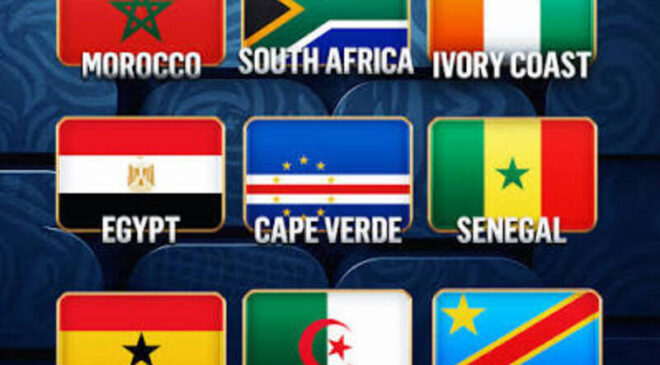
The FIFA World Cup has, since its inauguration in 1930, remained football’s greatest spectacle, producing unforgettable moments, legendary players and nations whose exploits have shaped the global game. For Africa, the tournament has long represented more than a football competition; it has been a platform to challenge stereotypes, showcase talent and announce the continent’s growing influence in world football. From Egypt’s pioneering appearance in 1934 to Morocco’s historic run to the semi-finals in 2022, every generation has added a new chapter to Africa’s remarkable World Cup story. The ongoing 2026 FIFA World Cup is now writing perhaps the most significant chapter yet, with an unprecedented nine African countries progressing to the knockout stage.
For decades, Africa’s journey at the World Cup has been defined by moments of brilliance rather than sustained dominance. Cameroon stunned the world in 1990 by becoming the first African nation to reach the quarter-finals, inspired by the evergreen Roger Milla, whose dazzling performances changed global perceptions about African football. Senegal repeated the feat in 2002 after defeating reigning champions France in the opening match before marching to the last eight, while Ghana came within inches of becoming Africa’s first semi-finalist in 2010 before Luis Suárez’s infamous handball and a heartbreaking penalty miss ended the dream. Morocco eventually broke that barrier in Qatar in 2022 by becoming the first African nation to reach the World Cup semi-finals, proving that African football had finally matured into a consistent global force.
Among Africa’s traditional football heavyweights, Nigeria and Cameroon occupy a special place in World Cup history. Nigeria’s Super Eagles qualified for six World Cups between 1994 and 2018, reaching the Round of 16 on three occasions while producing generations of stars including Rashidi Yekini, Jay-Jay Okocha, Nwankwo Kanu, Sunday Oliseh, Vincent Enyeama and John Obi Mikel. Cameroon, making eight World Cup appearances before missing the 2026 tournament, inspired millions with icons such as Roger Milla, Thomas N’Kono and Samuel Eto’o. Together, Nigeria and Cameroon became symbols of African excellence, attracting international scouts, boosting youth football development and opening European football’s doors to countless African players.
Yet, the absence of Nigeria and Cameroon from the ongoing World Cup has left an emotional void across the continent. Their passionate supporters, colourful fan culture and rich football traditions have always added excitement to the global tournament. Nigeria, home to one of Africa’s largest football audiences, has consistently delivered thrilling encounters, while Cameroon has built a reputation for fearless performances against football’s established powers. Their failure to qualify serves as a reminder that football is evolving rapidly and that historical pedigree alone no longer guarantees success on the biggest stage.
Ironically, the absence of these continental giants has coincided with the emergence of new African powers. Countries once considered outsiders have stepped confidently onto the global stage, demonstrating improved tactical discipline, stronger domestic structures and better youth development programmes. South Africa, Morocco, Senegal, Ivory Coast, Ghana, Algeria, Egypt, DR Congo and Cape Verde have collectively carried Africa’s hopes into the knockout rounds, rewriting long-held assumptions about the continent’s competitive depth. Rather than depending on a handful of traditional powers, African football now boasts a broader base of nations capable of competing with the world’s elite.
This remarkable achievement also reflects years of investment across African football. Better coaching education, improved football academies, stronger professional leagues, increased exposure of African players in Europe’s top competitions and enhanced support from football federations have all contributed to narrowing the gap between Africa and traditional football powers. Today’s African teams combine physical strength with tactical intelligence, technical ability and growing confidence, making them formidable opponents capable of challenging any nation.
The impact extends beyond Africa. Global football benefits when African teams compete at the highest level because the continent contributes some of the world’s finest talents to elite clubs across Europe and beyond. Players of African origin have become indispensable to many of football’s biggest teams, influencing tactics, entertainment value and commercial appeal. Strong performances by African national teams validate the quality of talent the continent continues to produce and reinforce football’s status as a truly global game.
For Nigeria and Cameroon, the success of their African counterparts should serve as inspiration rather than disappointment. Their rich football histories remain intact, but the new reality demands reforms in administration, grassroots development, coaching and long-term planning. The rise of countries such as Cape Verde and DR Congo demonstrates that commitment, vision and effective football governance can elevate any nation onto the world stage. The challenge before Nigeria and Cameroon is to rebuild quickly and reclaim their rightful places among Africa’s football elite.
As the 2026 FIFA World Cup enters its decisive stages, Africa stands on the threshold of another historic breakthrough. Never before has the continent entered the knockout phase with such numerical strength and widespread belief. Whether one of these nations reaches the semi-finals or goes even further, the message is unmistakable: African football has entered a new era. The continent is no longer content with producing gifted players alone; it is producing complete teams capable of competing for football’s greatest prize. The future of African football has never looked brighter, and the world is finally witnessing the emergence of a continent ready to shape the next chapter of the beautiful game.